Antun Maračić
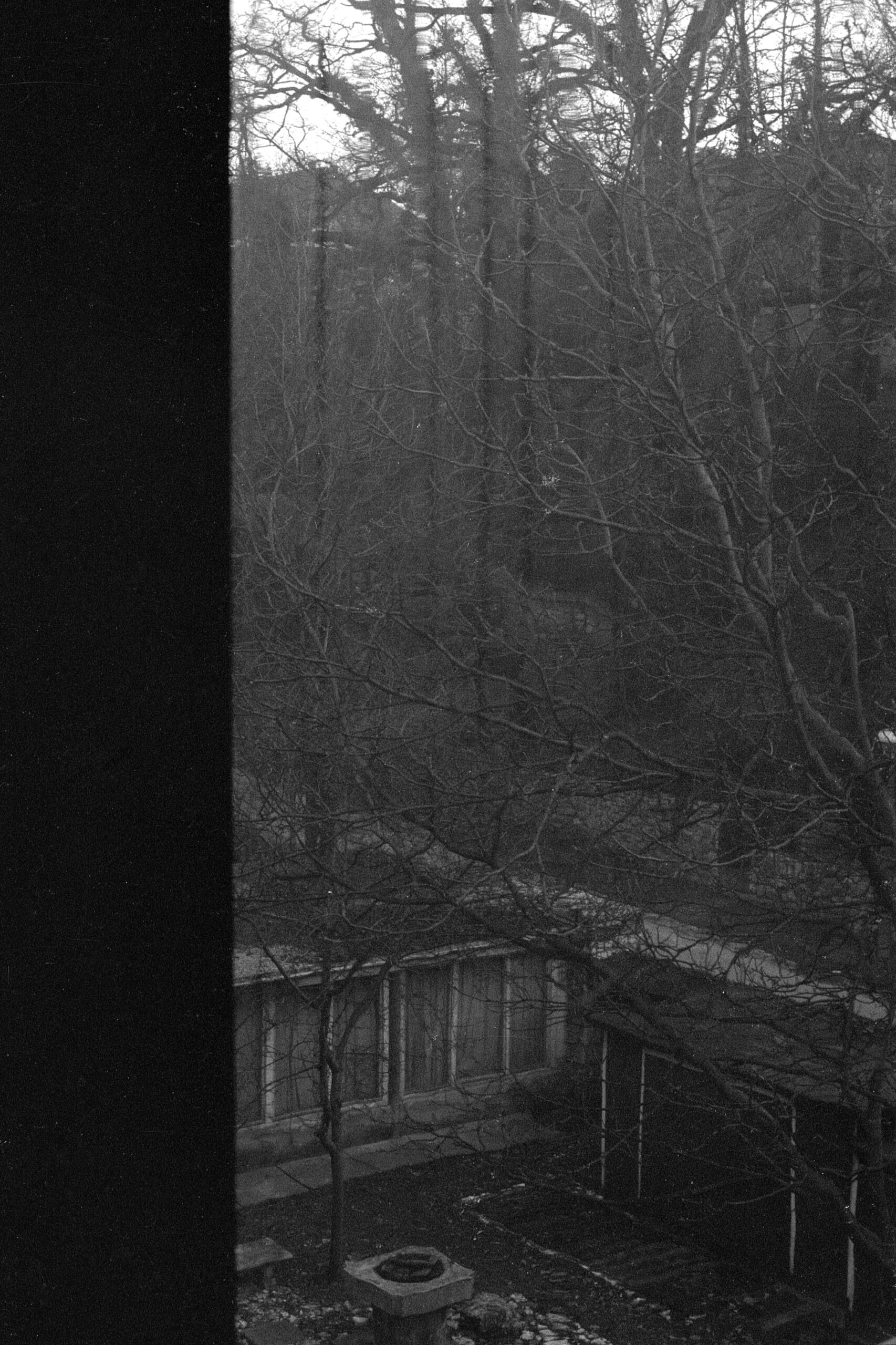
Lokrum 2000–2013
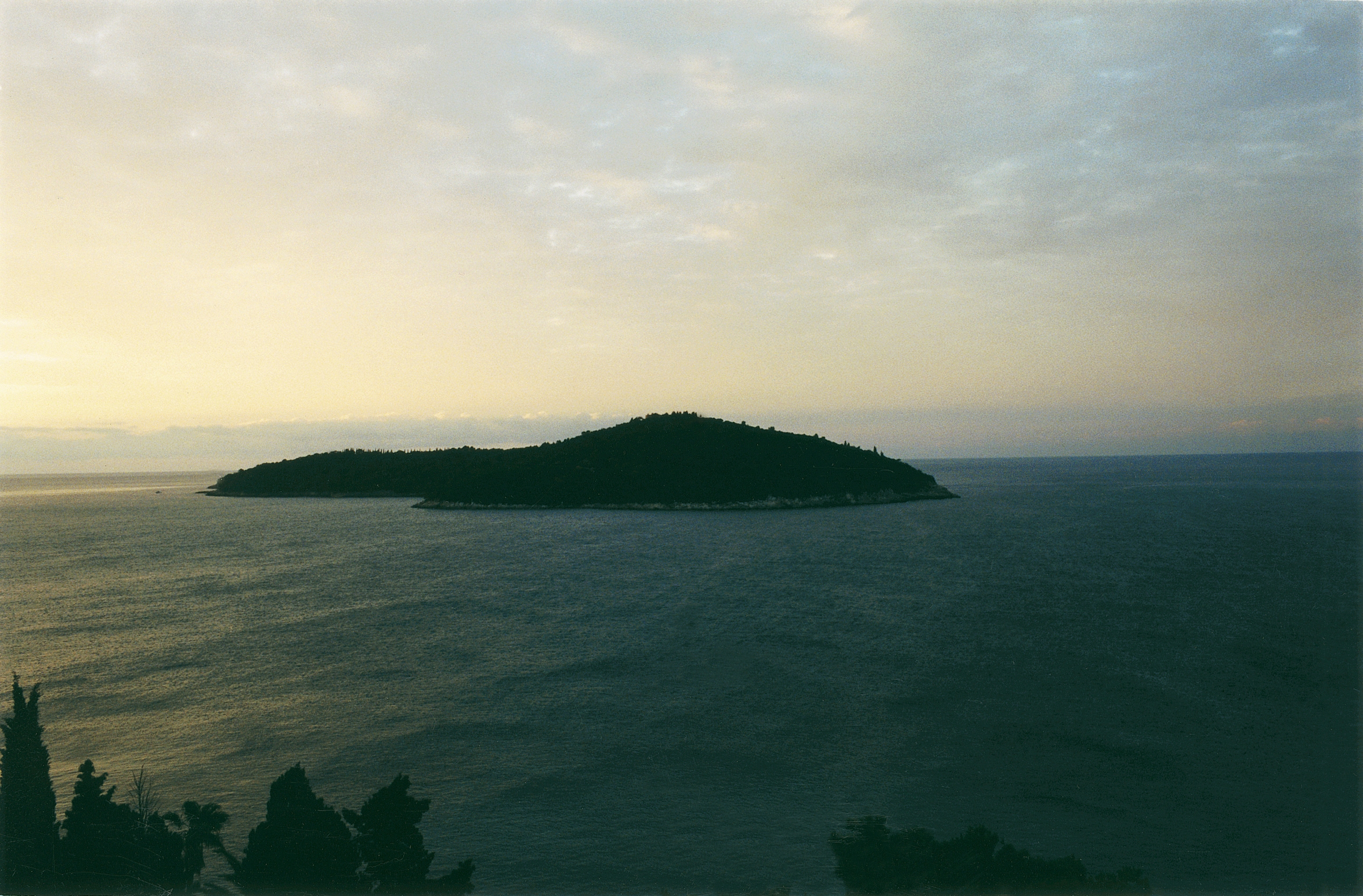
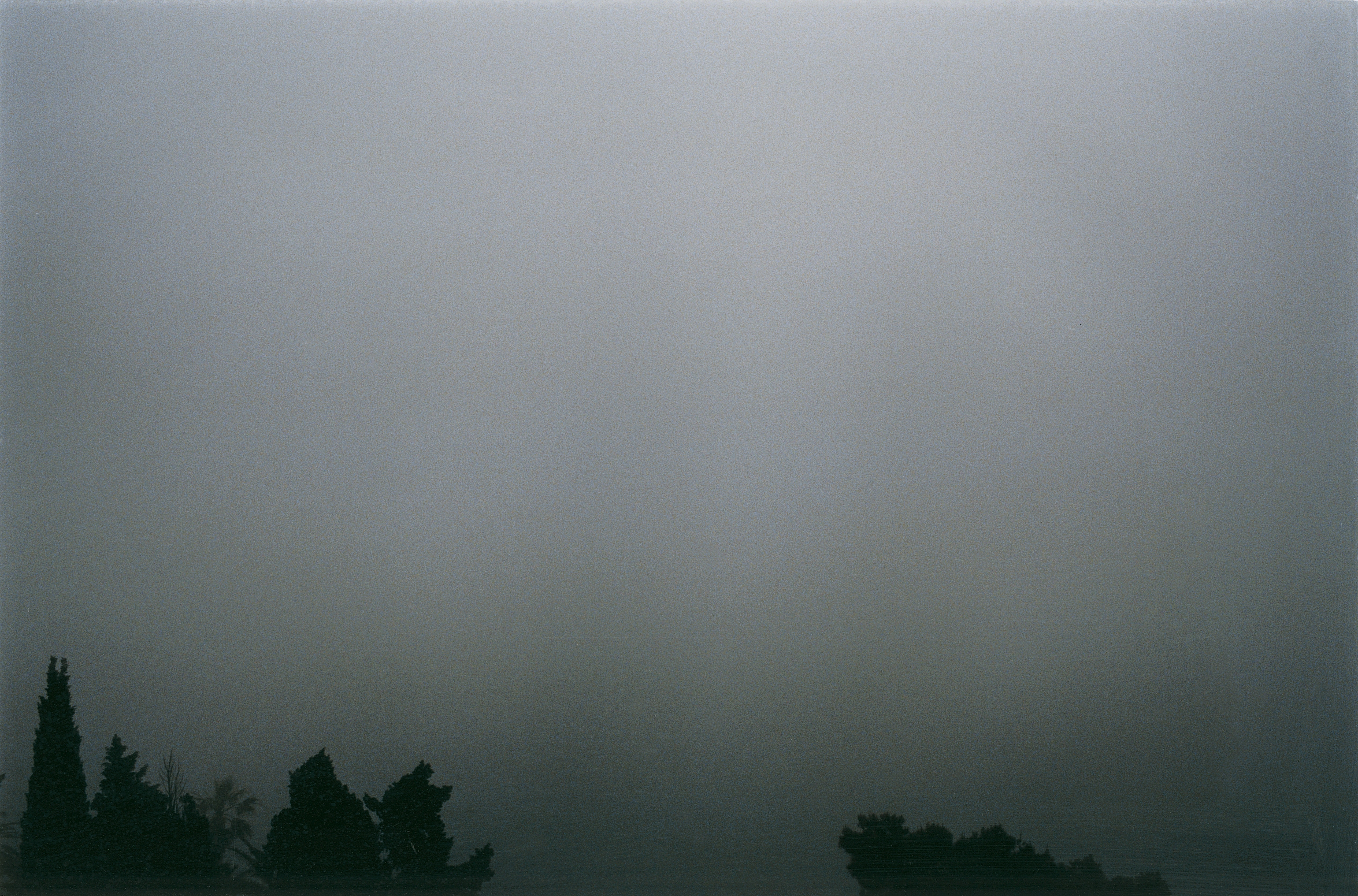
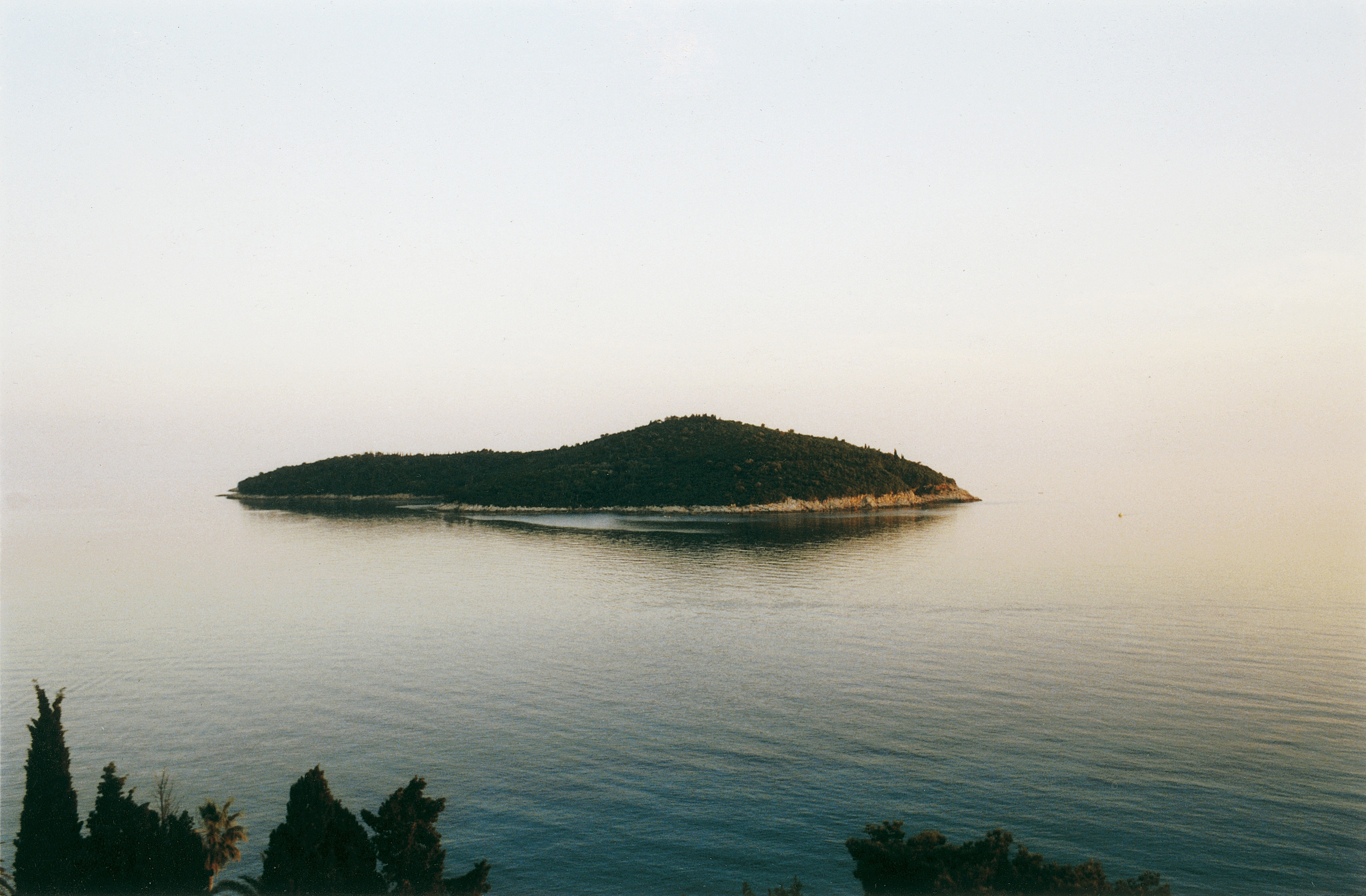
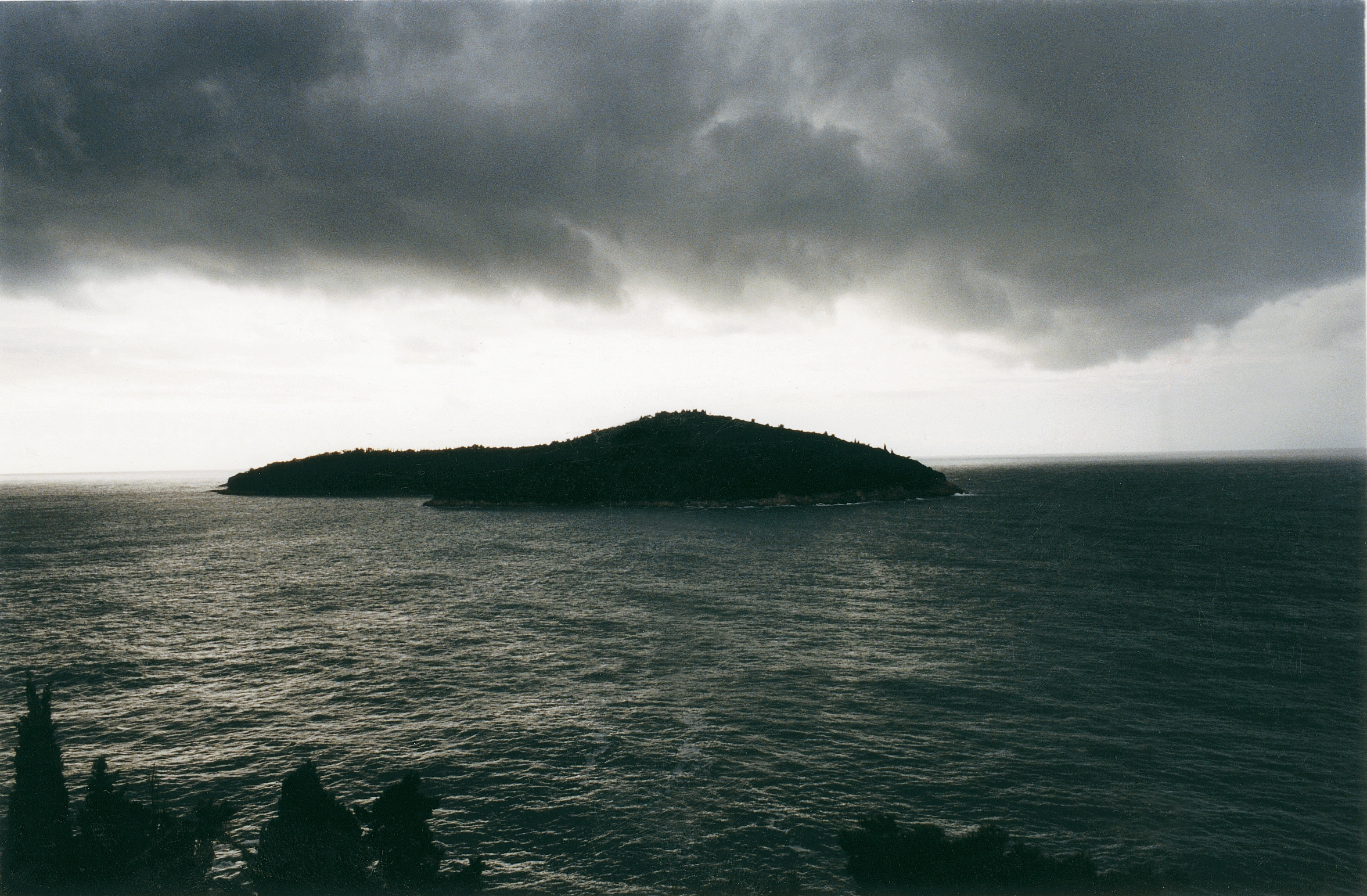
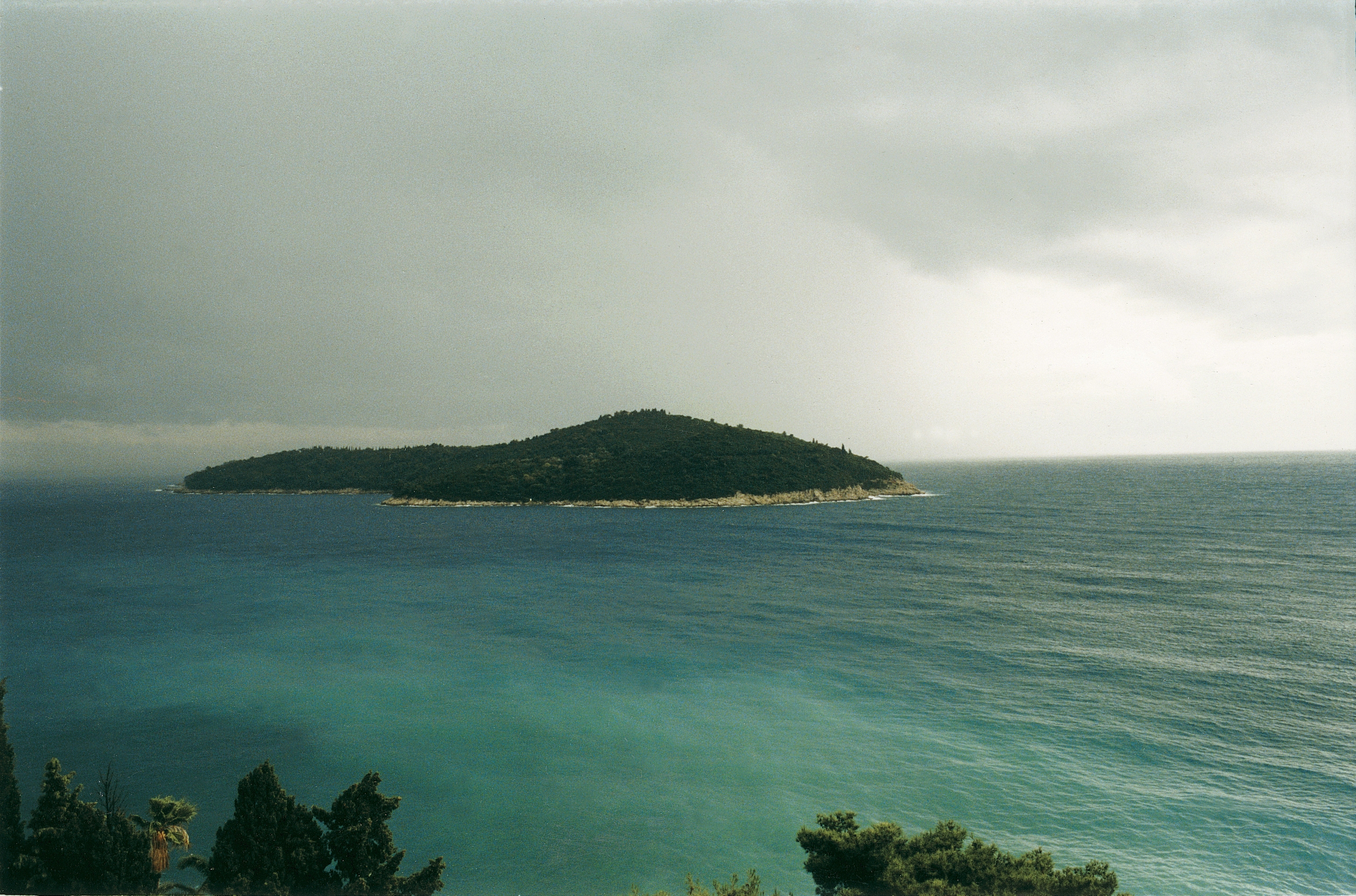
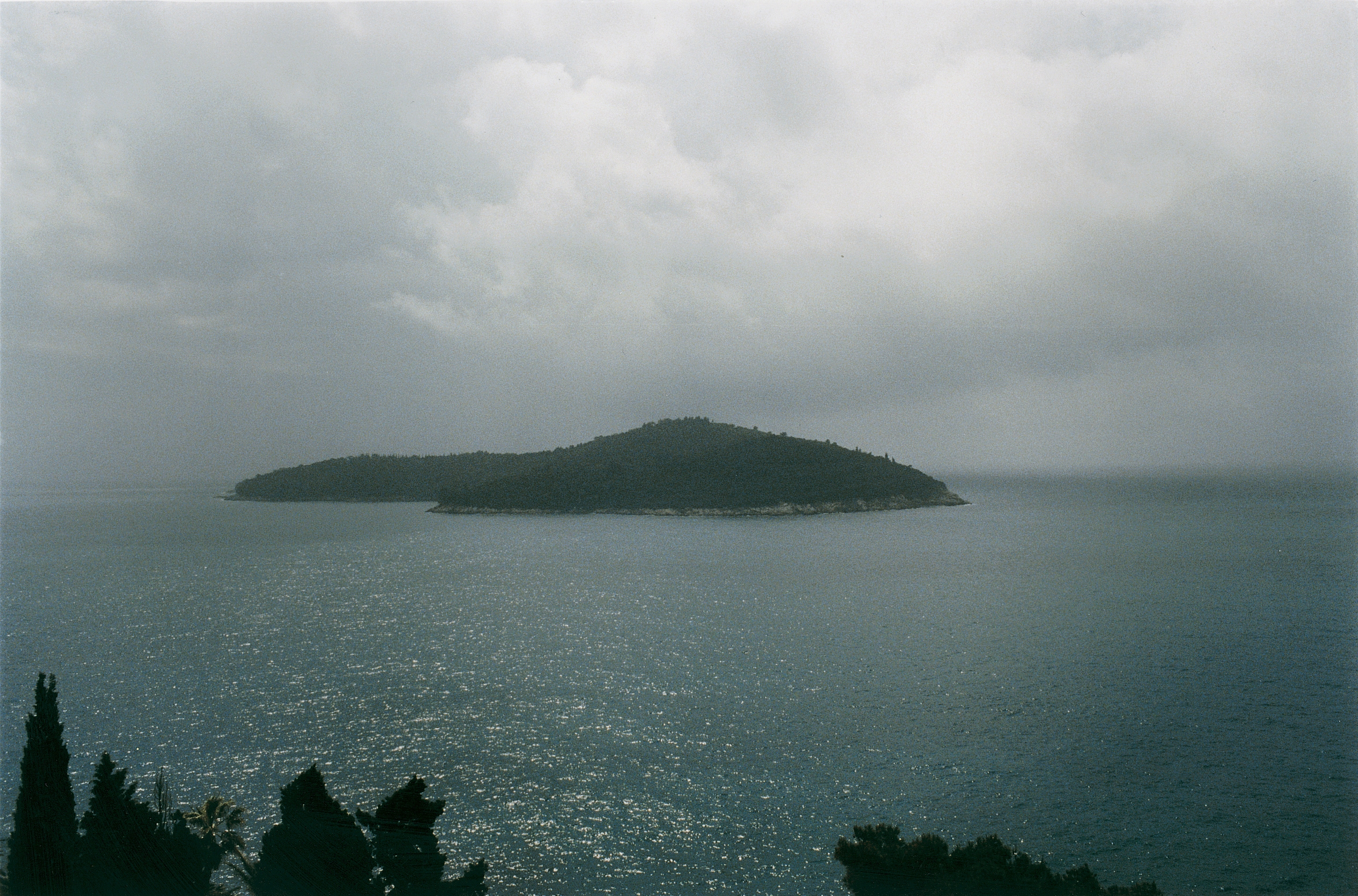
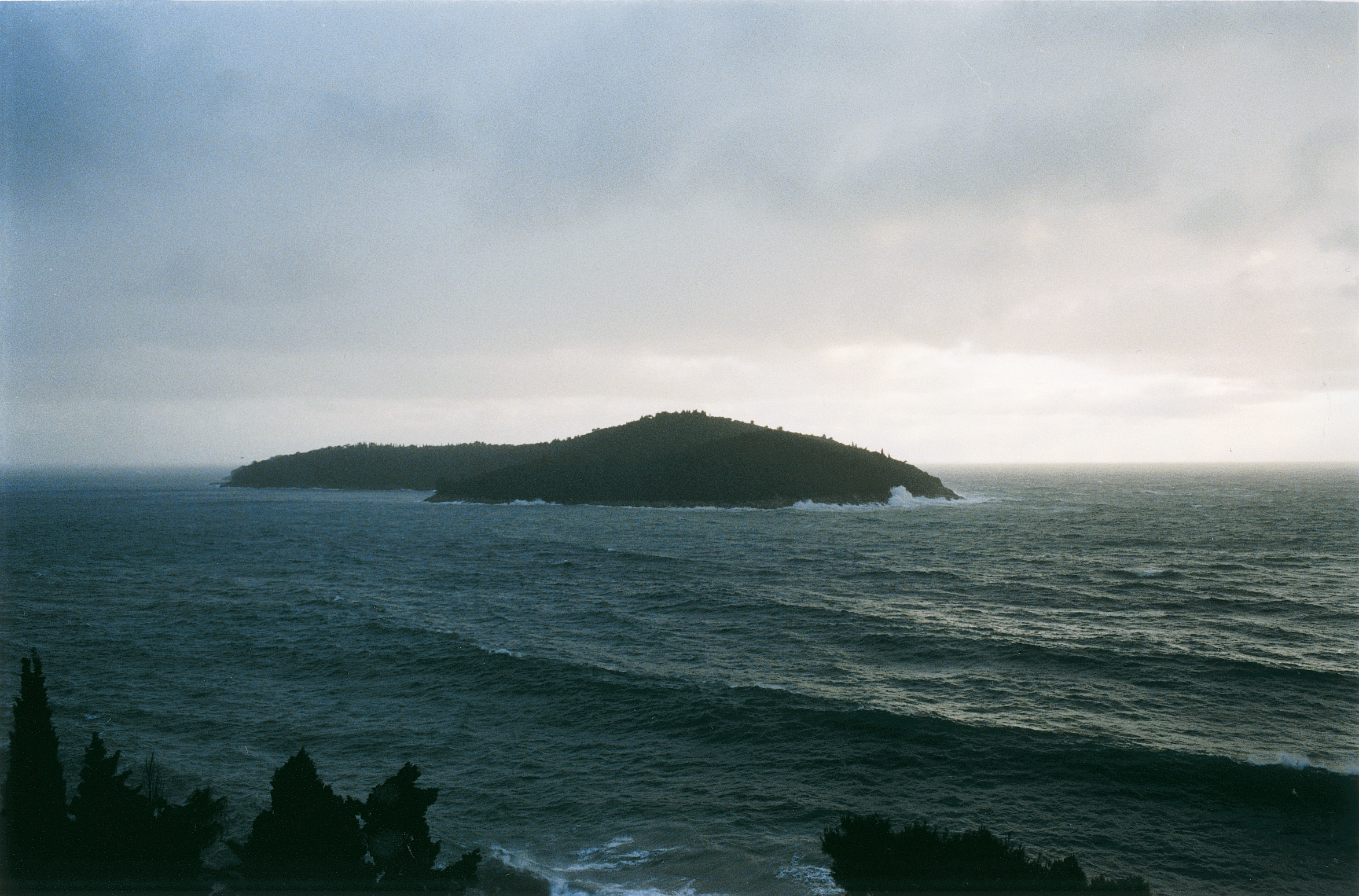
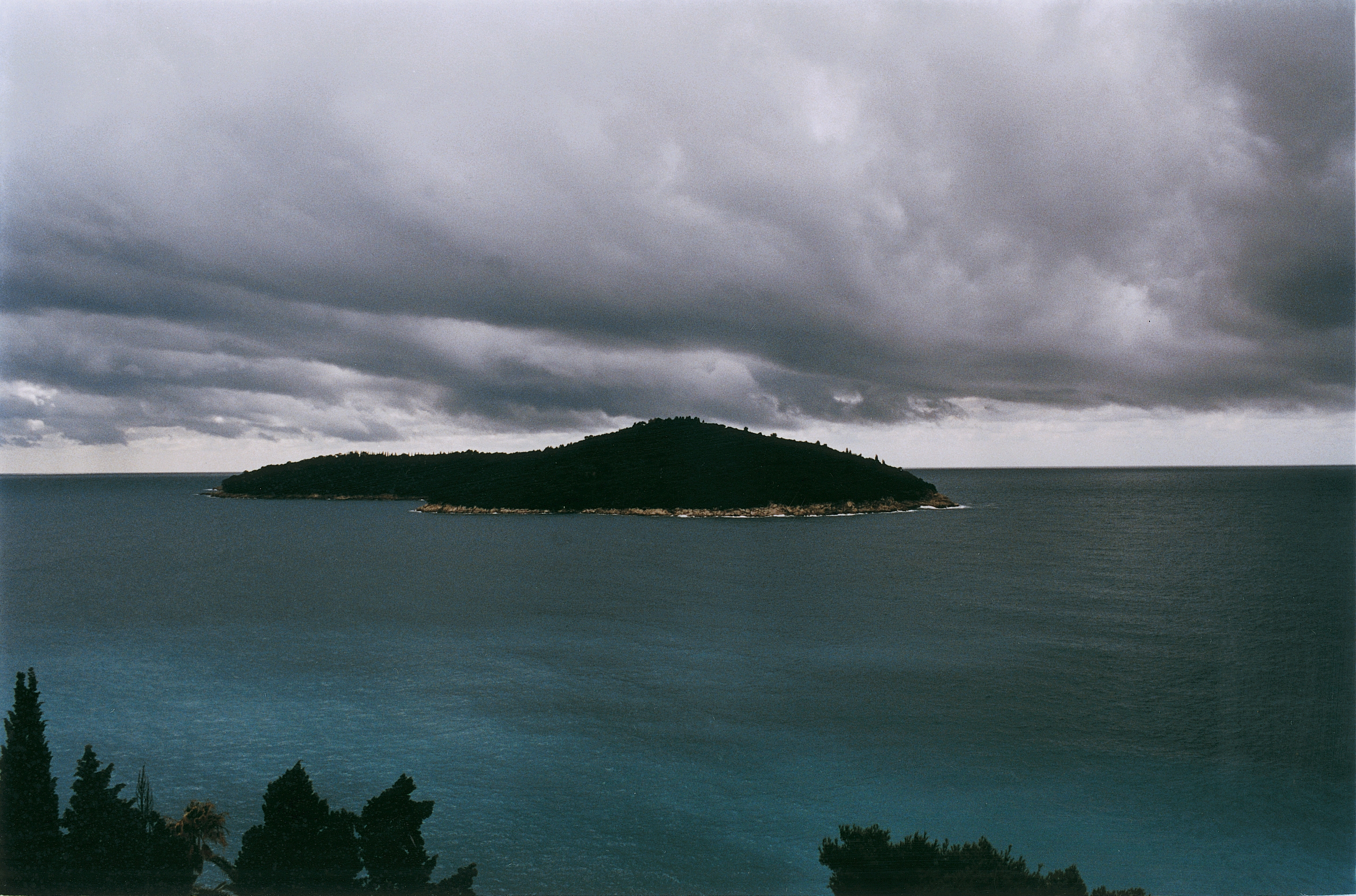
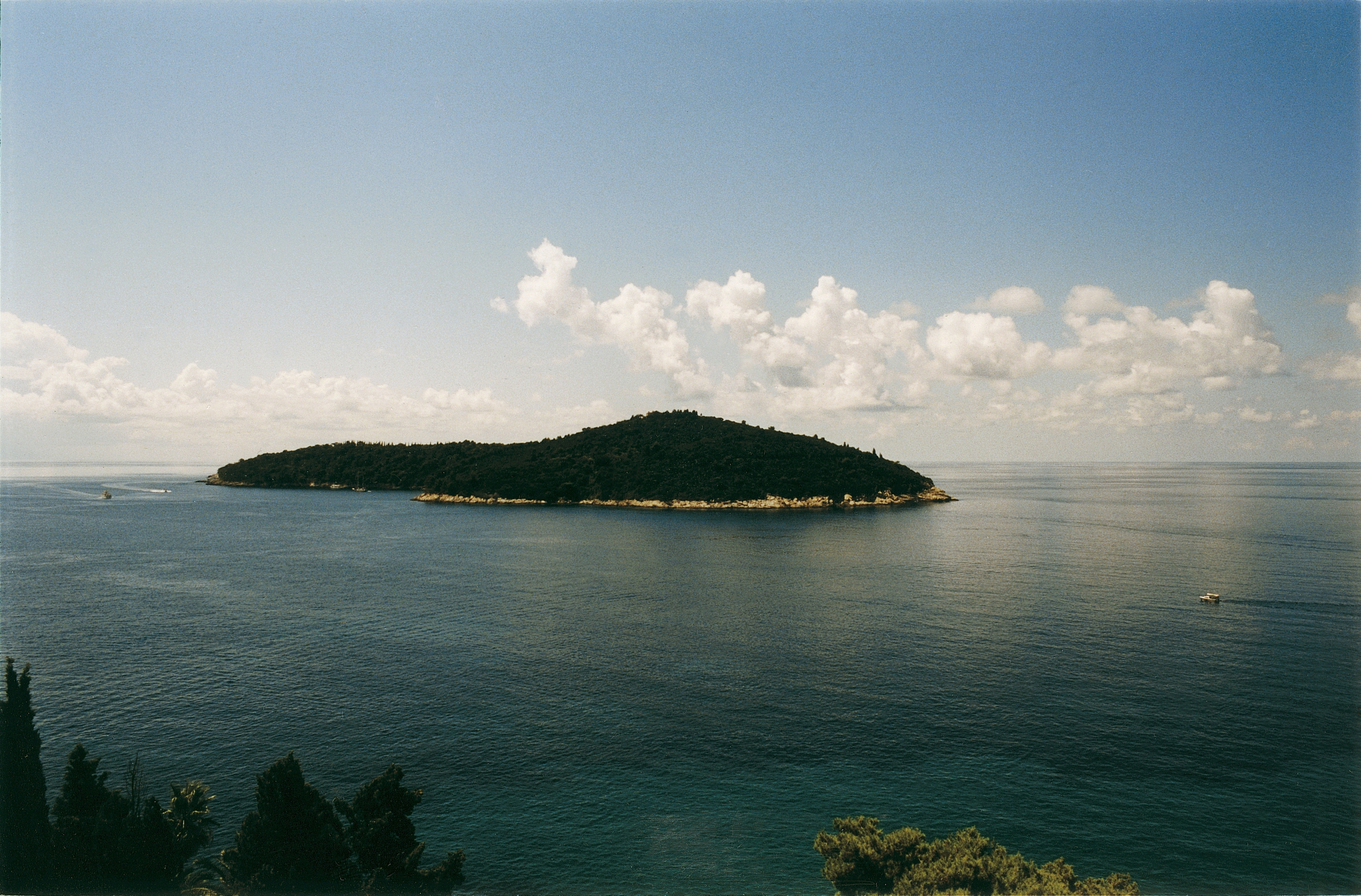
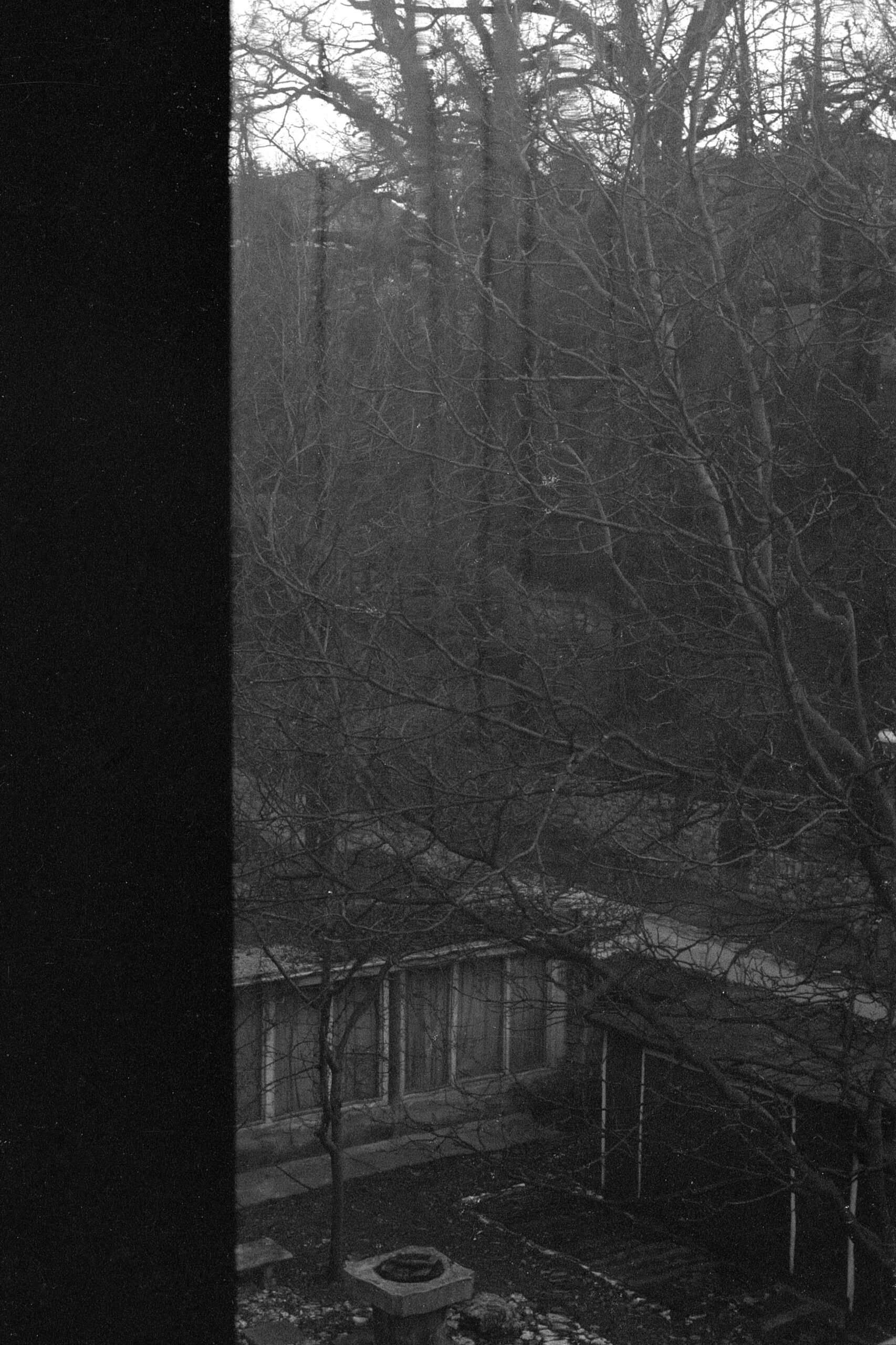
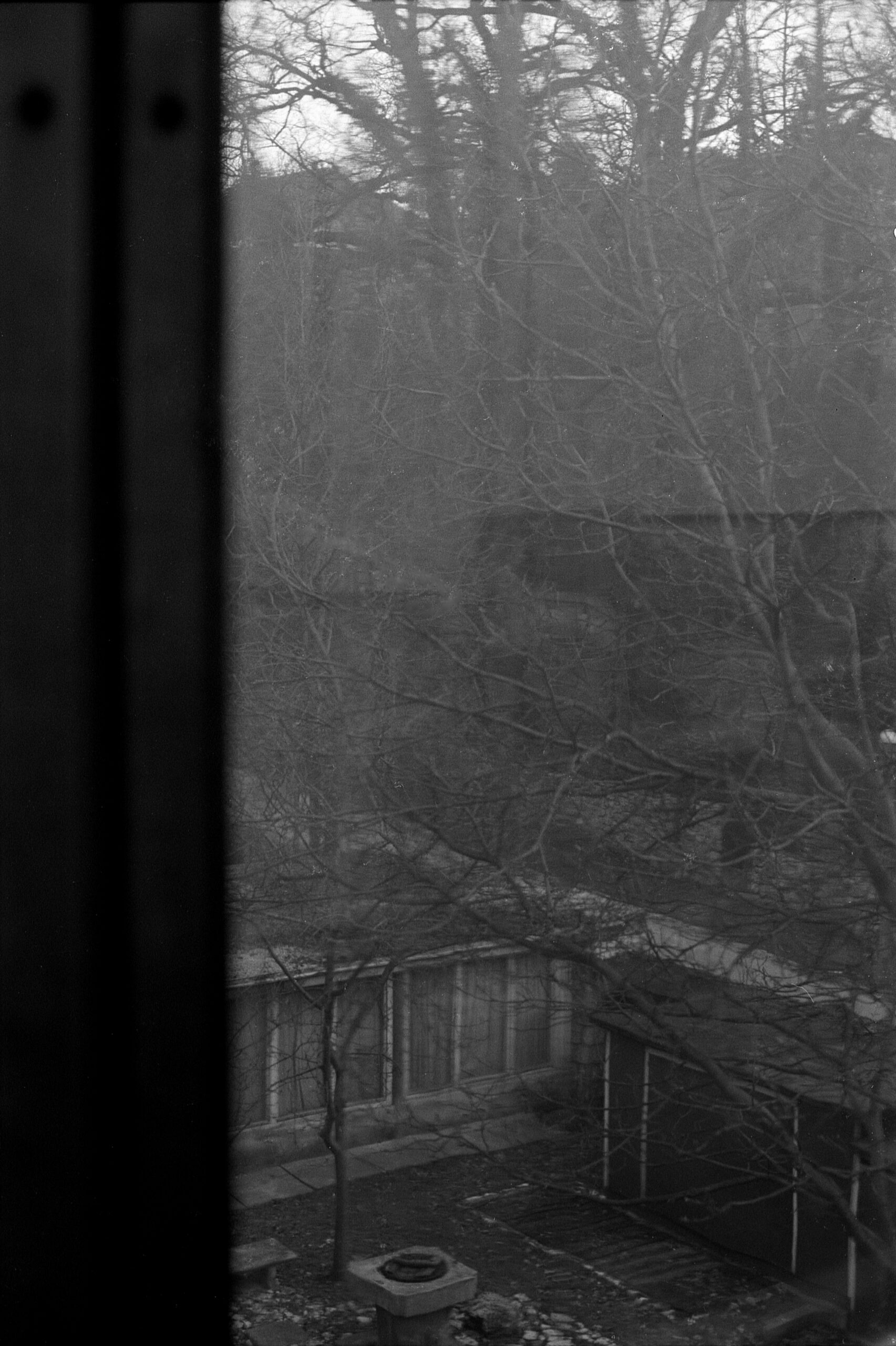
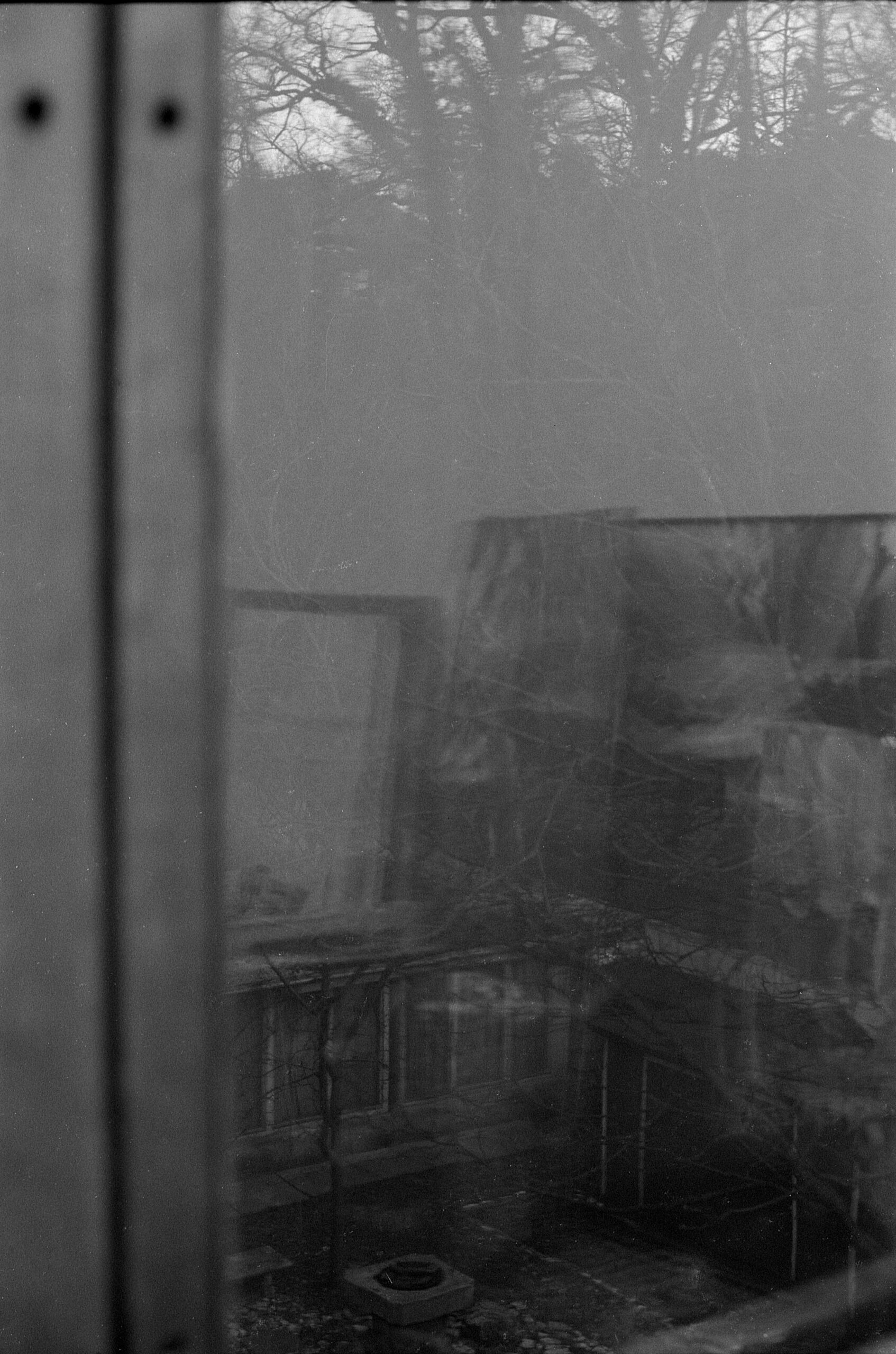
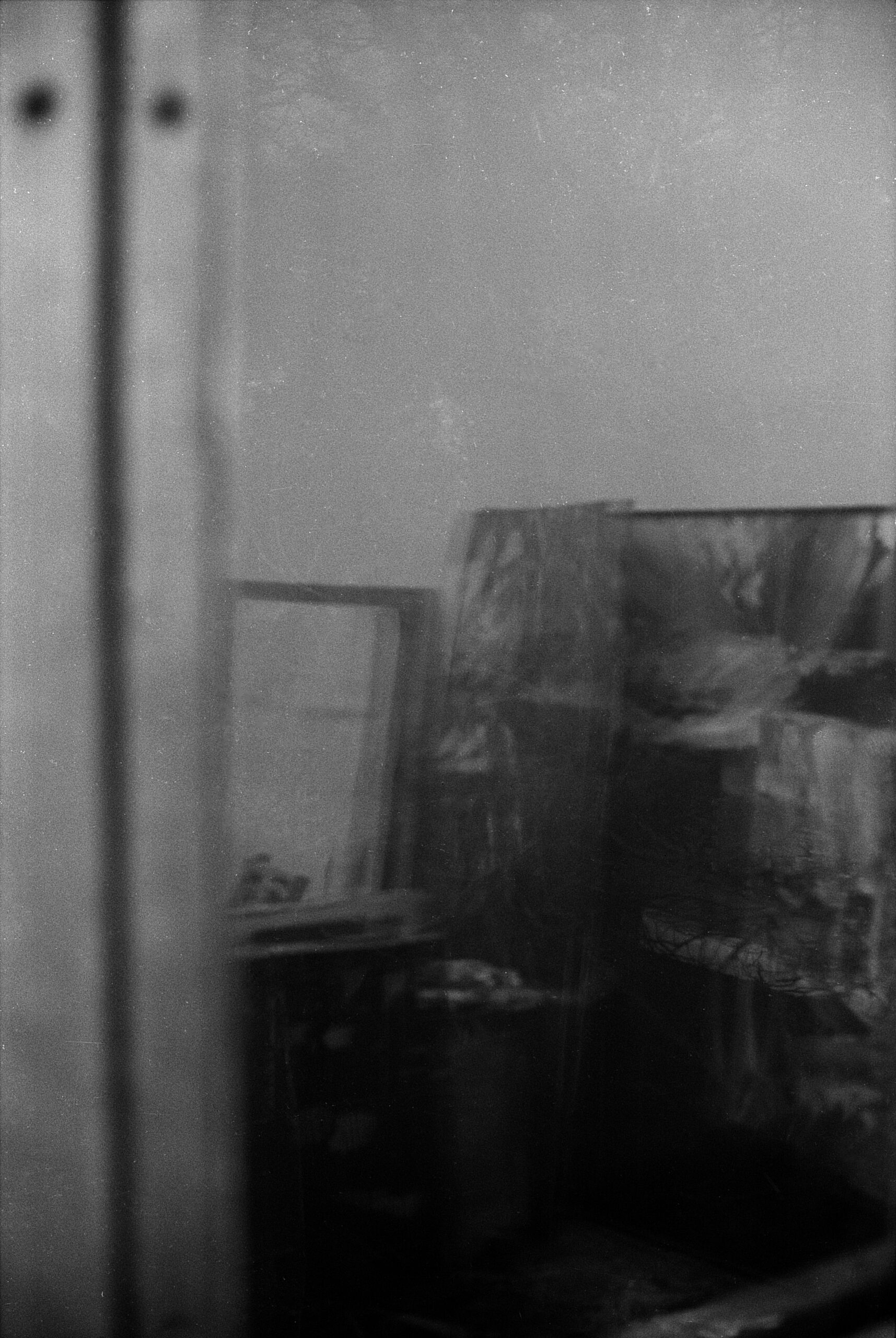
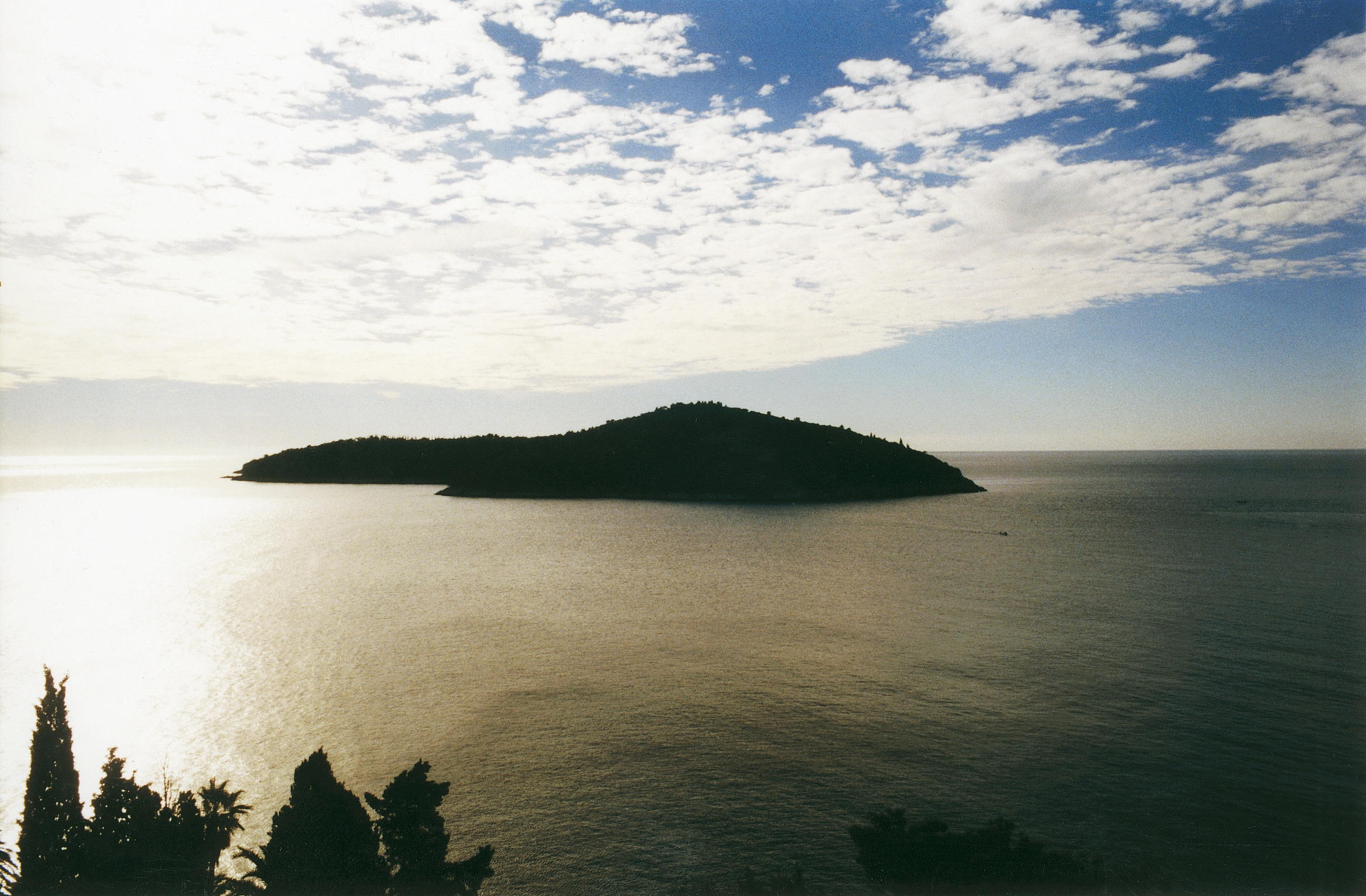
I was filming Lokrum island for twelve years, from the end of 2000, when I started using the office on the third floor of the Museum of Modern Art Dubrovnik. The urge to film the scene that was spreading out before my eyes from the office window was irresistible, but natural at the same time. It was an exceptionally clear view that encompassed the entire island, with a large portion of the sky and the sea around it. Actually, the island was only the central spot, an axis around which an endless spectacle of change occurred. The brightness was altered with the blur of jugo; the clarity of bura – when the northern wind shaves the surface of the sea, sending up foam high in the air – was altered with rain; and then waterspouts began to dominate the frame, the horizons got enshrouded in fog, or snow was falling... And all that time the island remained the same, staunch, unwavering; like a magnet that draws the eye, like a catalyst of perceptions and atmospheric opulence. Time and weather are the central themes of this work. These photographs of Lokrum island are a vivid demonstration of Heraclitus’ non-repeatability of things. In other words, we can immerse ourselves into the same scene (of Lokrum) twice.
Antun Maračić, excerpt from the exhibition catalogue In the Long Run, May 15 – June 4, 2017, Rijeka: Museum of Modern and Contemporary Art
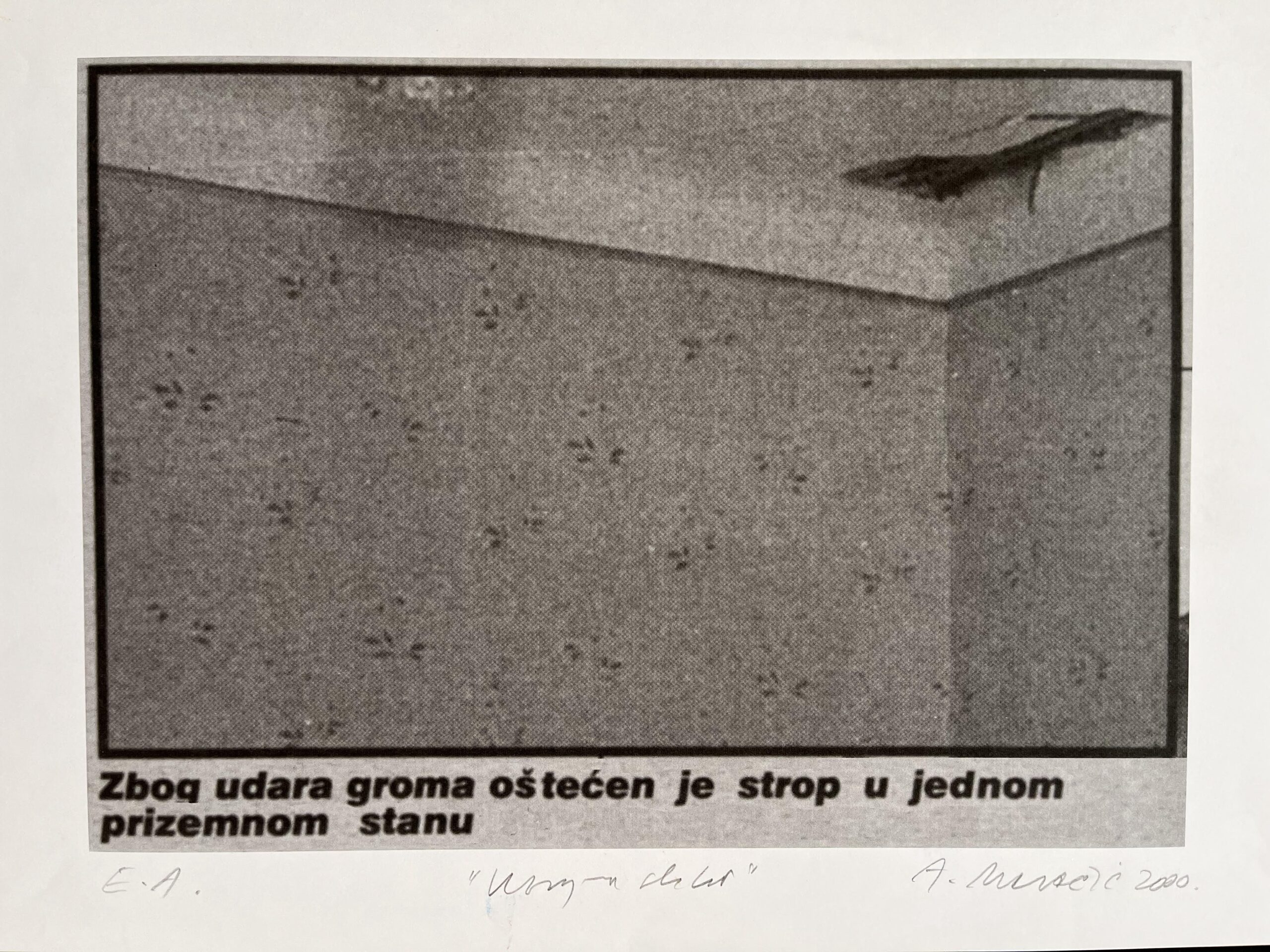
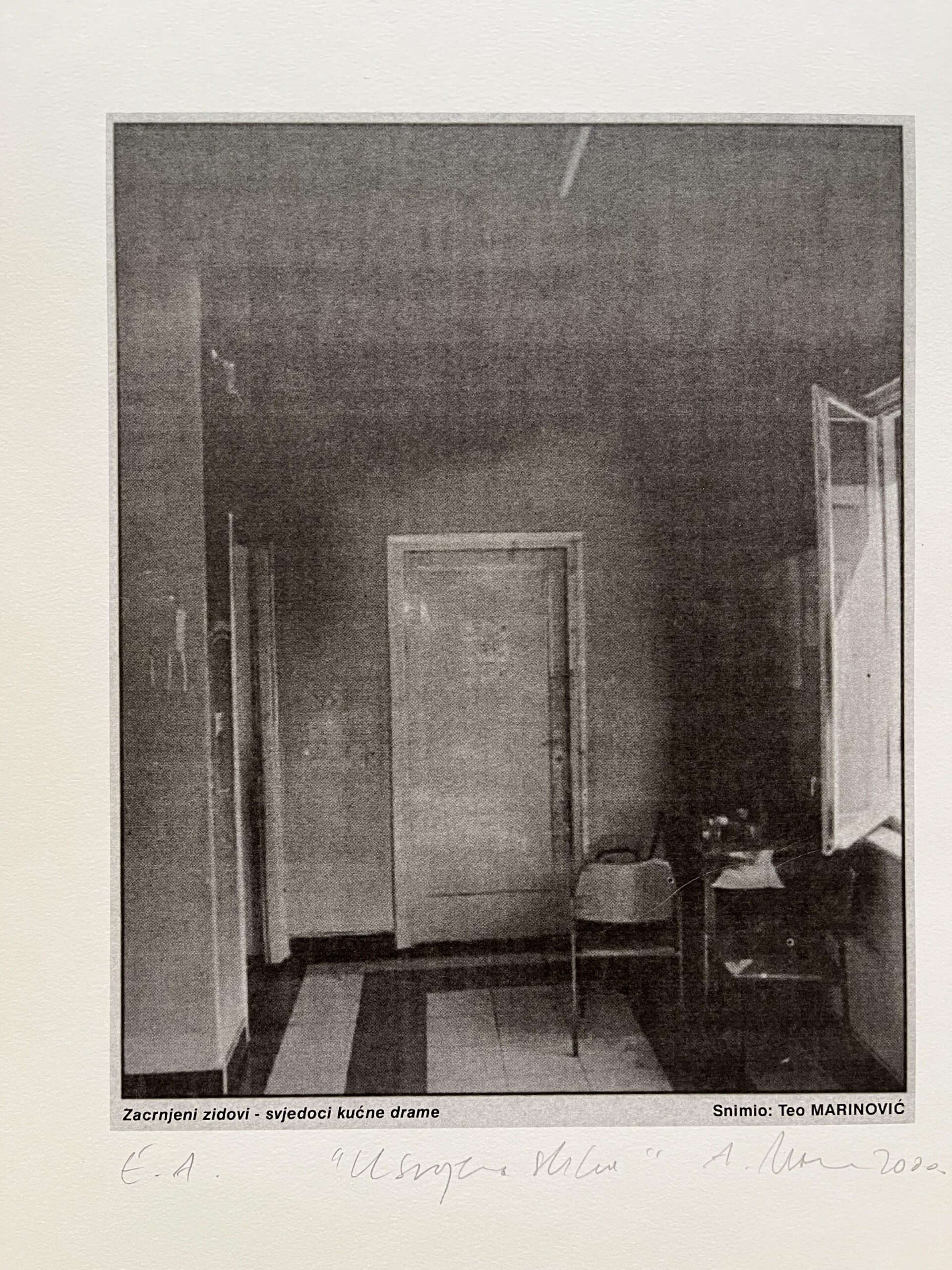
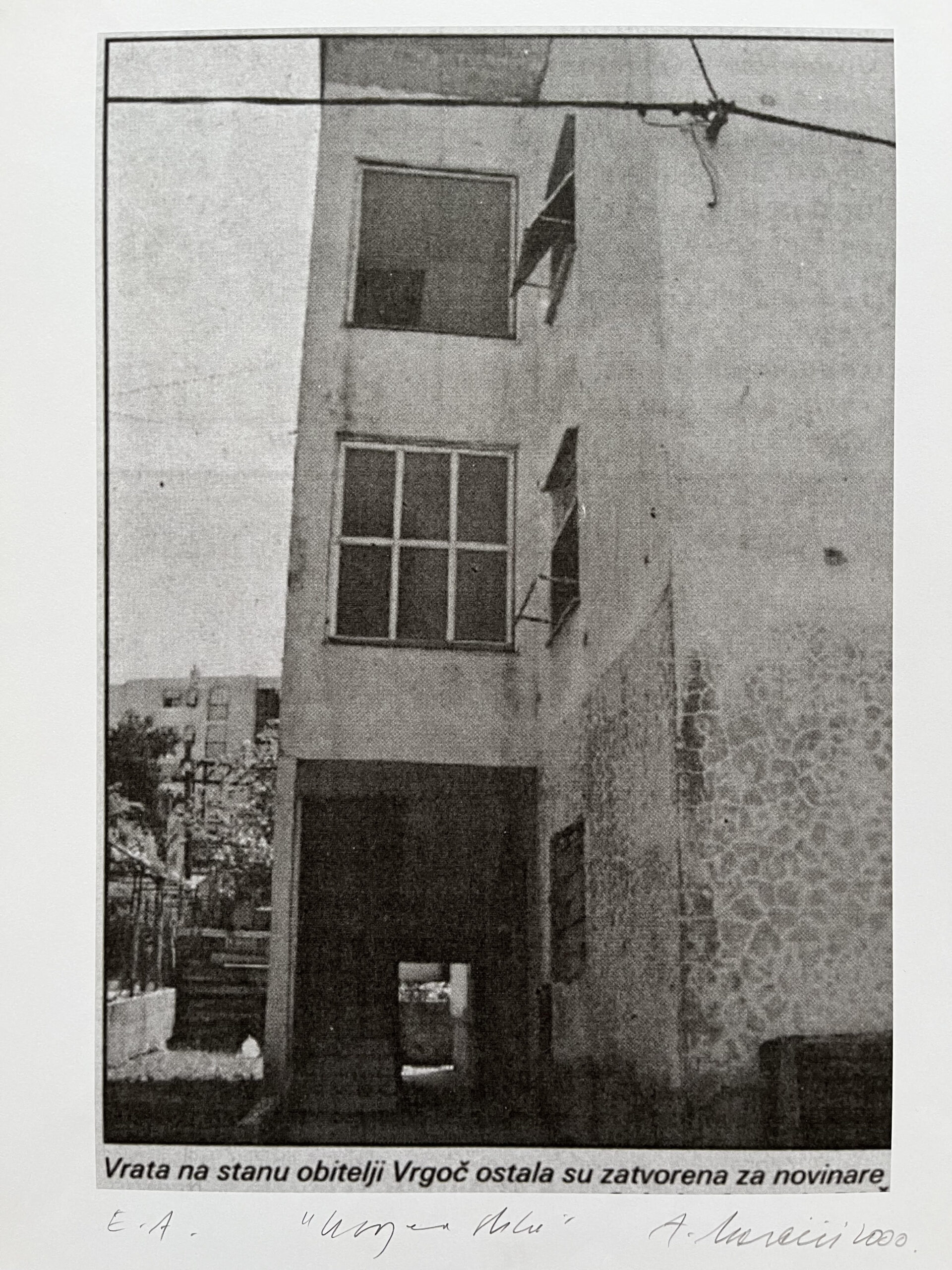
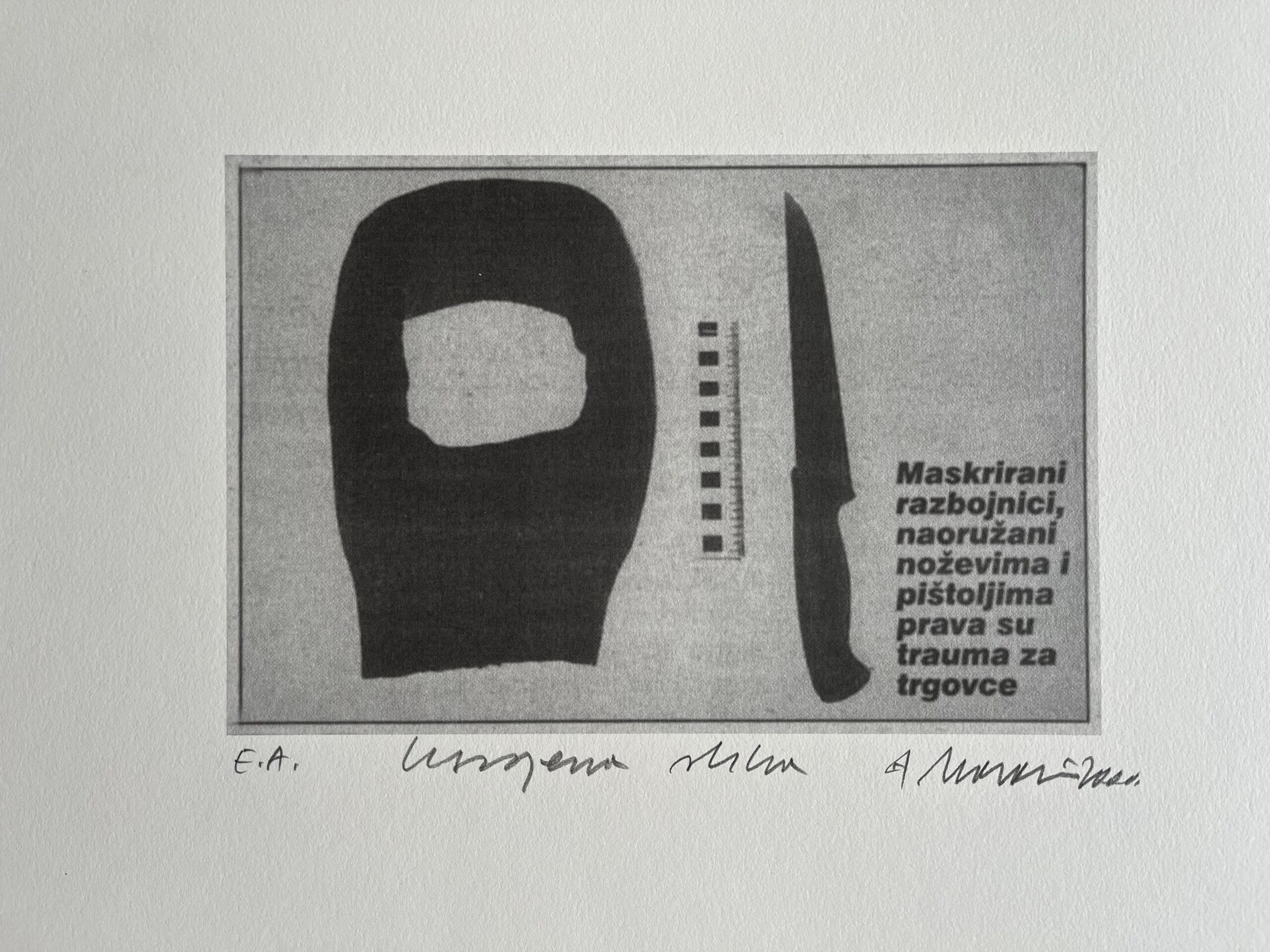
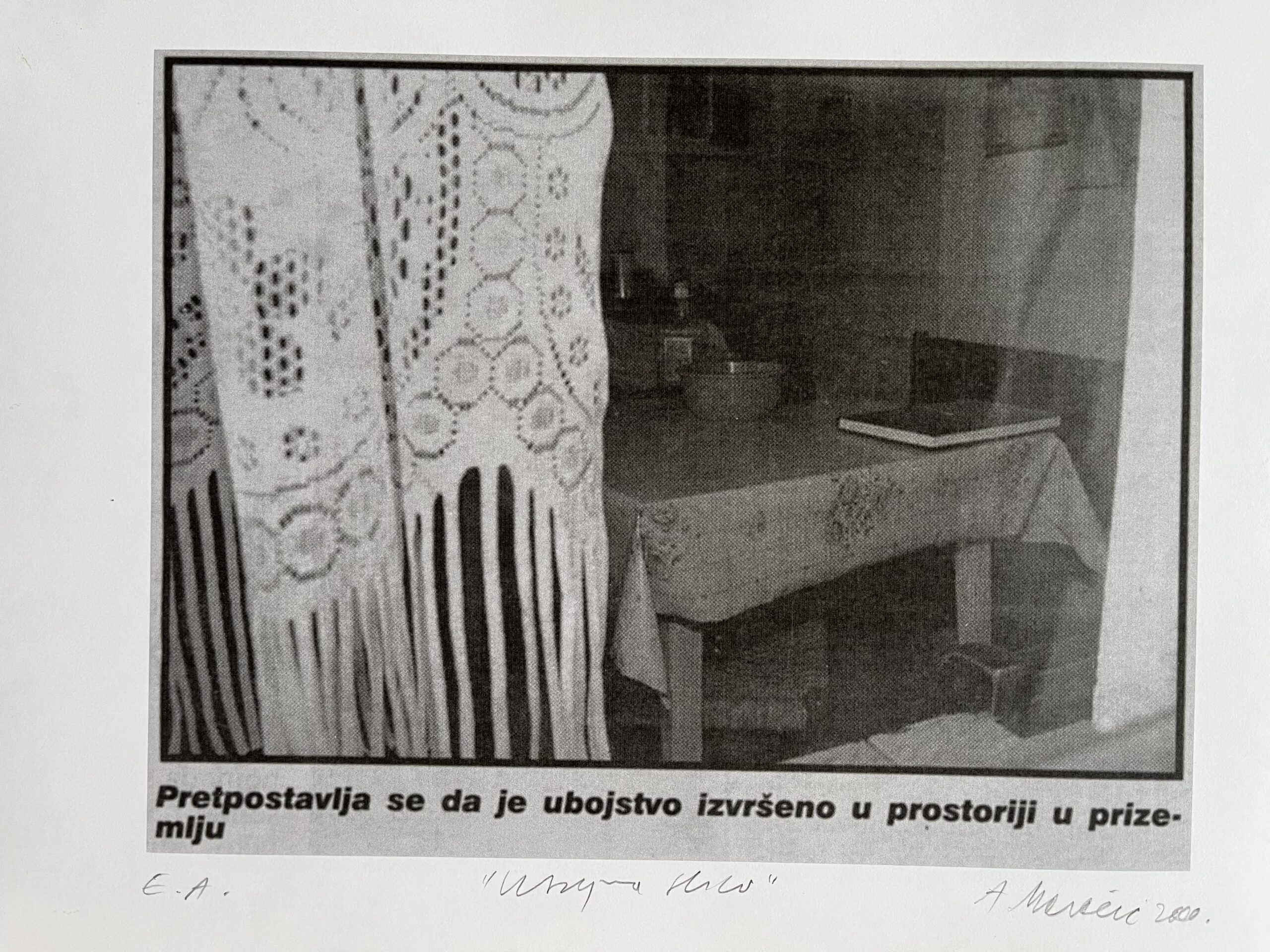
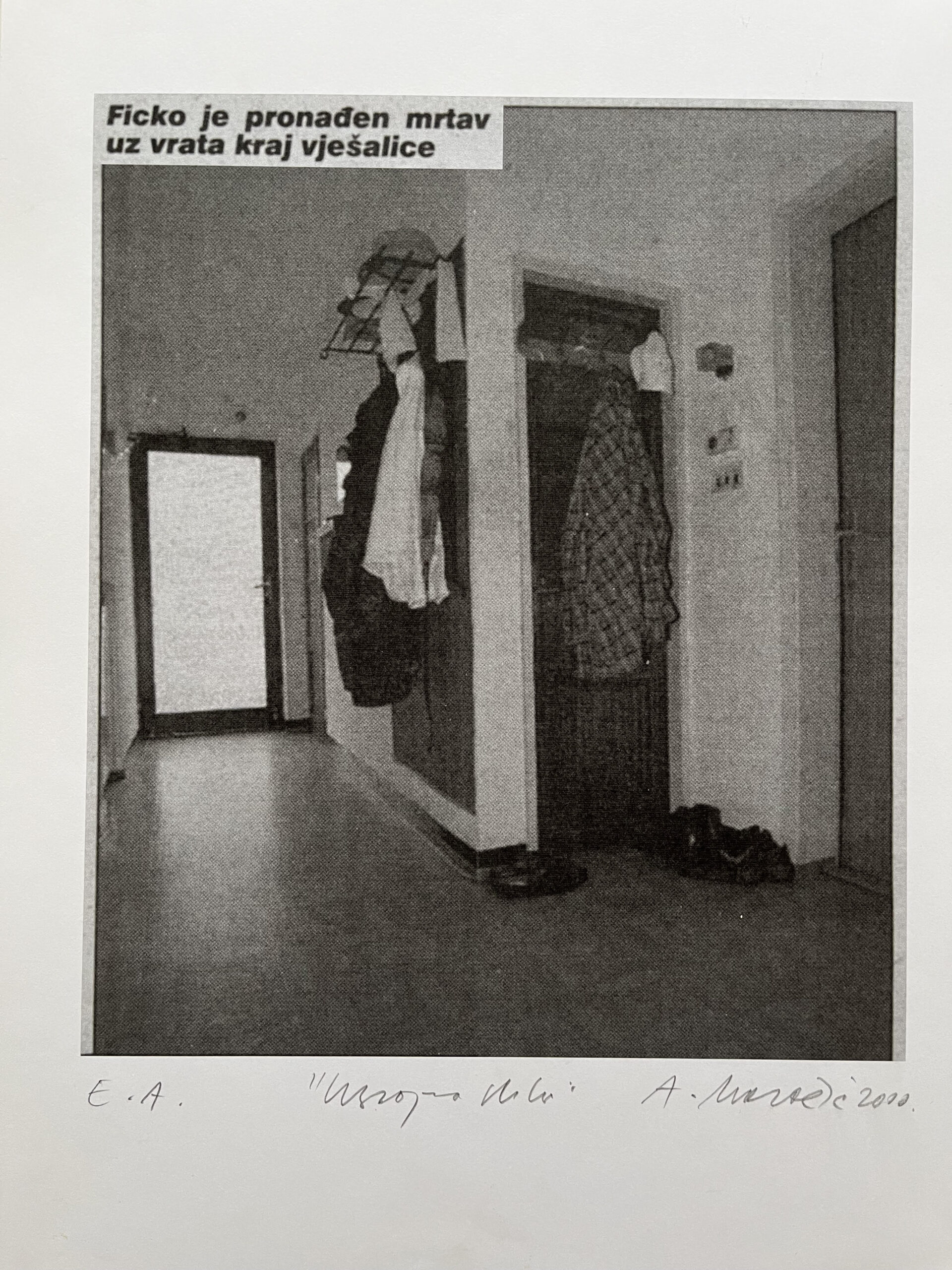
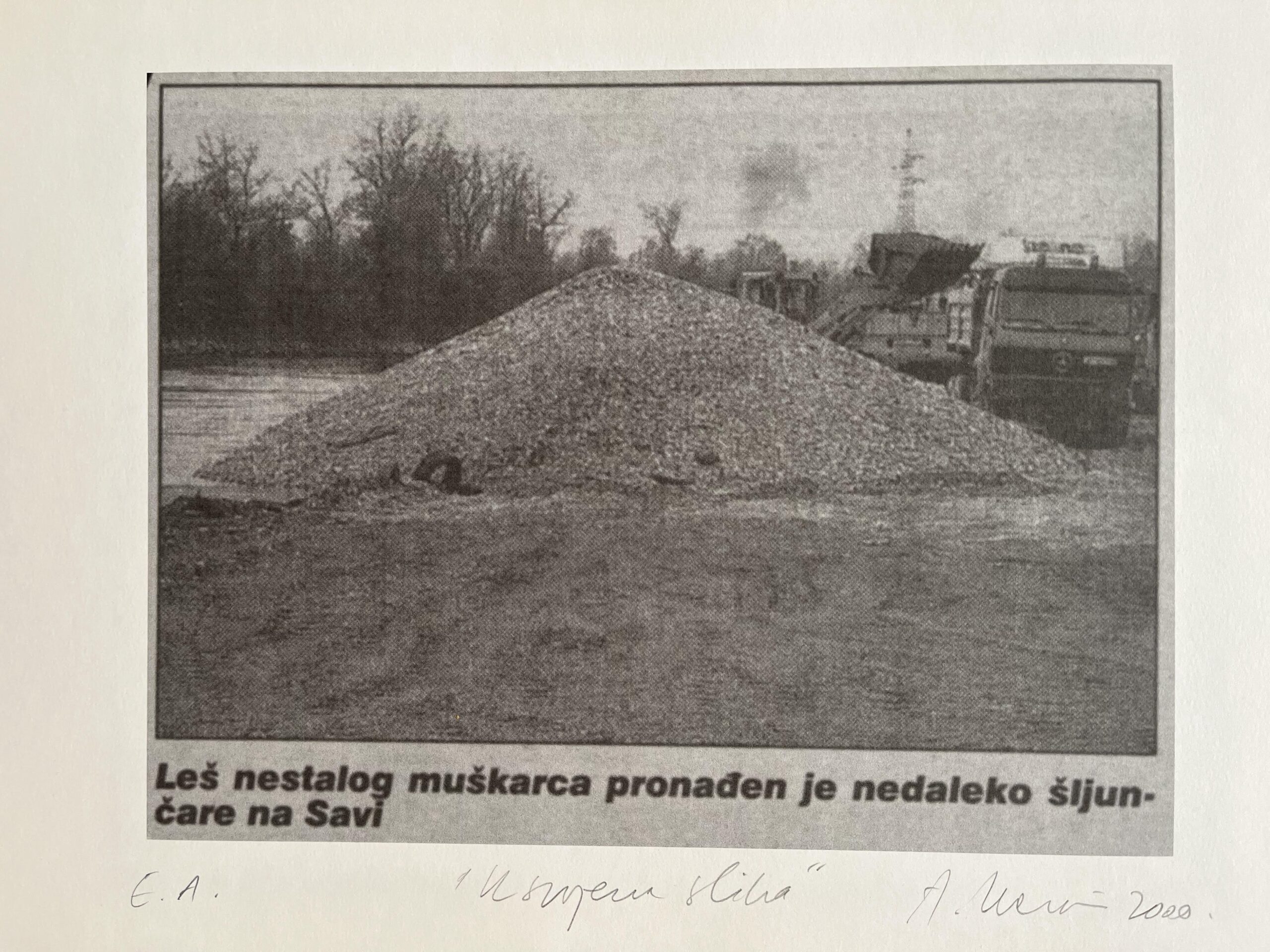
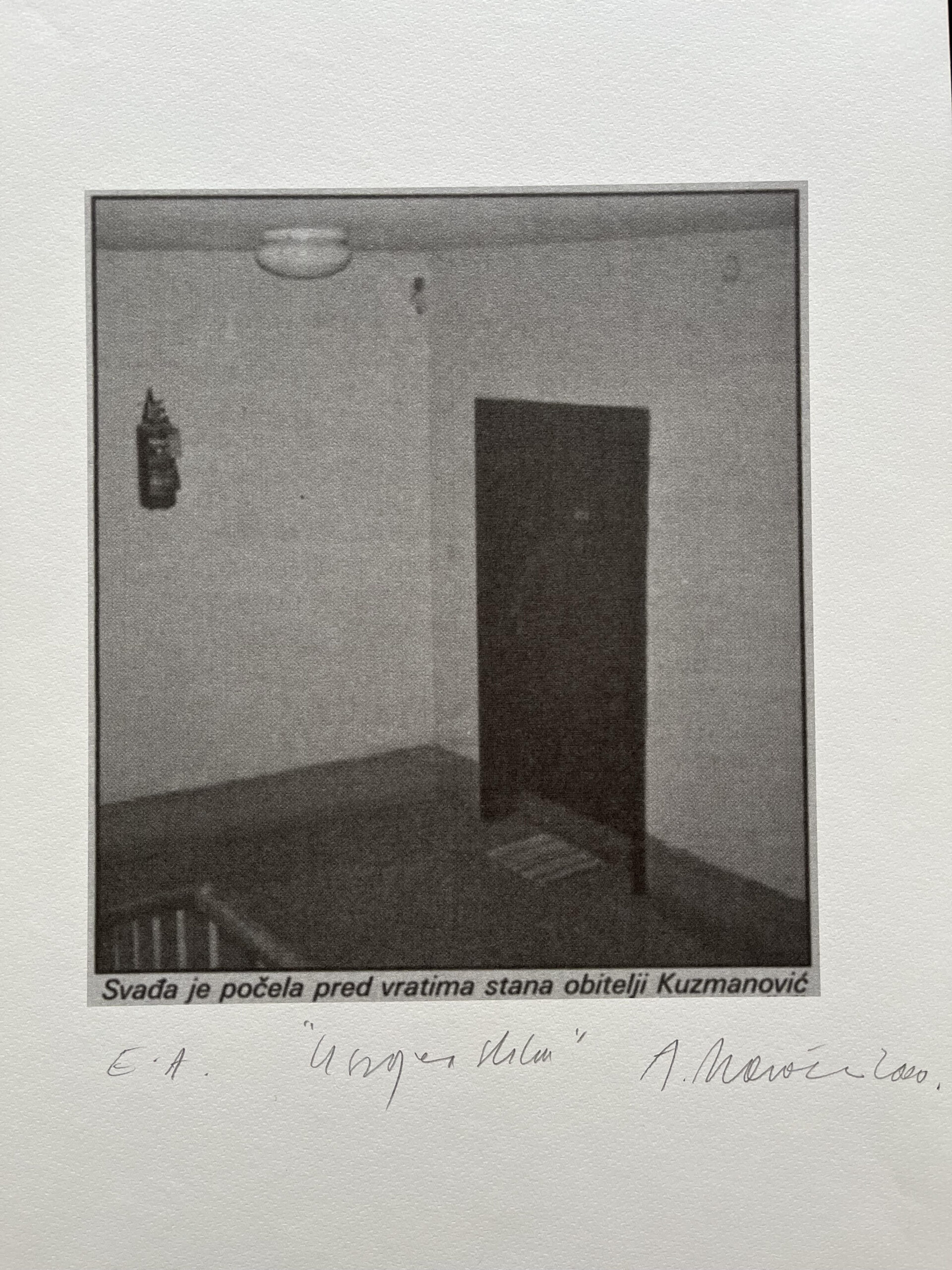
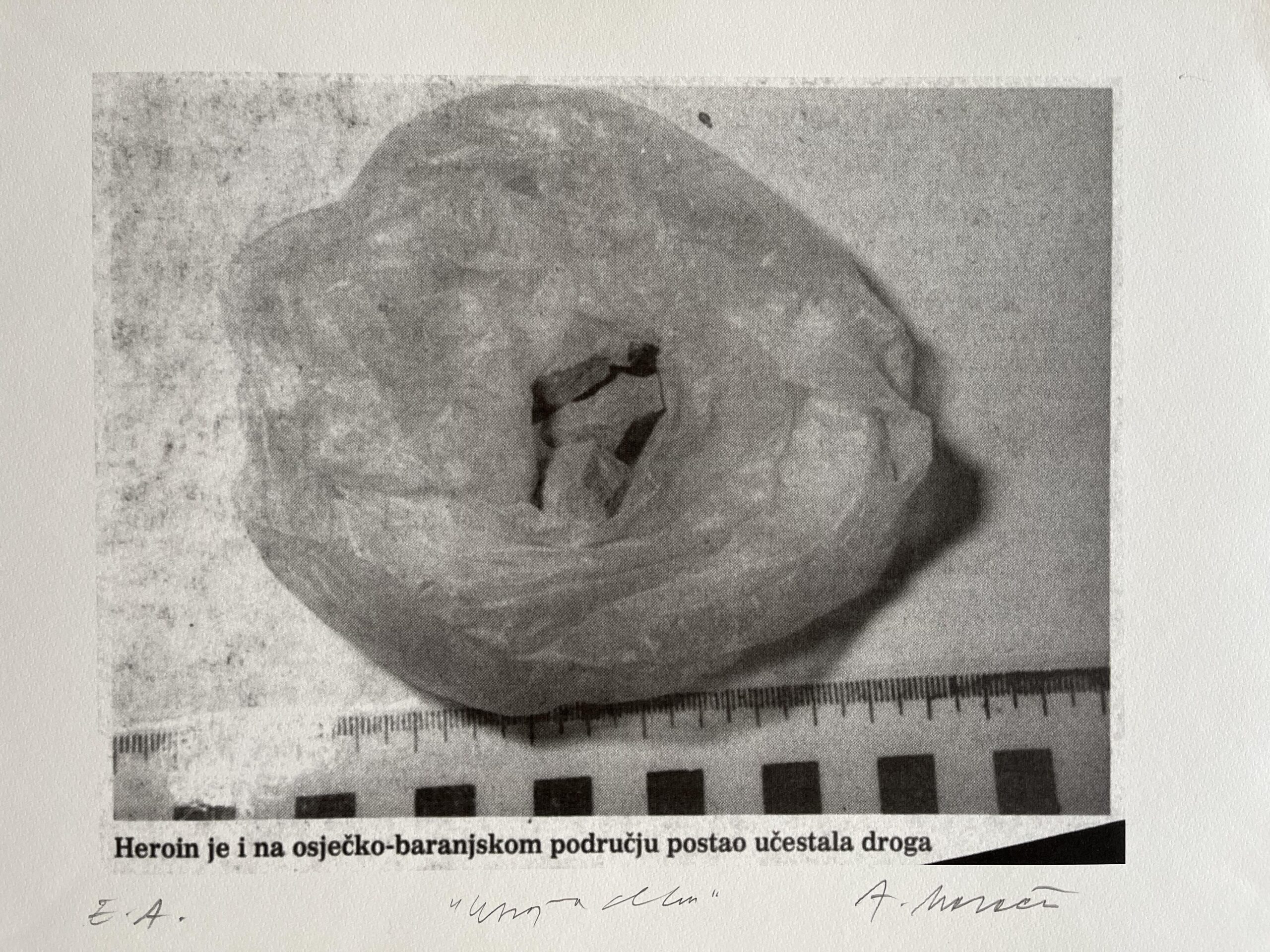
Appropriated Pictures, 2000
(…) this bearing witness to the banality of the existing has perhaps most come out in the cycles of Appropriated Pictures, also one of the lasting preoccupations of Maračić, in which he appropriates news photos from the crime and disaster pages and prints them together with an accompanying explanation of the scene as an original print. The attractivity factor of these news photos is certainly not the obscenity of death and violence, but, once again, the very want of content. Although they refer to a certain crime or criminal action, there is a standard absence of sensations in the newspaper crime story photos; on the whole they are depictions of the scenes of the crimes without any visible dramatic traces of the crimes, which bowl us over with the very commonness and triviality, or depictions of some evidentiary material such as weapons, impounded goods and so on. In the context of the newspaper report, the function of these picture stories is not to show the crime referred to, but only to witness to it via some, whatever it may be, visible remnant; and in fact the non-existence of a necessary connection, the radical gap between the banal and the trivial survivor and the event committed or surmised, opens up an empty space for a witness. What Maračić usurps, then, is not just the picture itself, but this emptiness between possibility and credibility, between proof and what is being proved with this proof; entering into possession of this emptiness, Maračić carries off these remains of the crime, the waste packaging of everyday life dramas, and saves them as pure possibility – the possibility of meaning outside the denotation set by the accompanying text; the possibility that any kind of triviality flickers with a poetic, comic or simply artistic sense in the eye of the witness. (…) (translated by Graham McMaster)
Ivana Mance, Witness in Passing, excerpt from the exhibition catalogue Nehotični i slični radovi – fotografije i video, Zagreb: Dom hrvatskih likovnih umjetnika, 2009
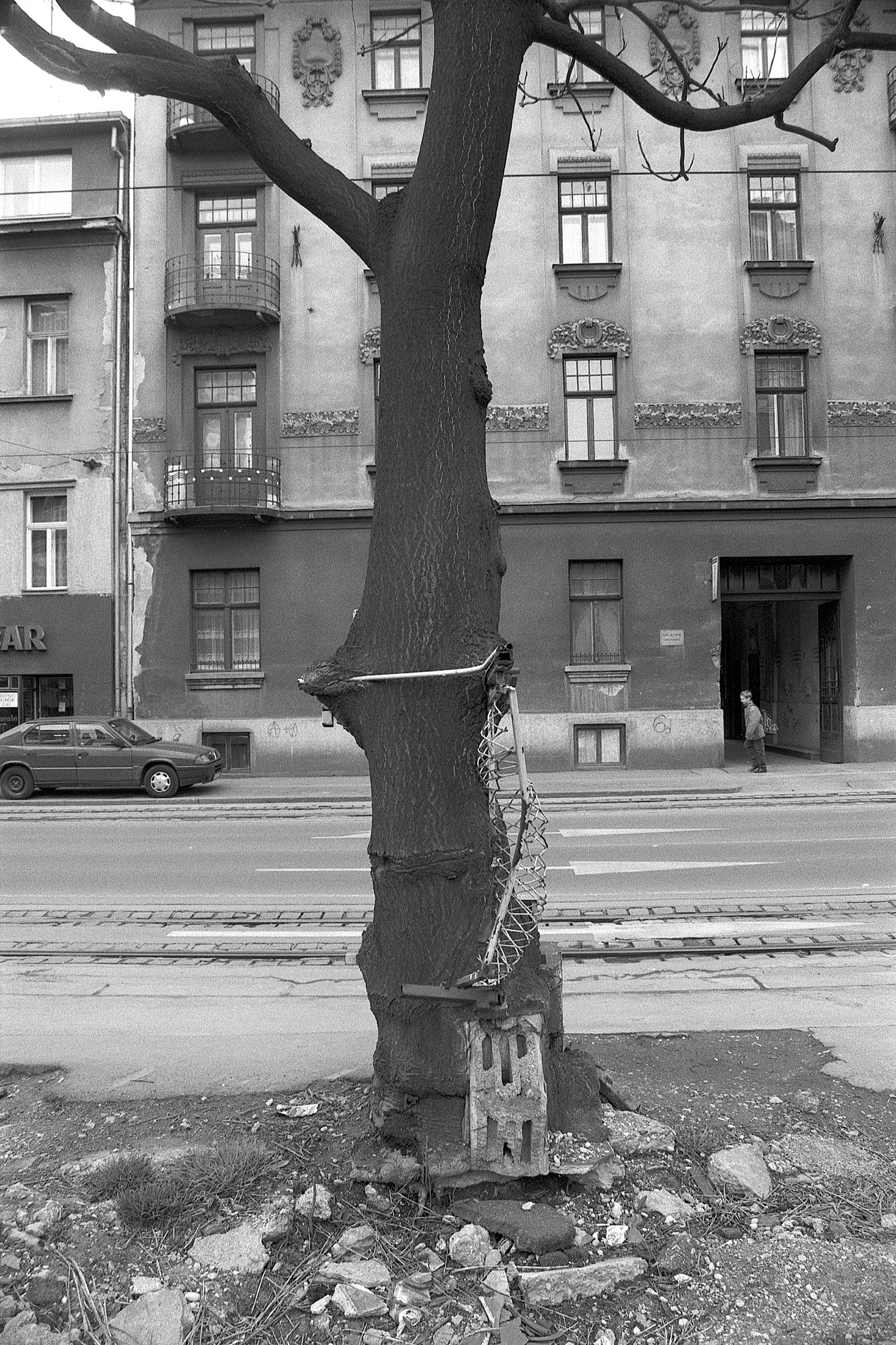
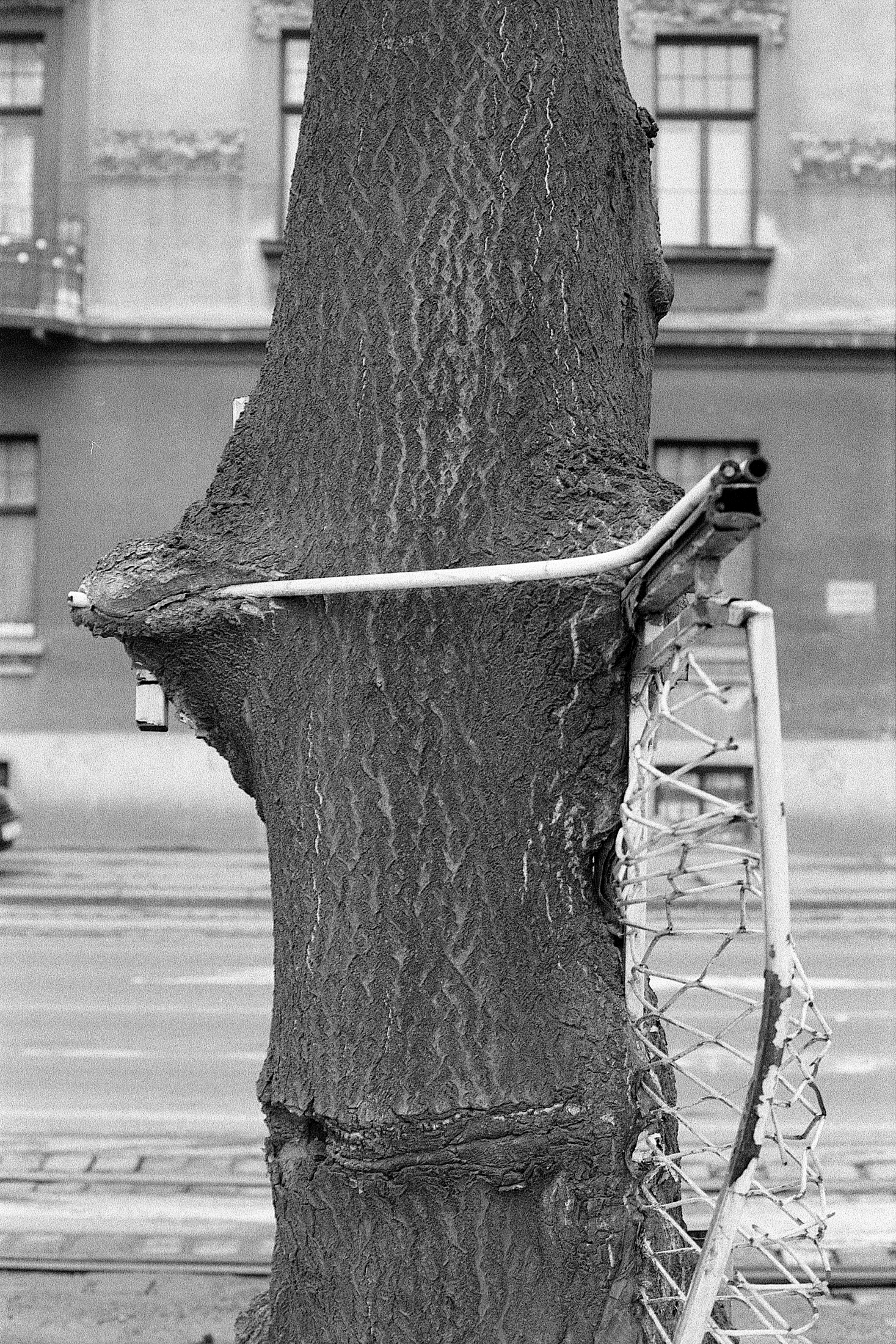
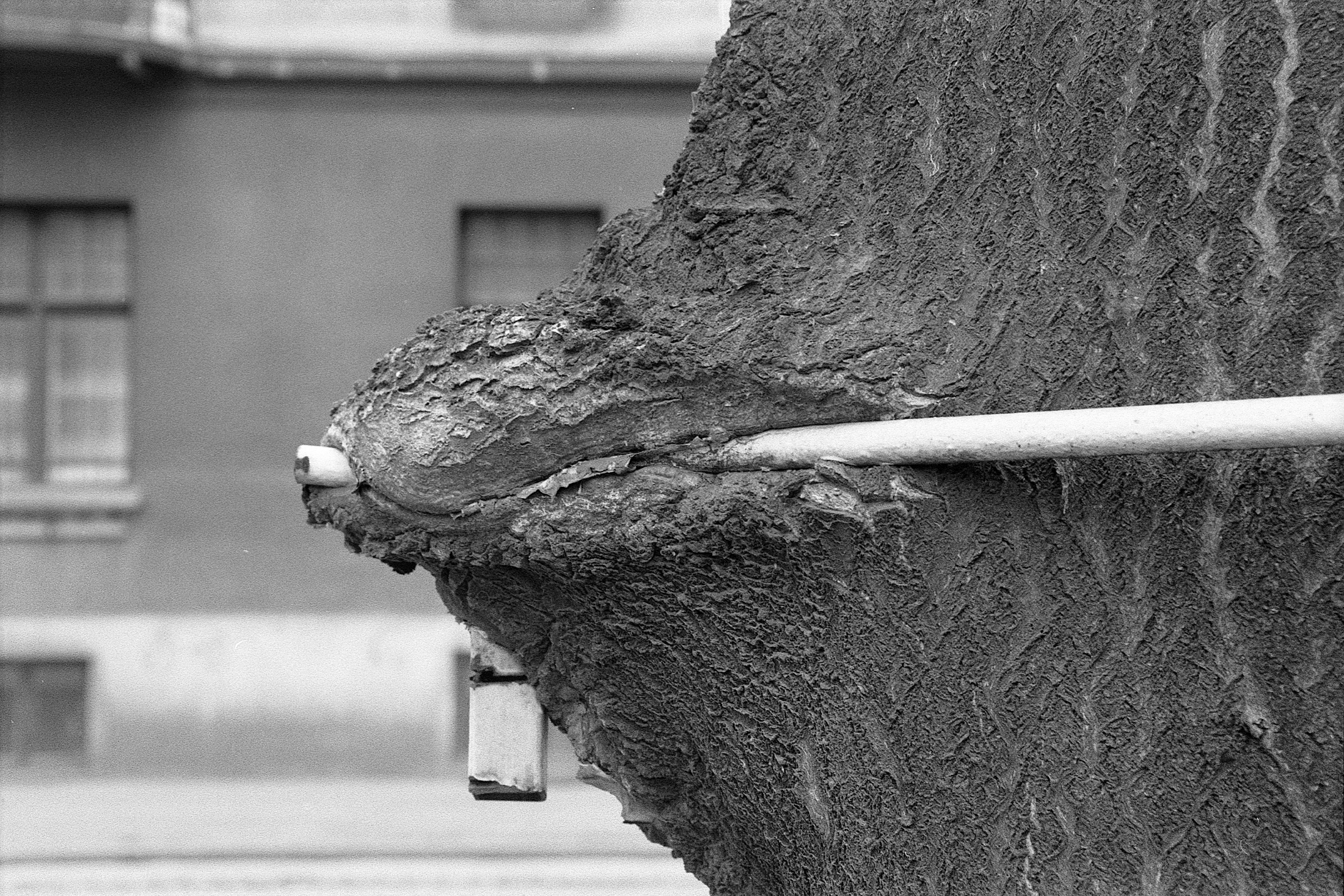
The Tree, 1997
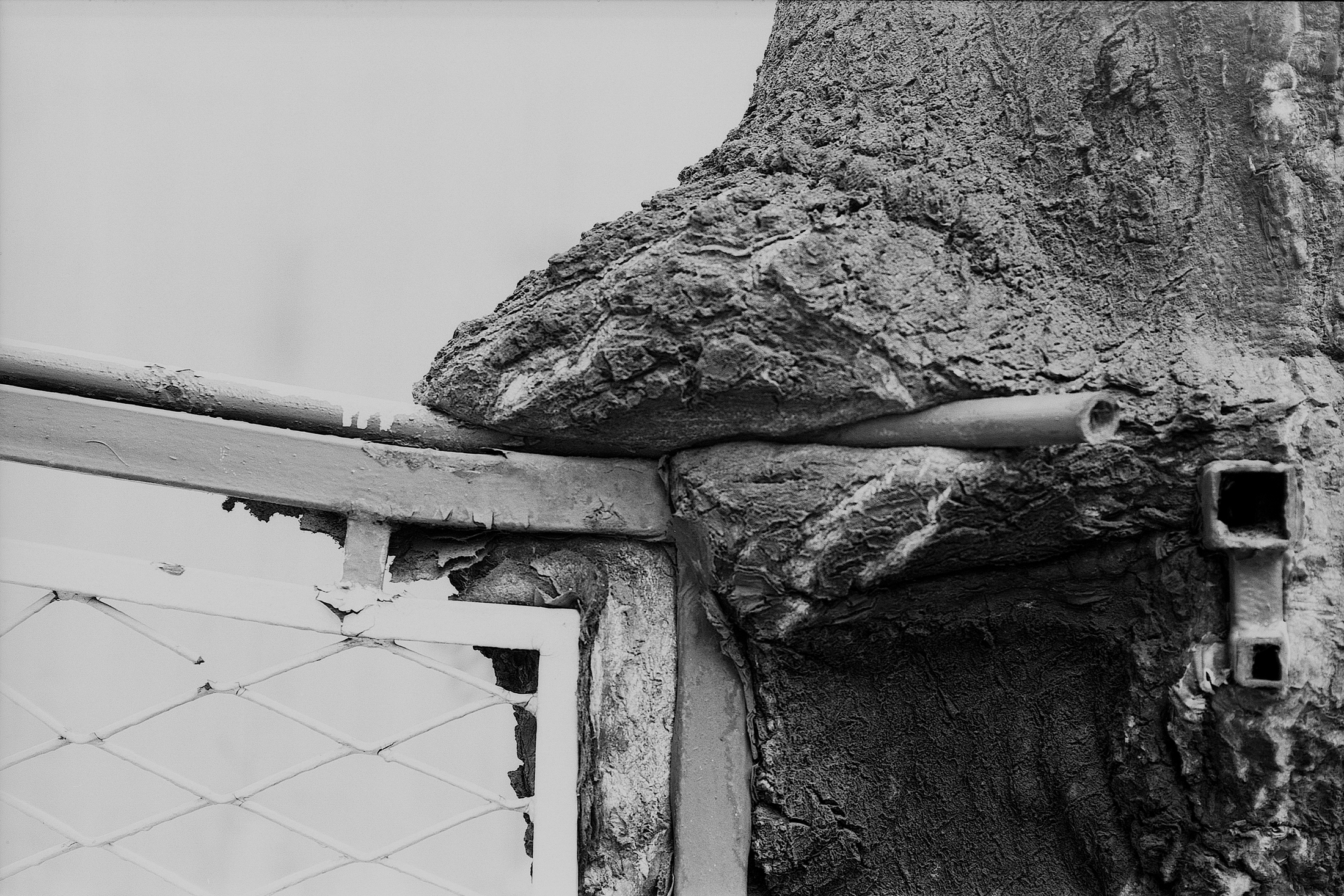
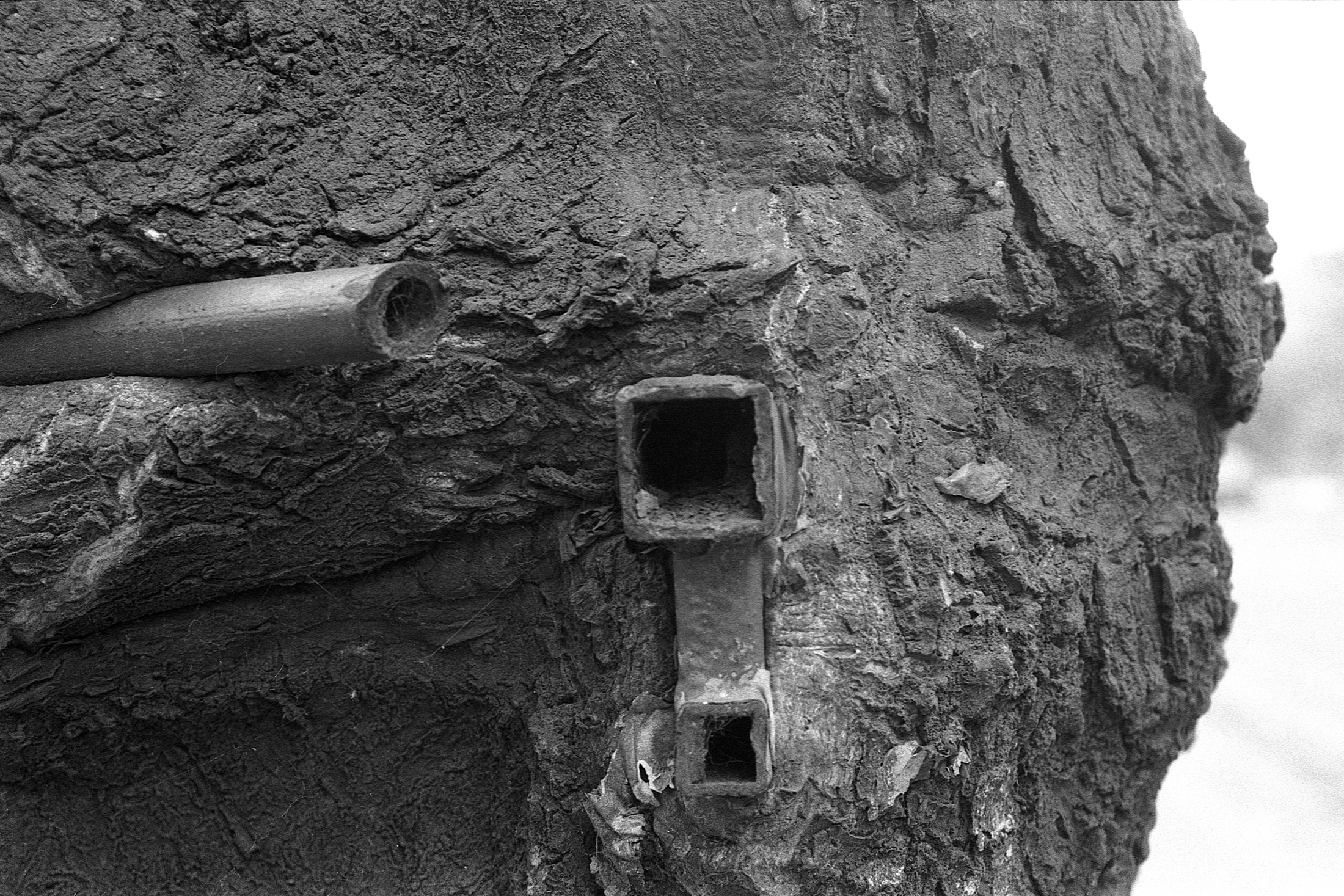
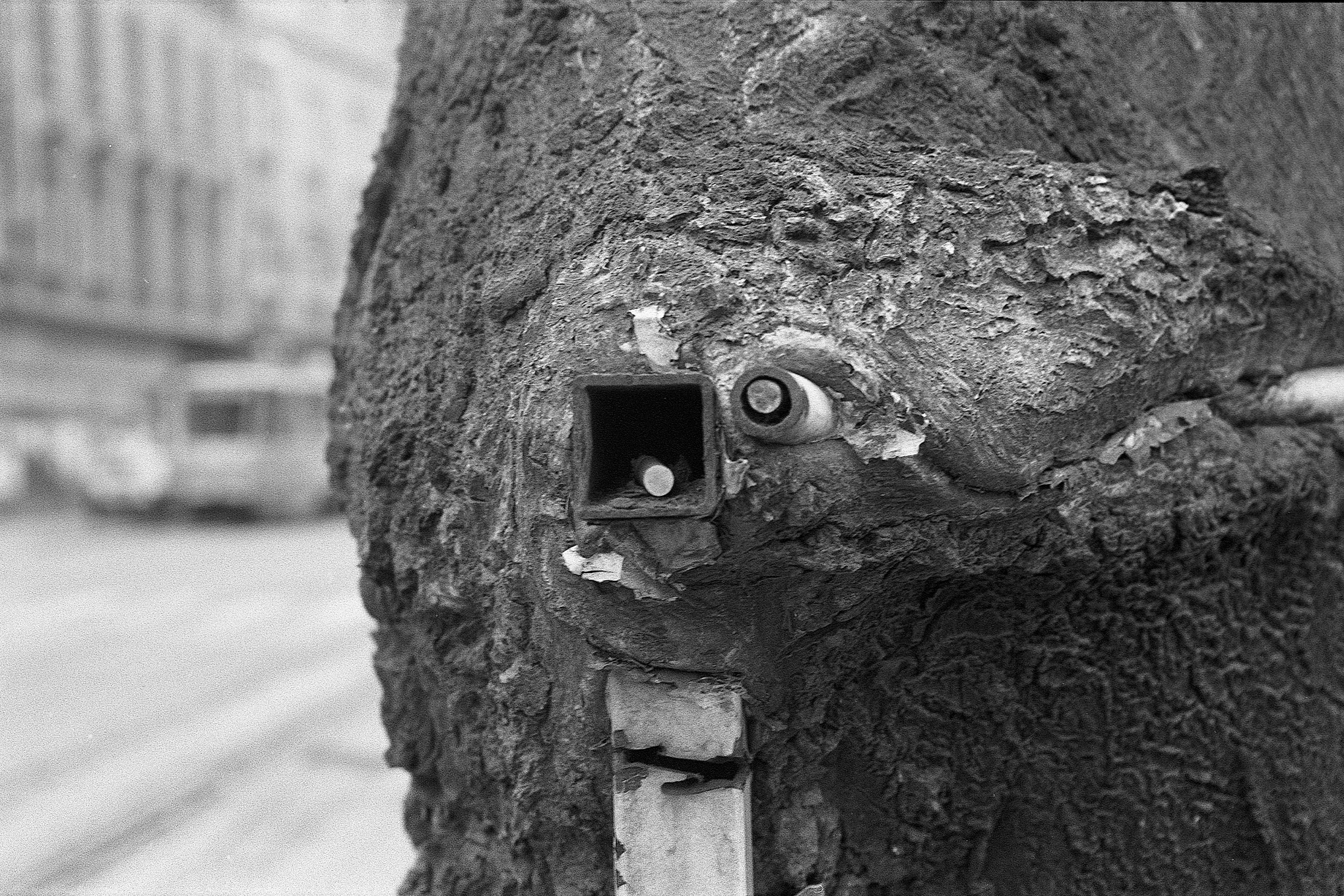
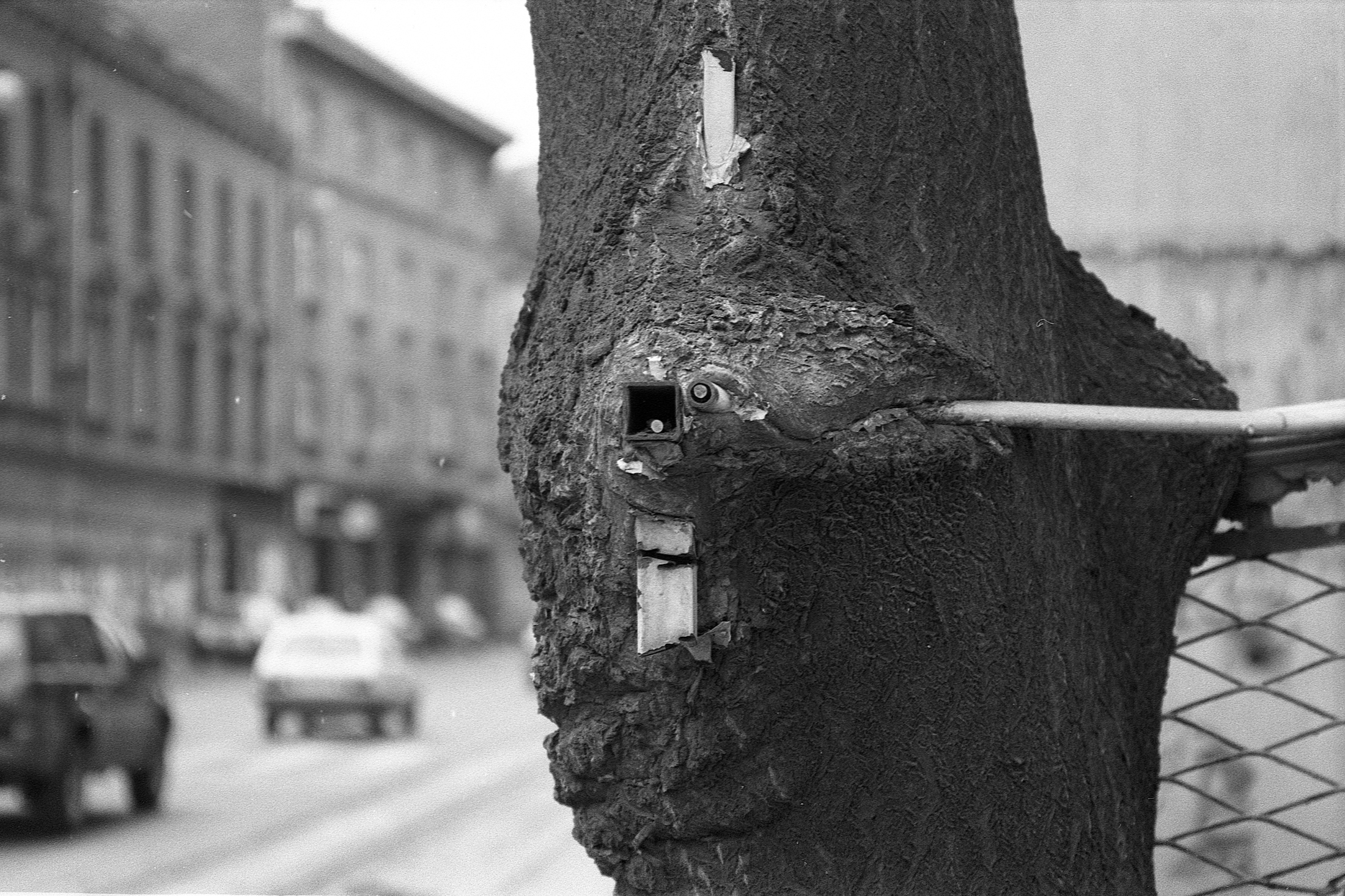
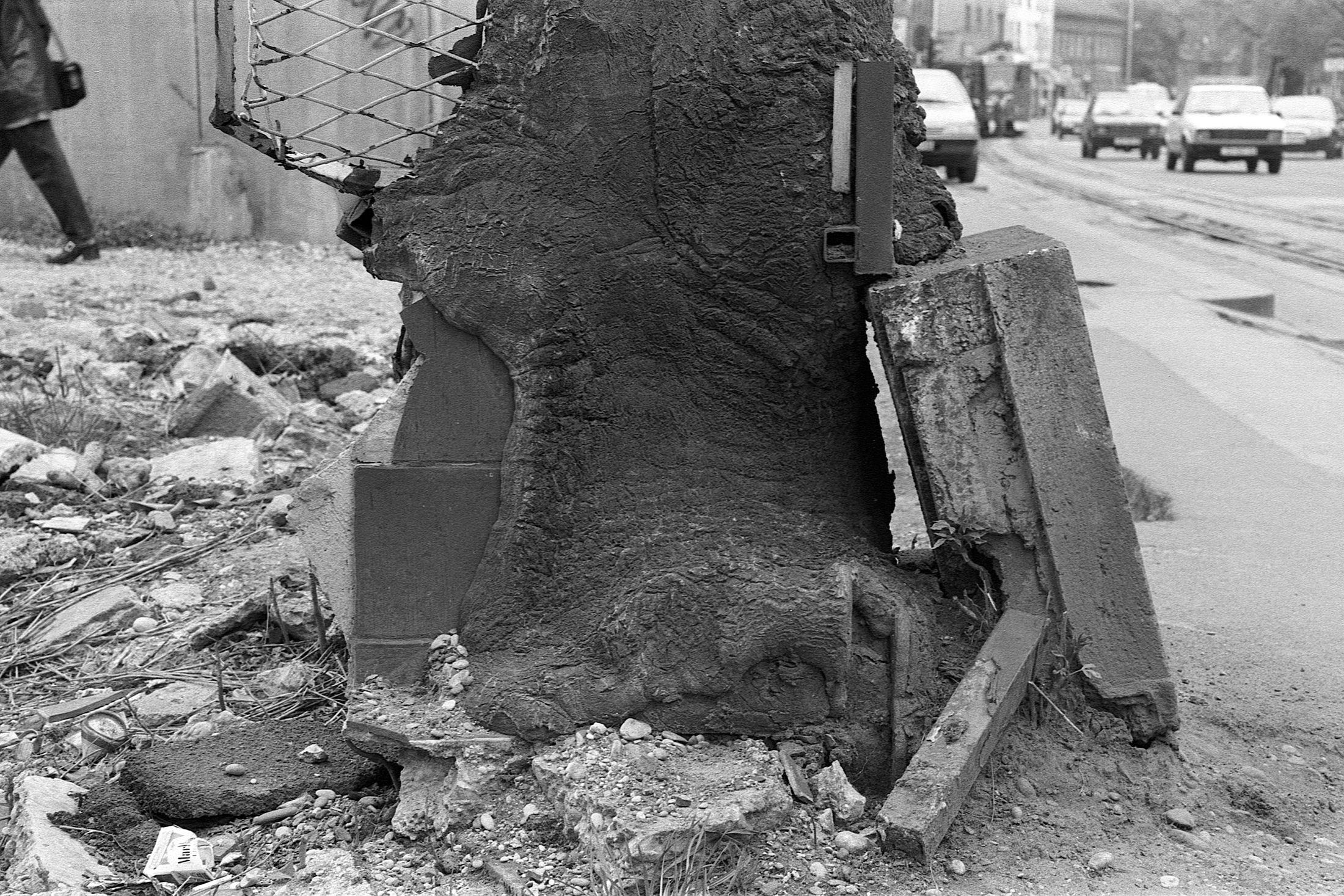
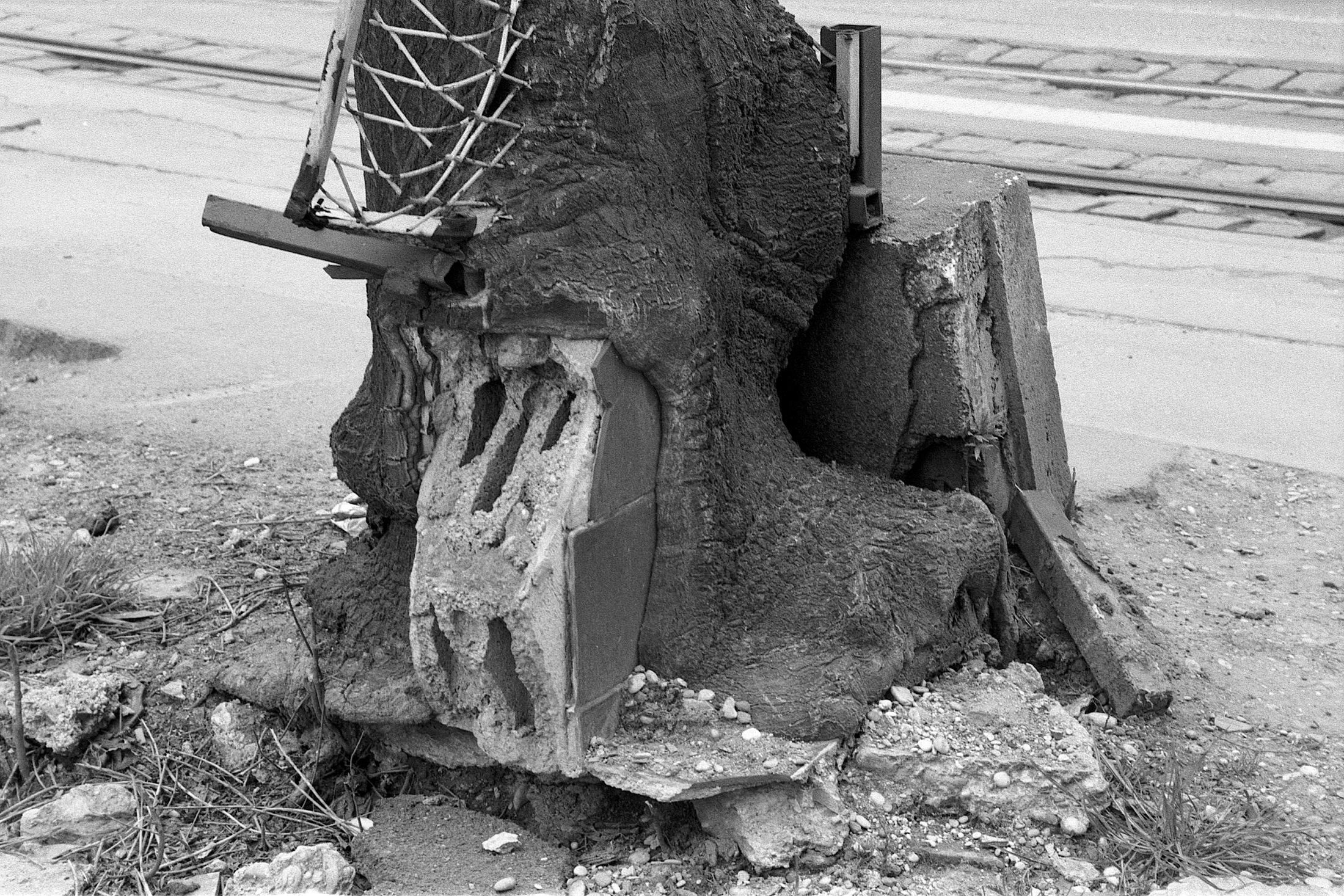
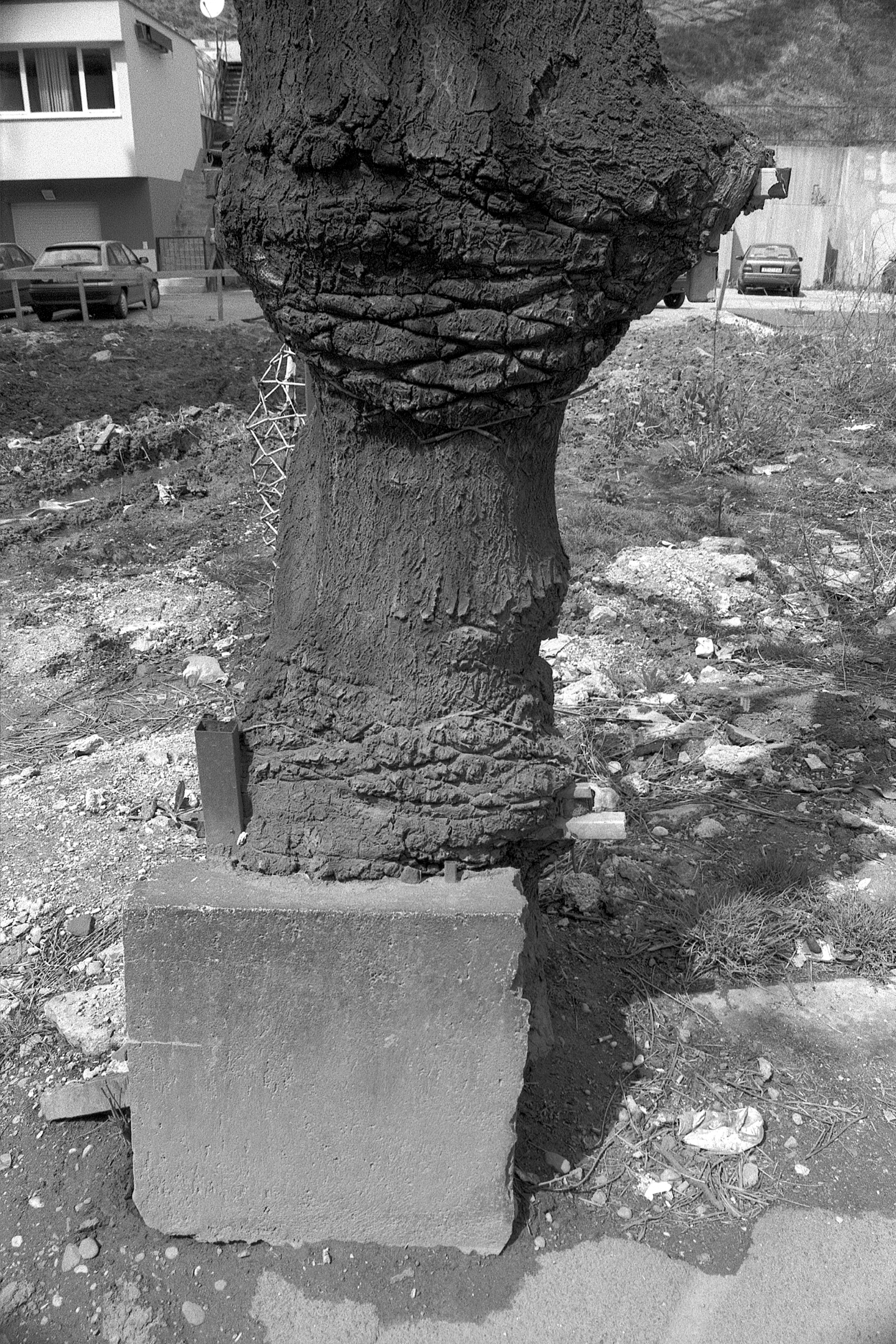
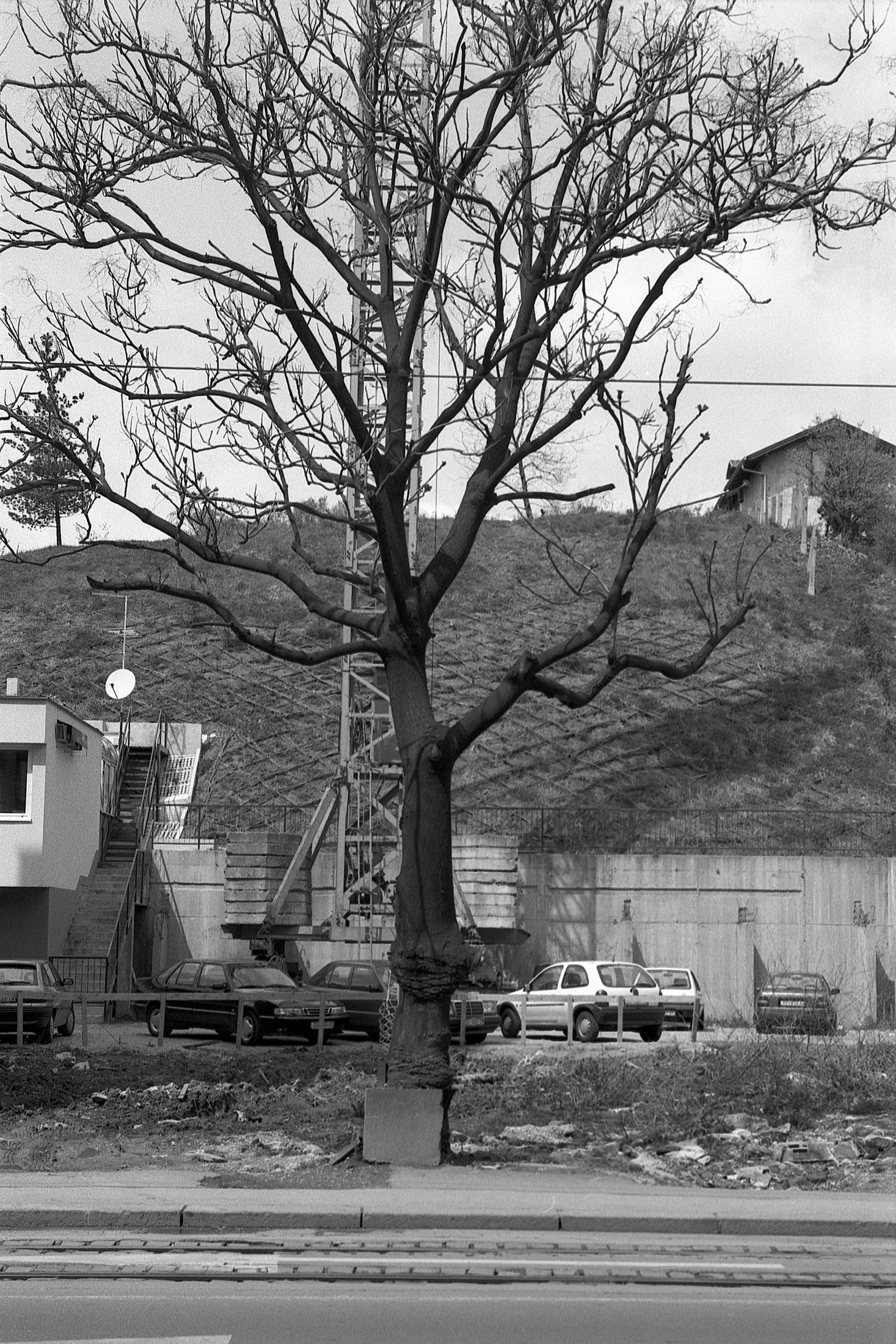
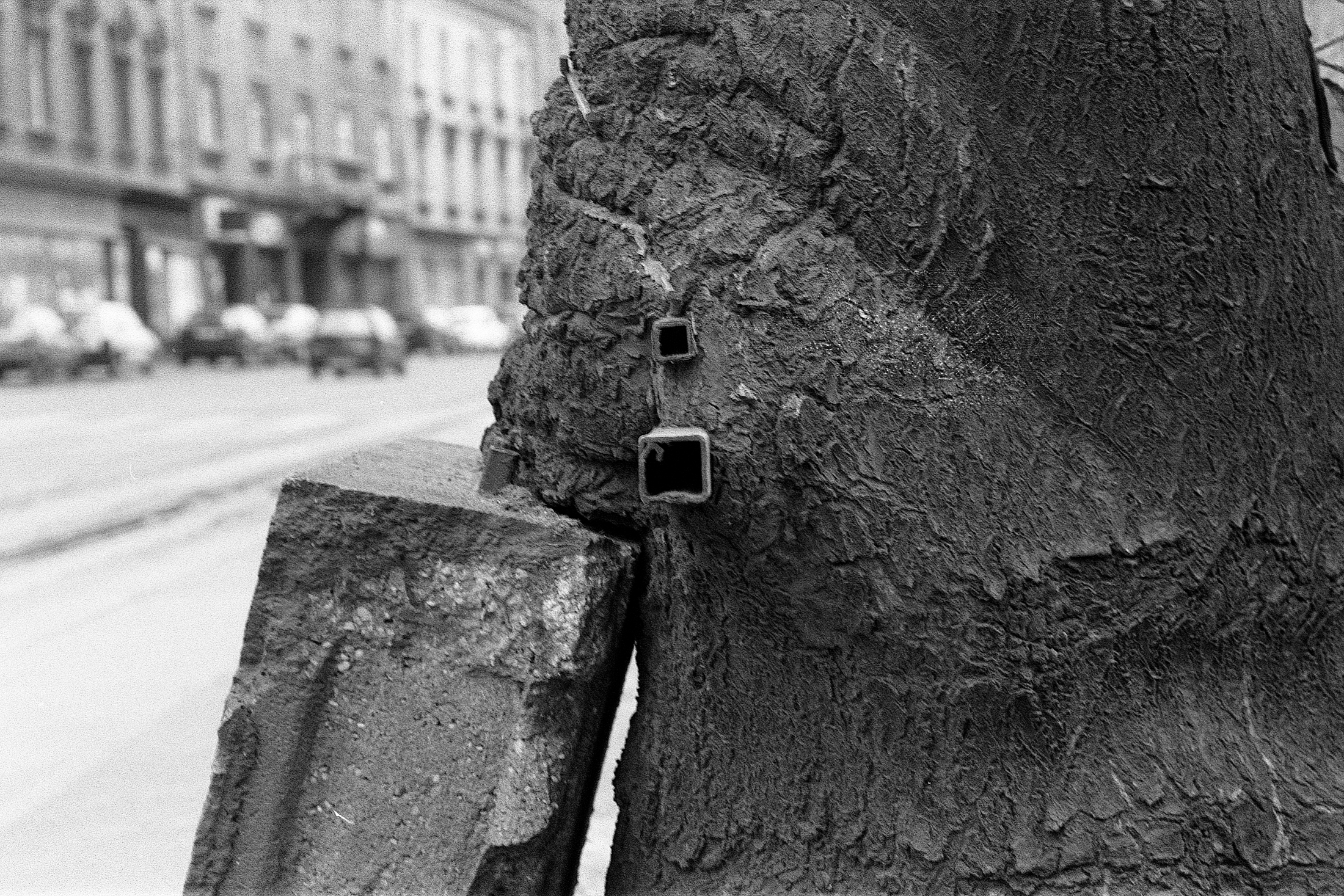
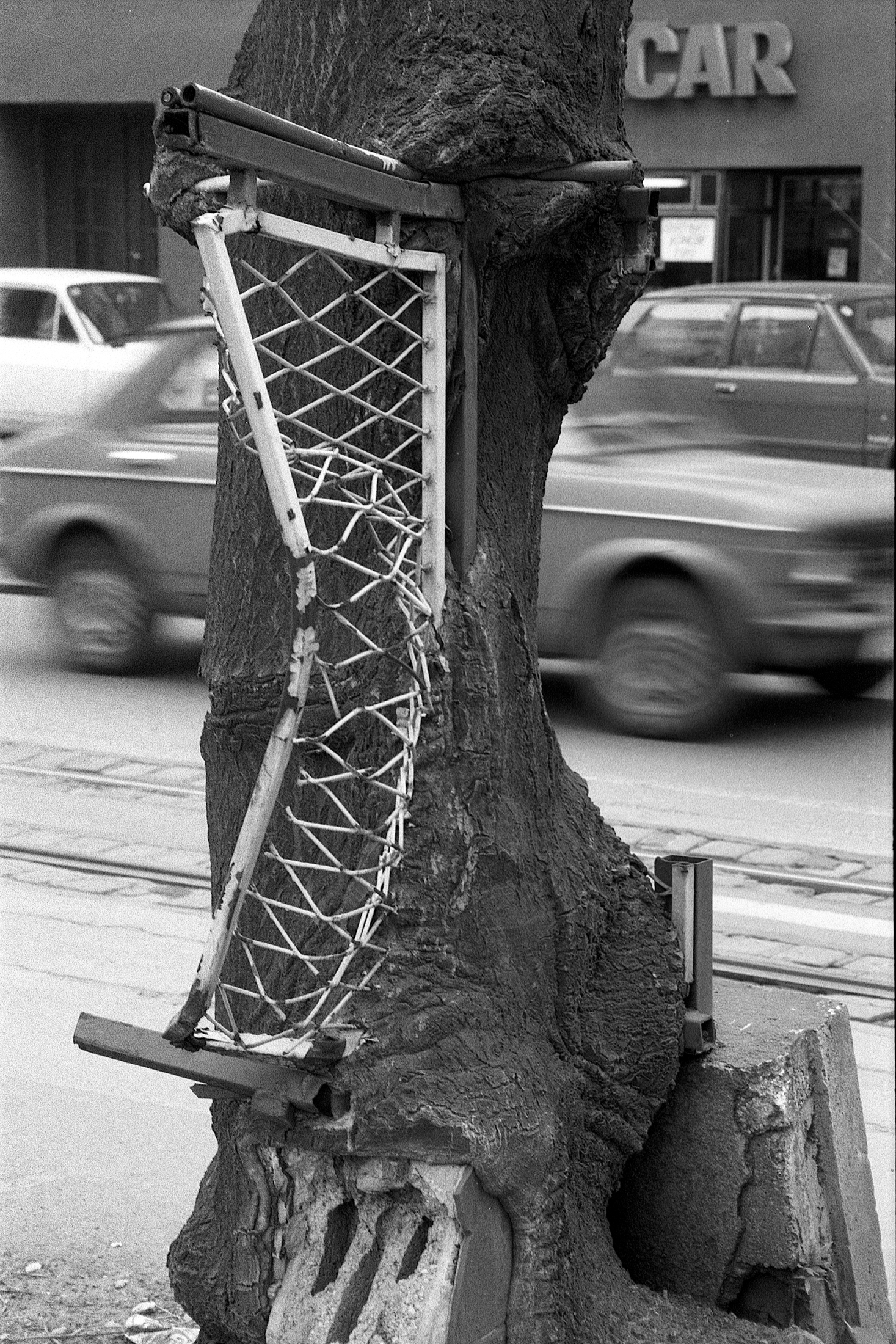
In Zagreb, on Ilica Street, between numbers 172 and 176, right at the edge of the sidewalk and in line with the houses, a single tree grows. For years and decades, it served as a pillar, a support for foundations and fences—most recently, the terrace fence of a pizzeria. Crowded and wounded by surrounding installations, the tree defended itself through growth, enveloping various materials, swallowing, bending, and lifting them, while simultaneously deforming its own shape. Today, the fences have been removed, yet fragments of foreign objects remain embedded in the tree: iron pipes, wire, concrete, ceramic tiles… It appears as a living object, both organism and artifact, in which nature and technology confront each other in the most brutal manner. I experience it, therefore, not merely as a trivial ecological fact, but as the material outcome of an unplanned experiment with the potential for survival, as an object charged with metaphor and rich associative potential, possessing a unique plastic value. In fact, it is a sculpture created without premeditation, which I simply captured and presented through the medium of photography.
Antun Maračić, exhibition catalogue Stablo, Zagreb: Gallery Gradska, 1997
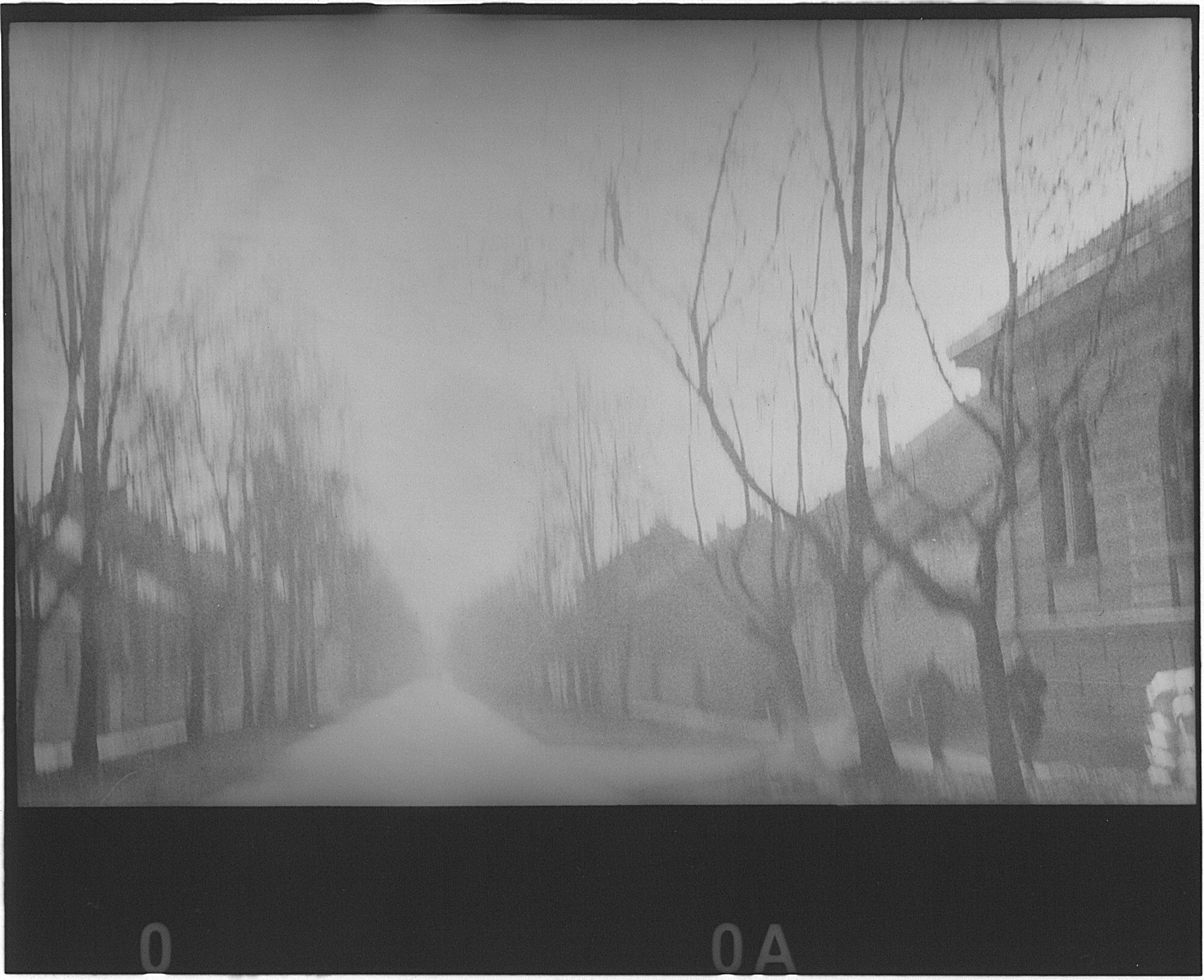
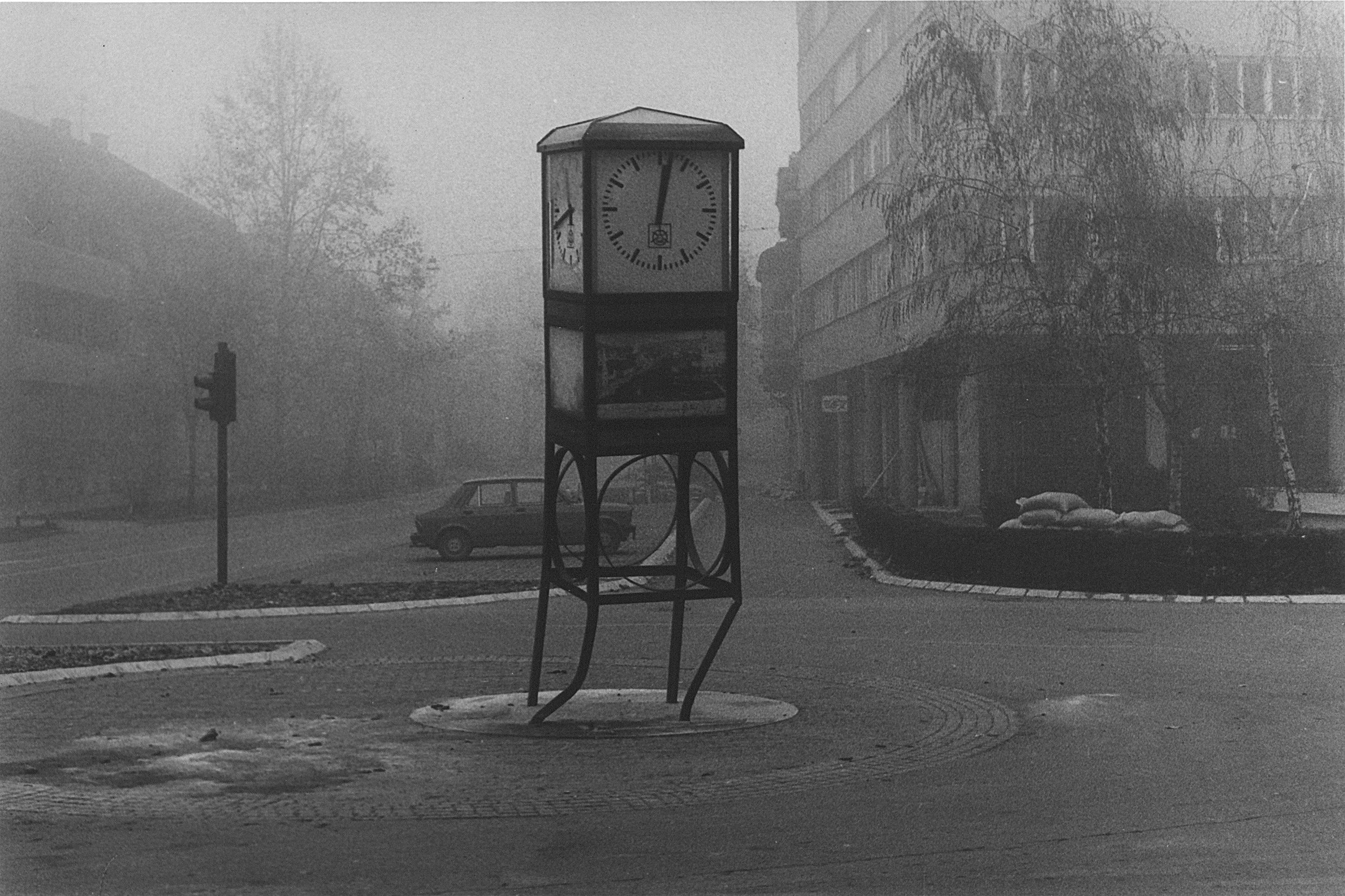
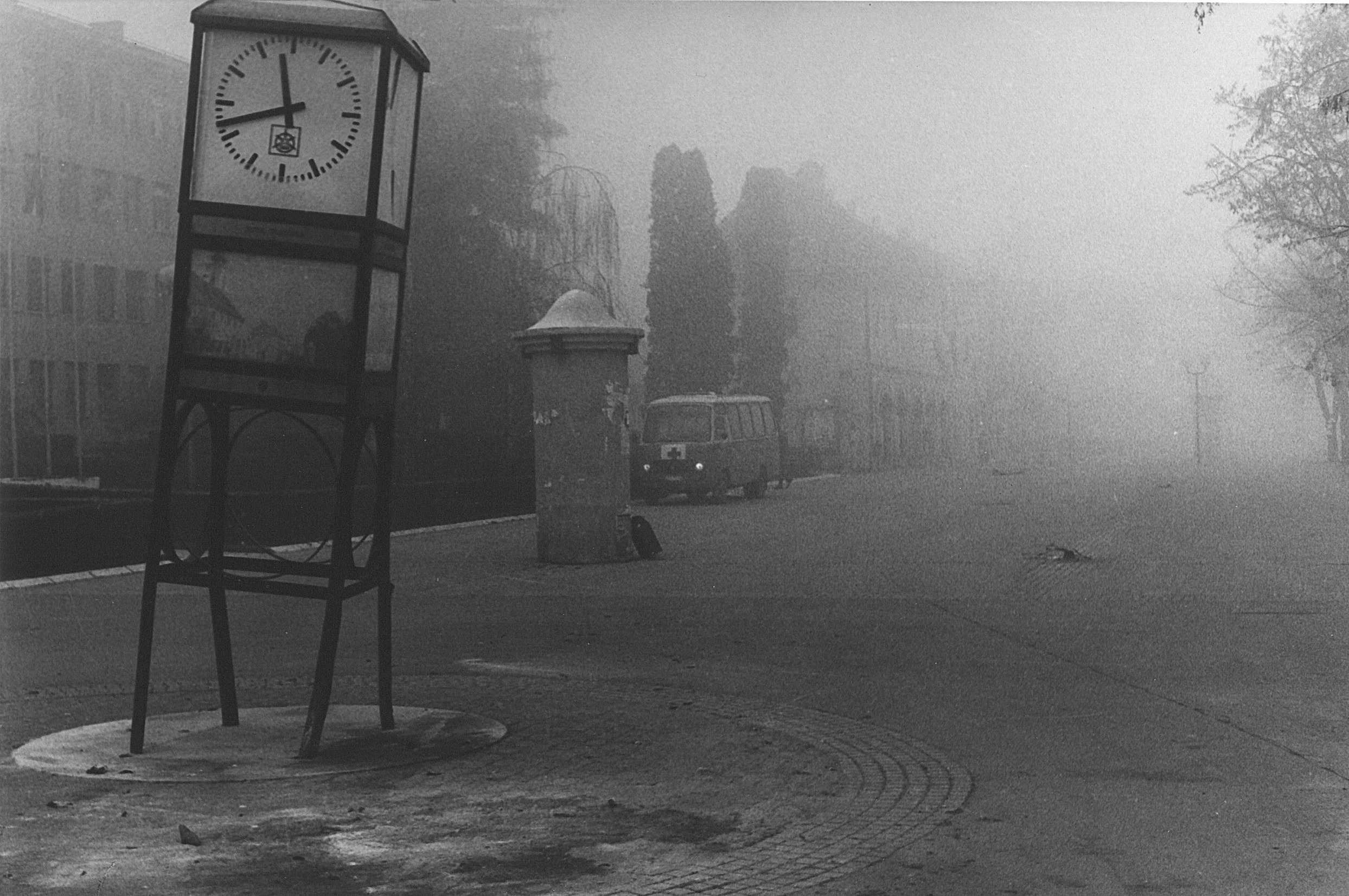
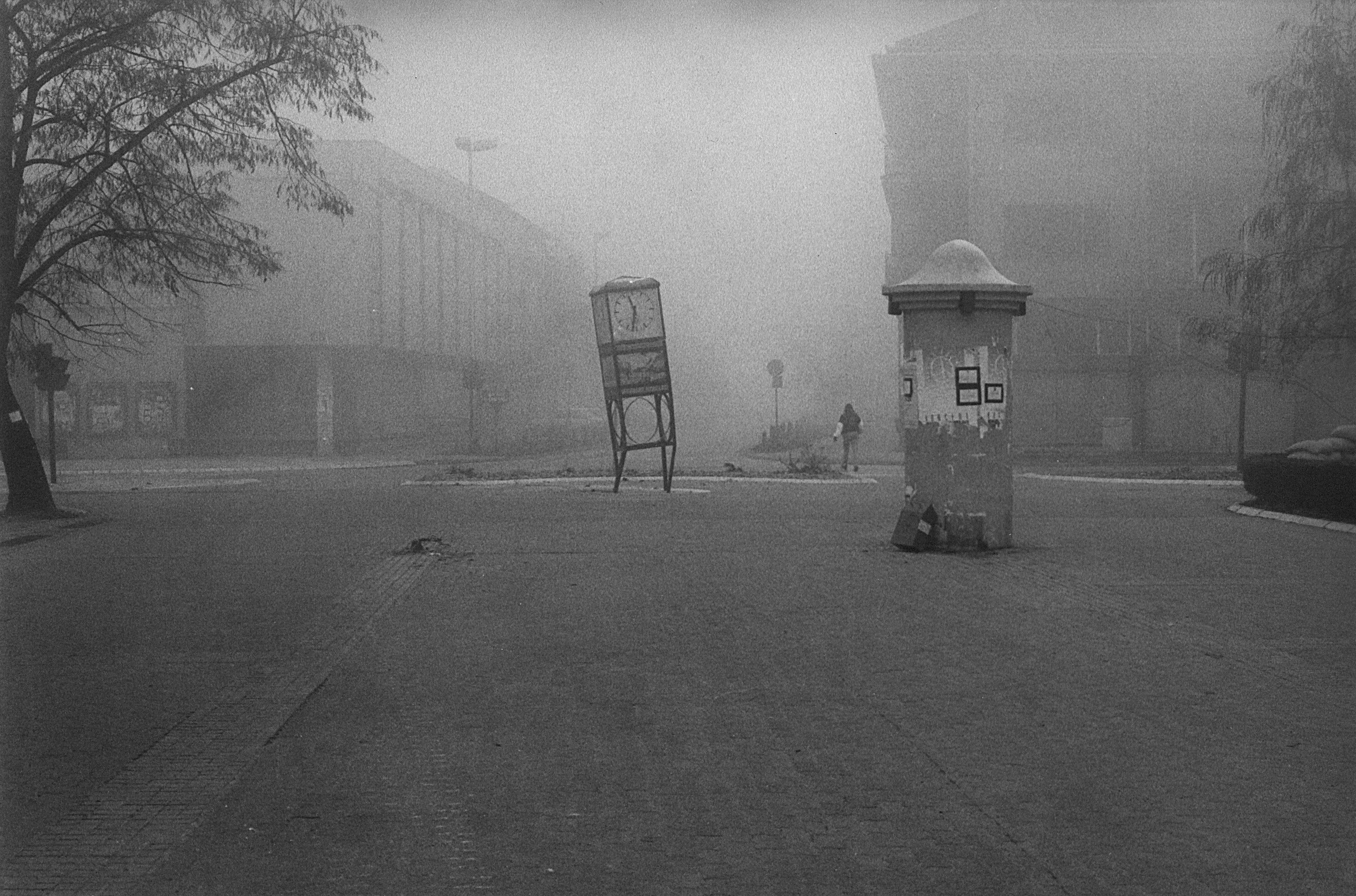
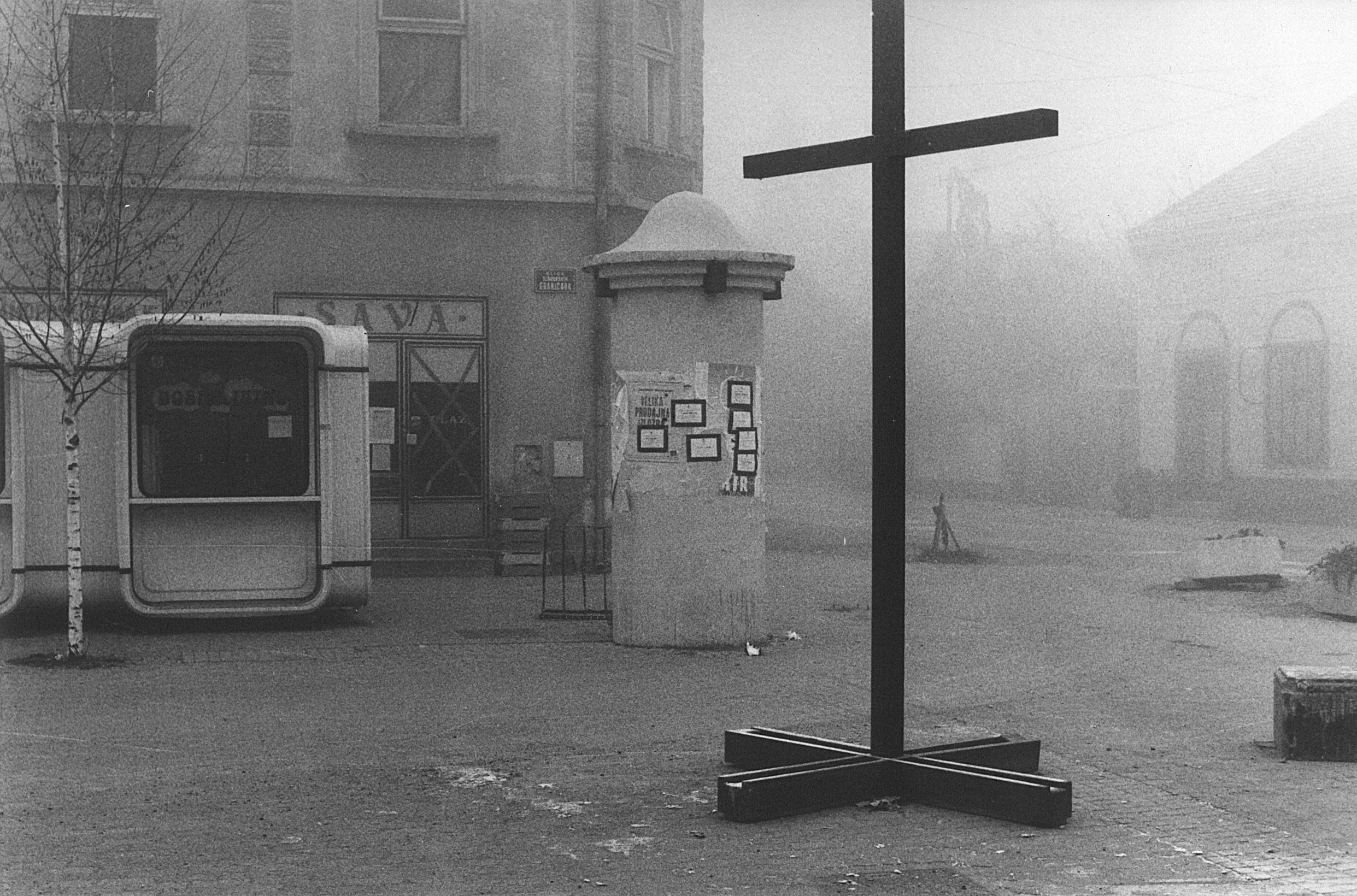
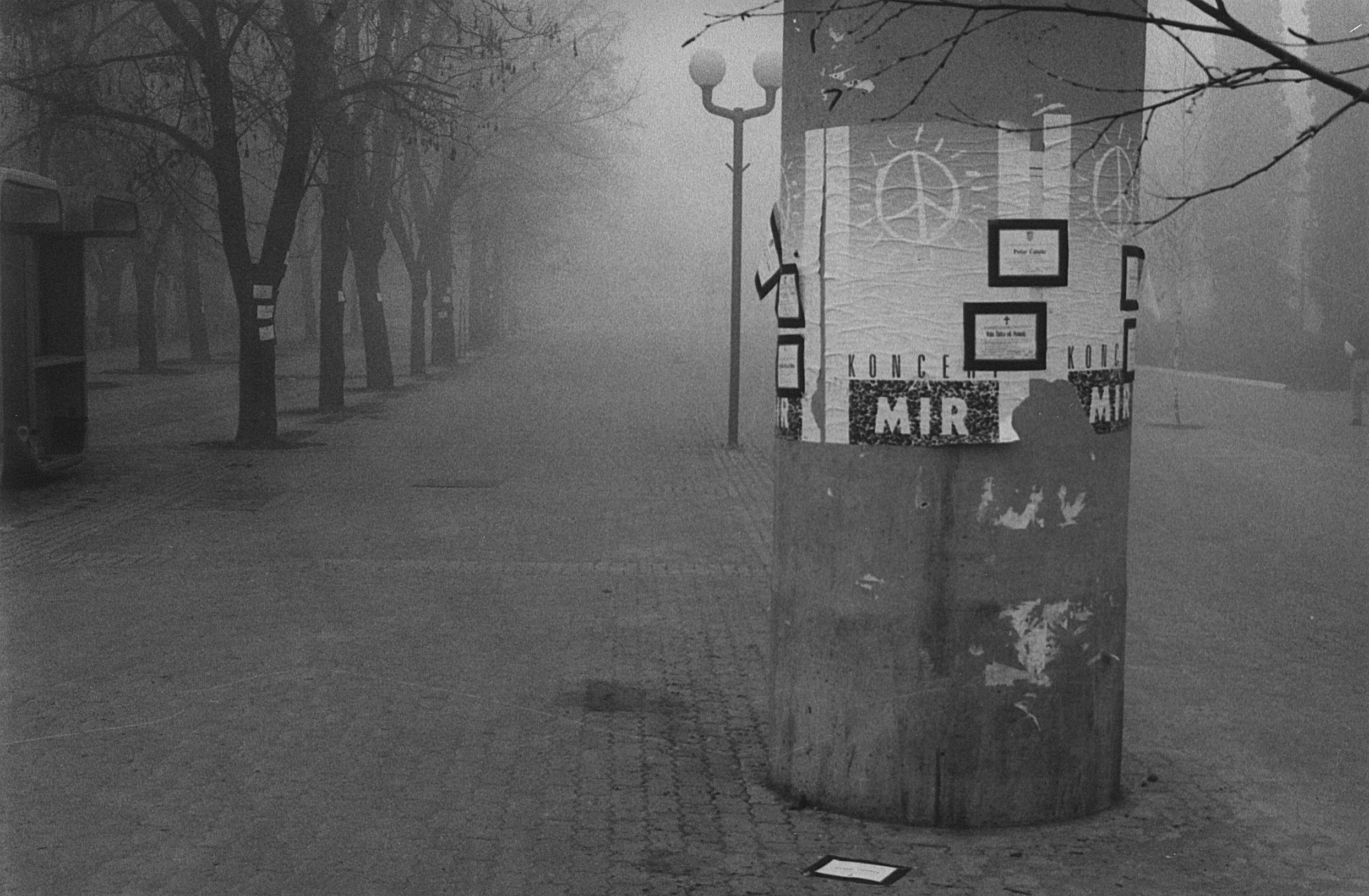
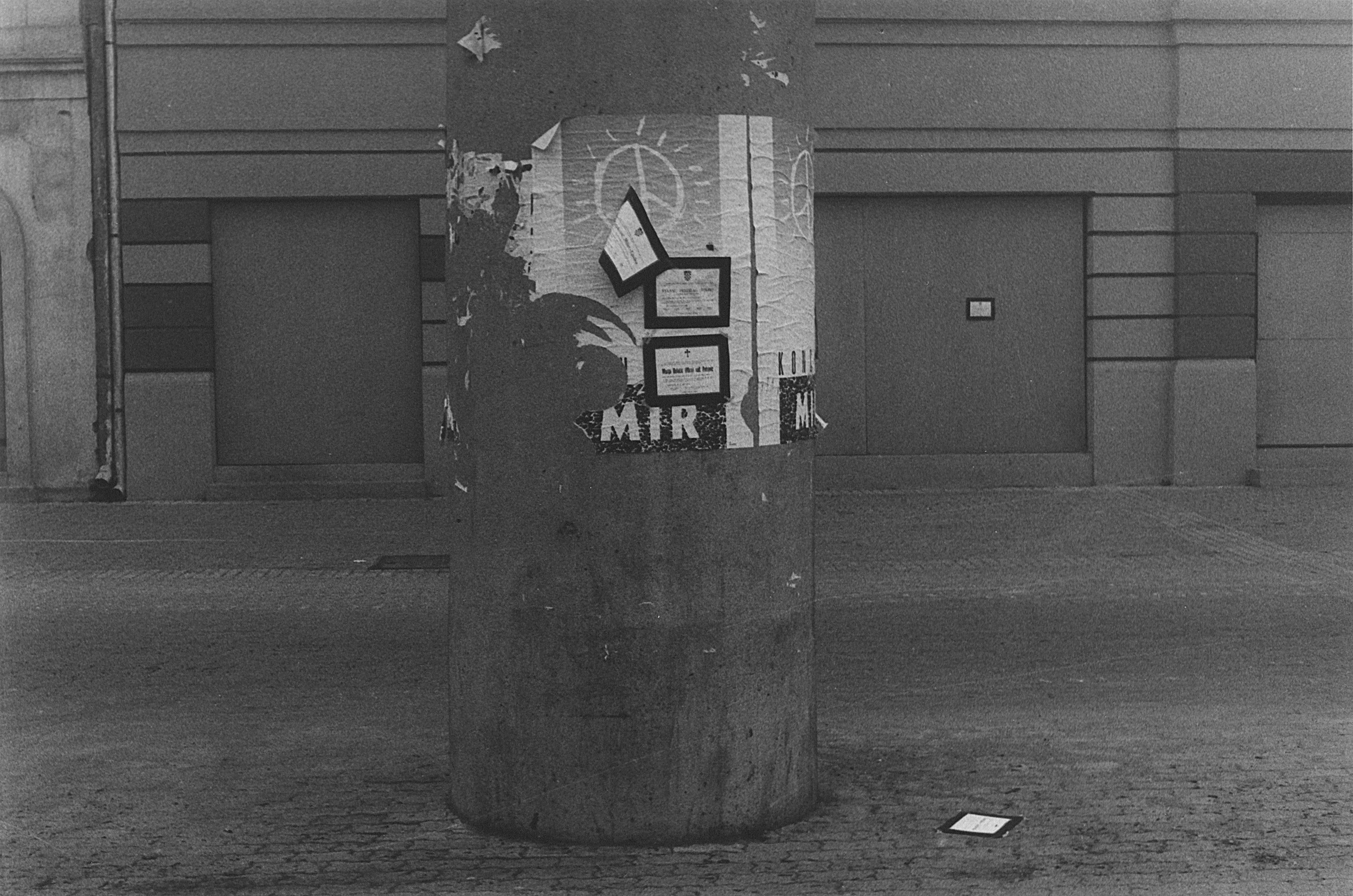
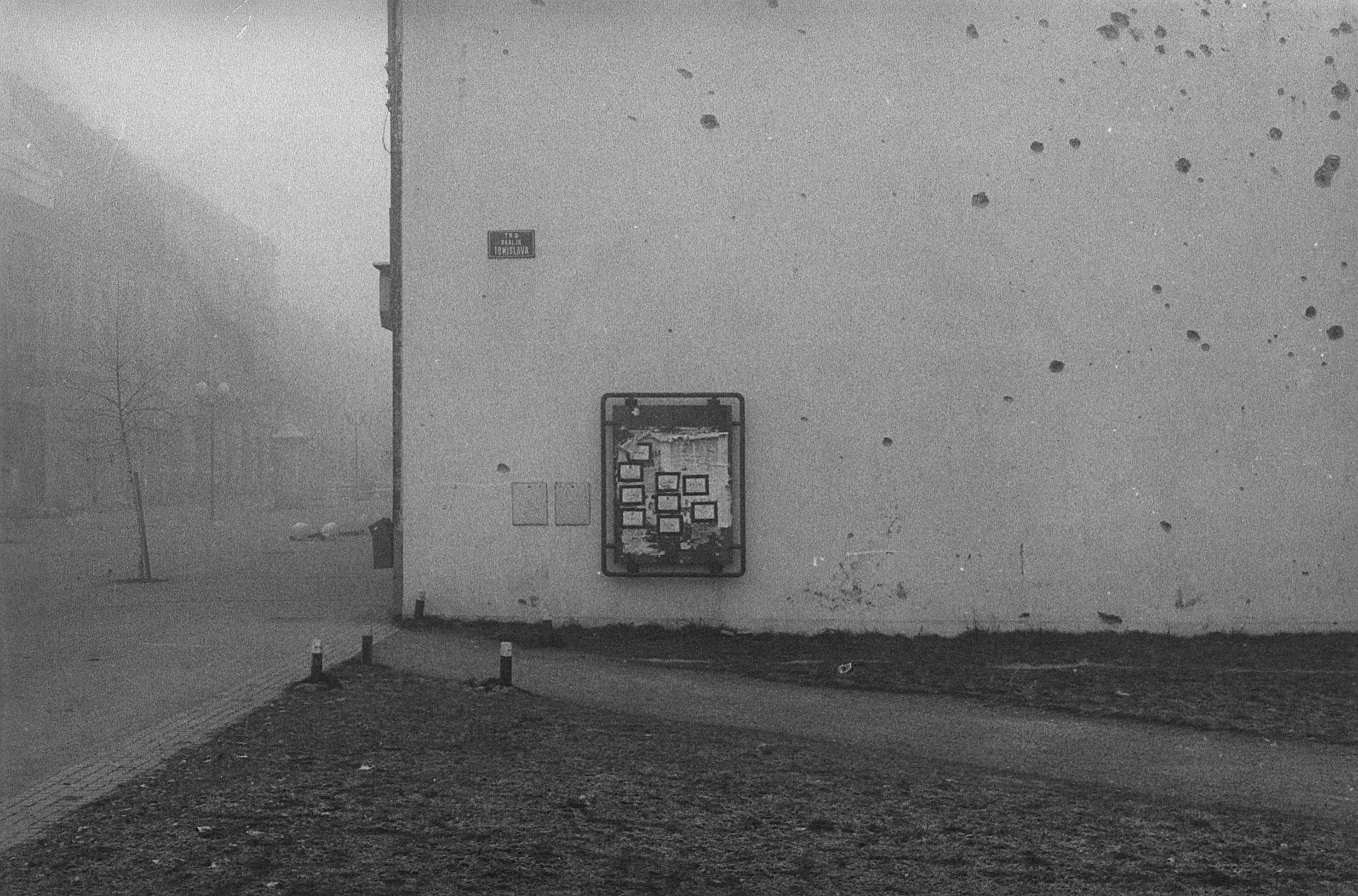
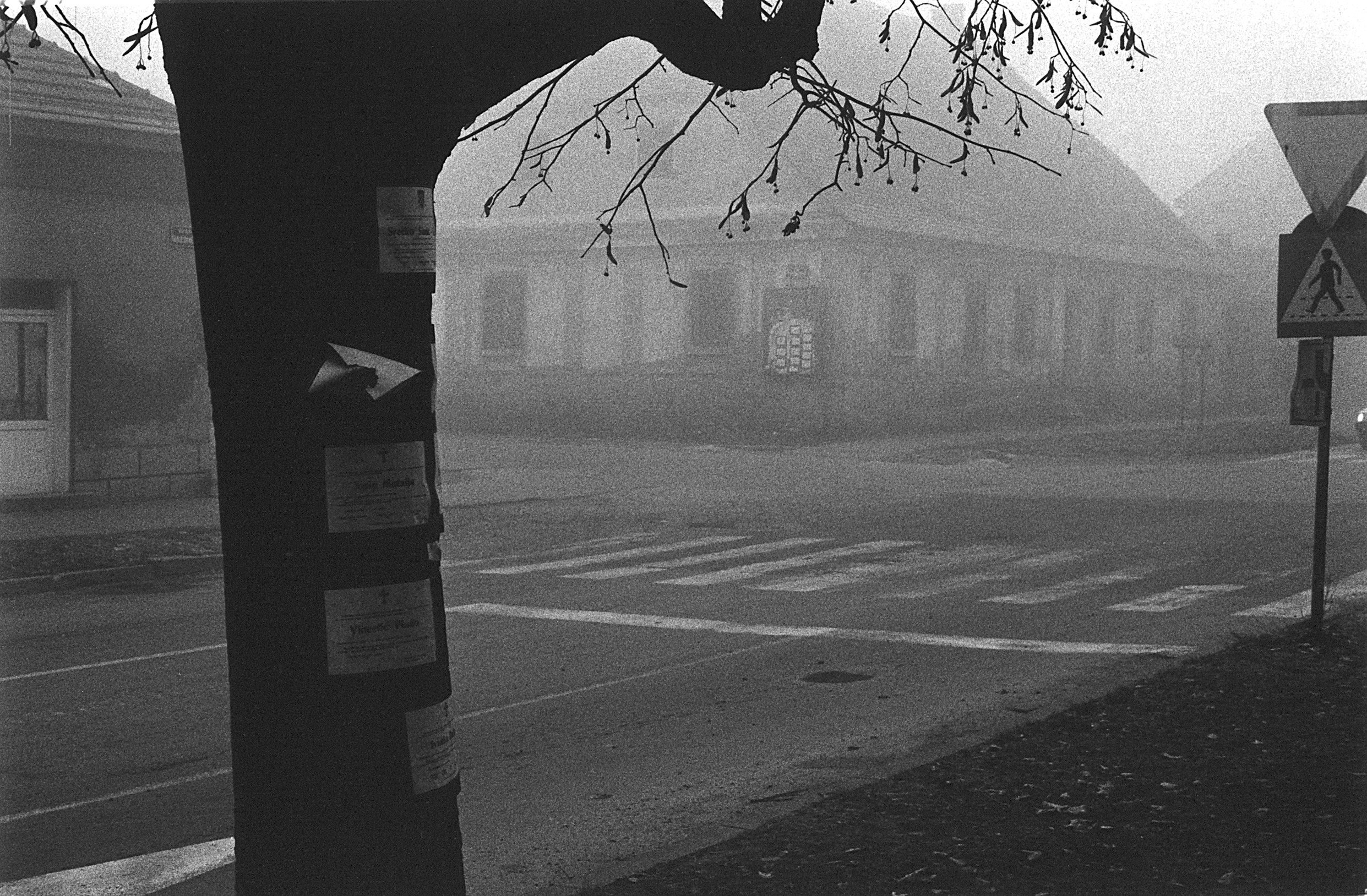
No-city, 16th and 17th December, 1991
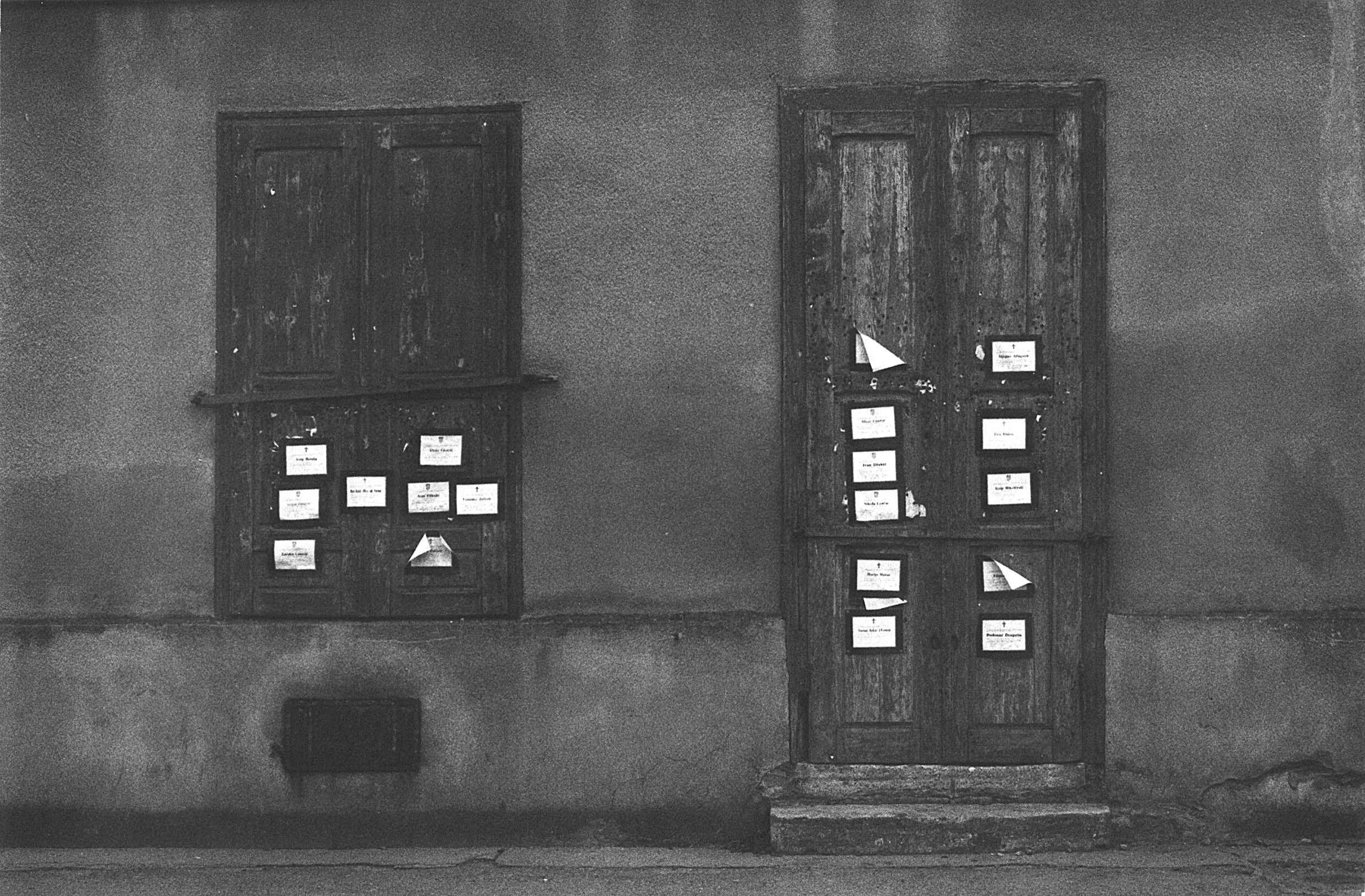
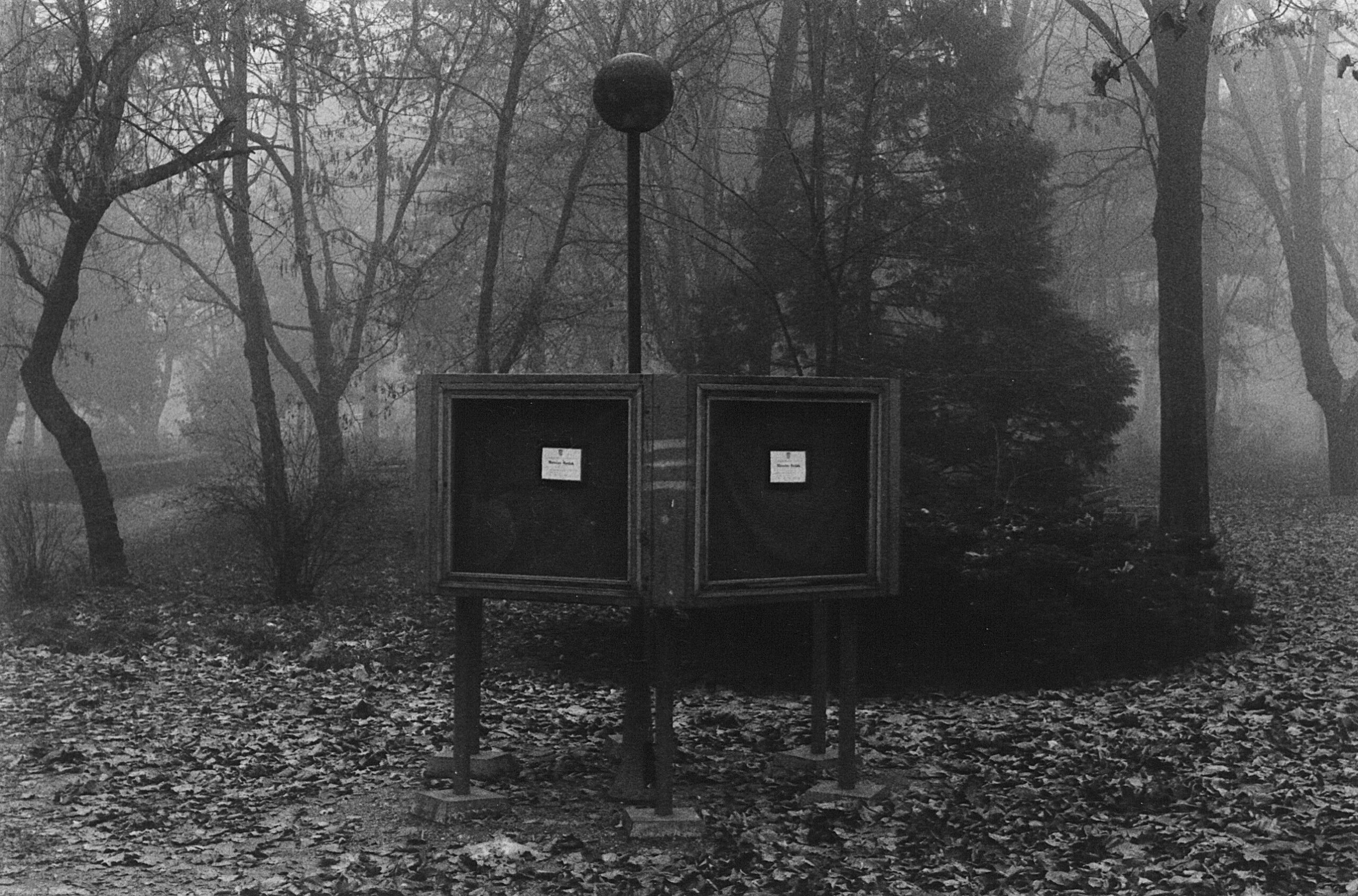
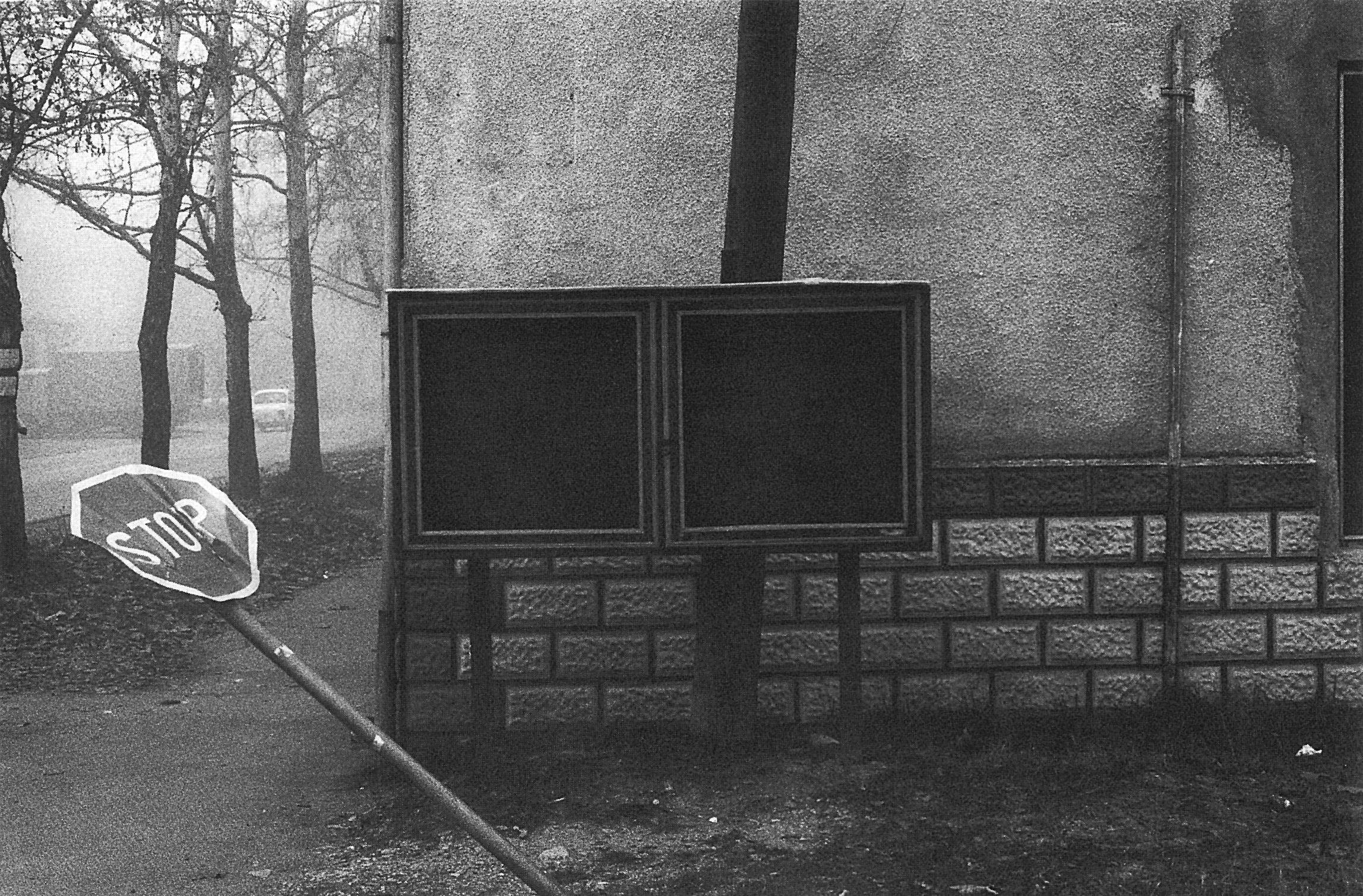
(…) Maračić is the sort of author who unobtrusively leaves to the spectator some space to be filled with the content, indicating only the potential character and meaning of the work The void actually becomes the sum of all reality, perhaps like the ontology of the zero, where it represents the totality of everything. No Grad and Its Subrealism, a cycle of photographs made in 1991 in Nova Gradiška after an artillery attack, may be considered a breaking point in Maračić’s opus, since he presented there the nausea of (non-)existence, powerlessness, and devastation in realistic iconographic motifs of wartime. It was the first time that contentlessness was linked throught the documentary medium of photography with the content of real space and time. The nausea was given its own iconography. The photographs showed empty streets steeped in fog. In that pervasive greyness, the only thing that struck the eye were the white frames of obituaries in broken showcases that had once served to exhibit movie posters. Although these photographs reflected the reality, at the formal level they possessed an expressly artistic, surrealist, or rather sub-realist character of De Chirico’s metaphysical anxiety, wrapped in gloomy sfumato of a town struck by war. (…) (translated by Marina Miladinov)
Antonia Majača: excerpt from "Filled with the Absent", Život umjetnosti Vol. 74/75 No. 1 (2004)
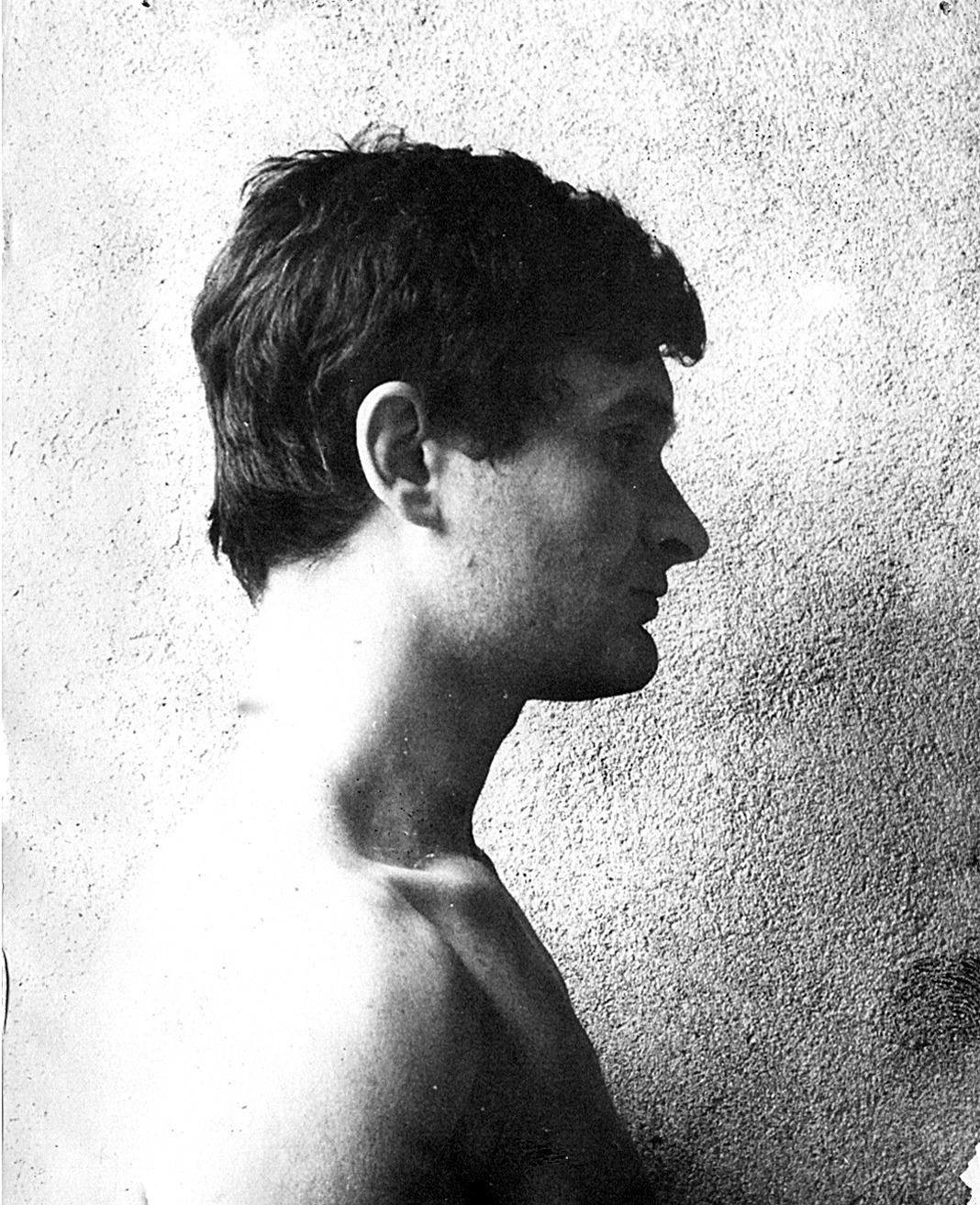
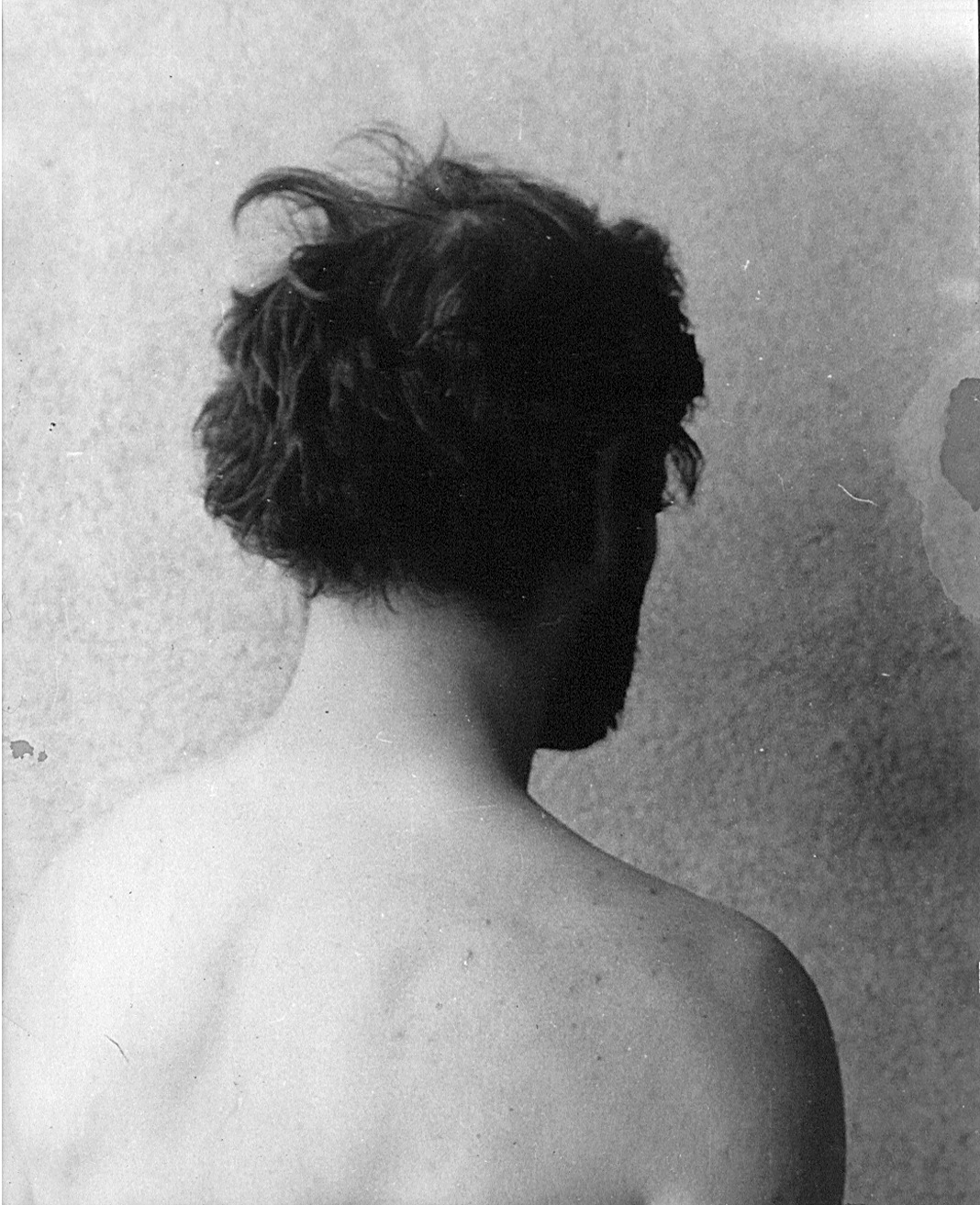
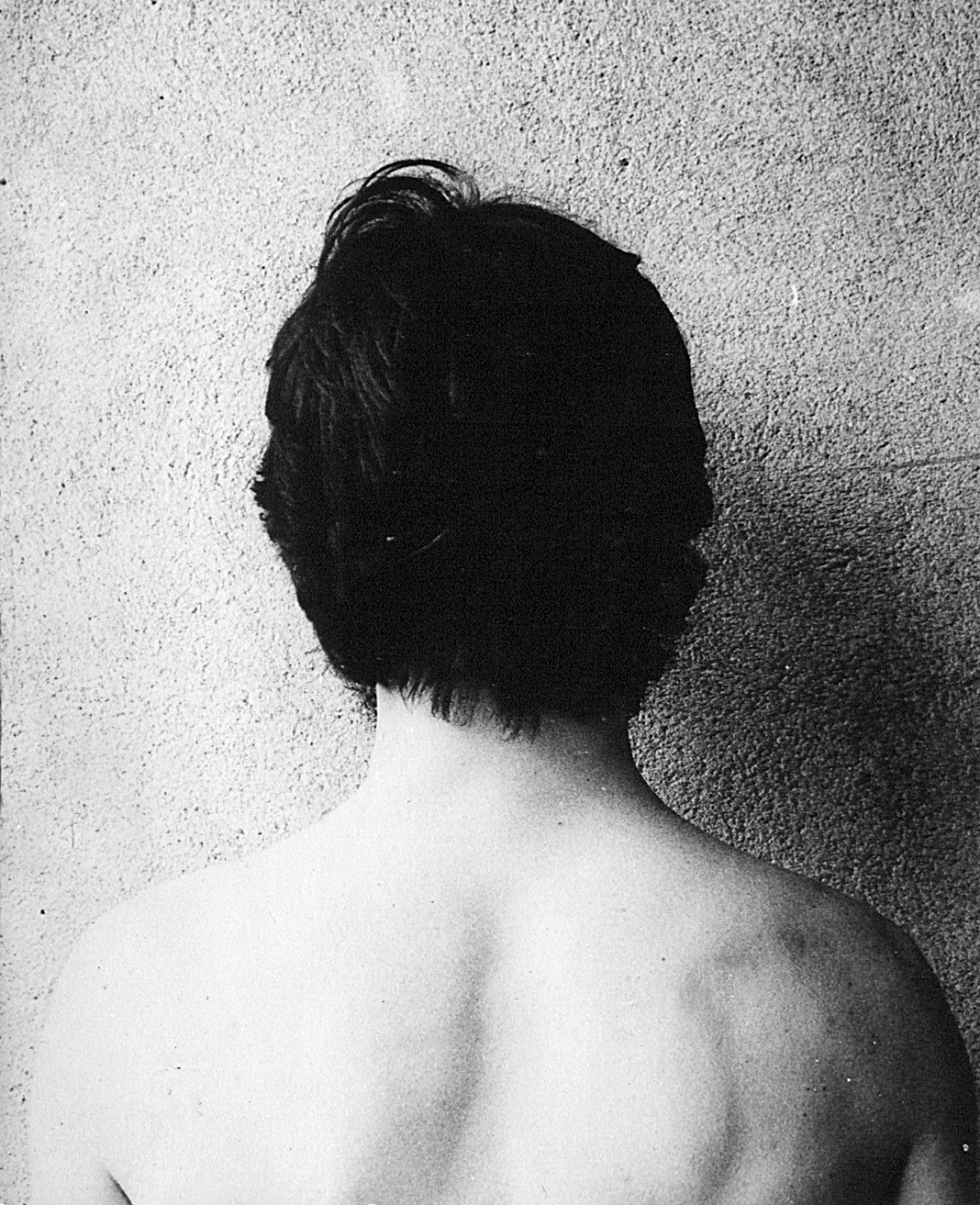
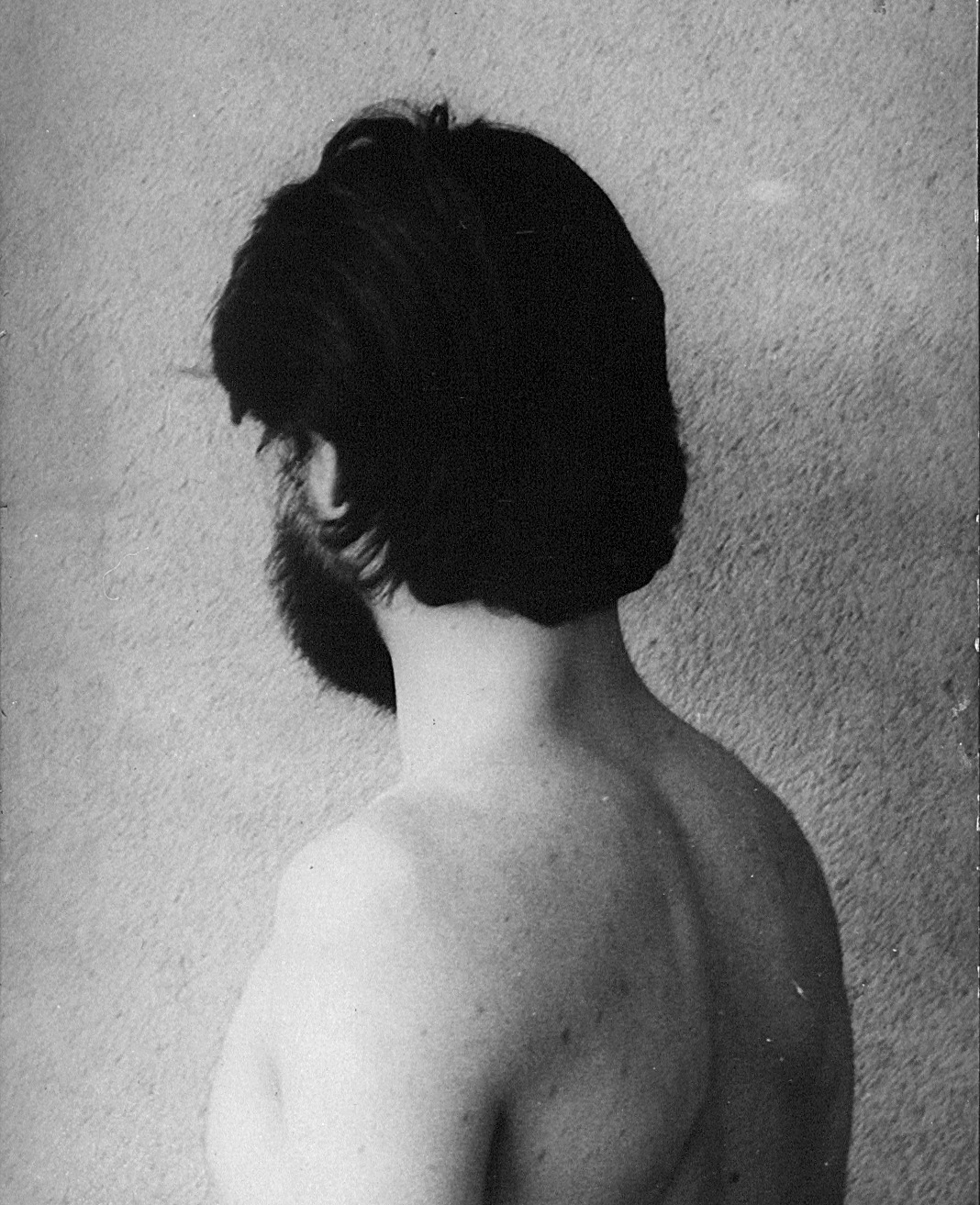
Exterior – Interior, 1977
Antun Maračić, 1977
May 1977 – November 1979
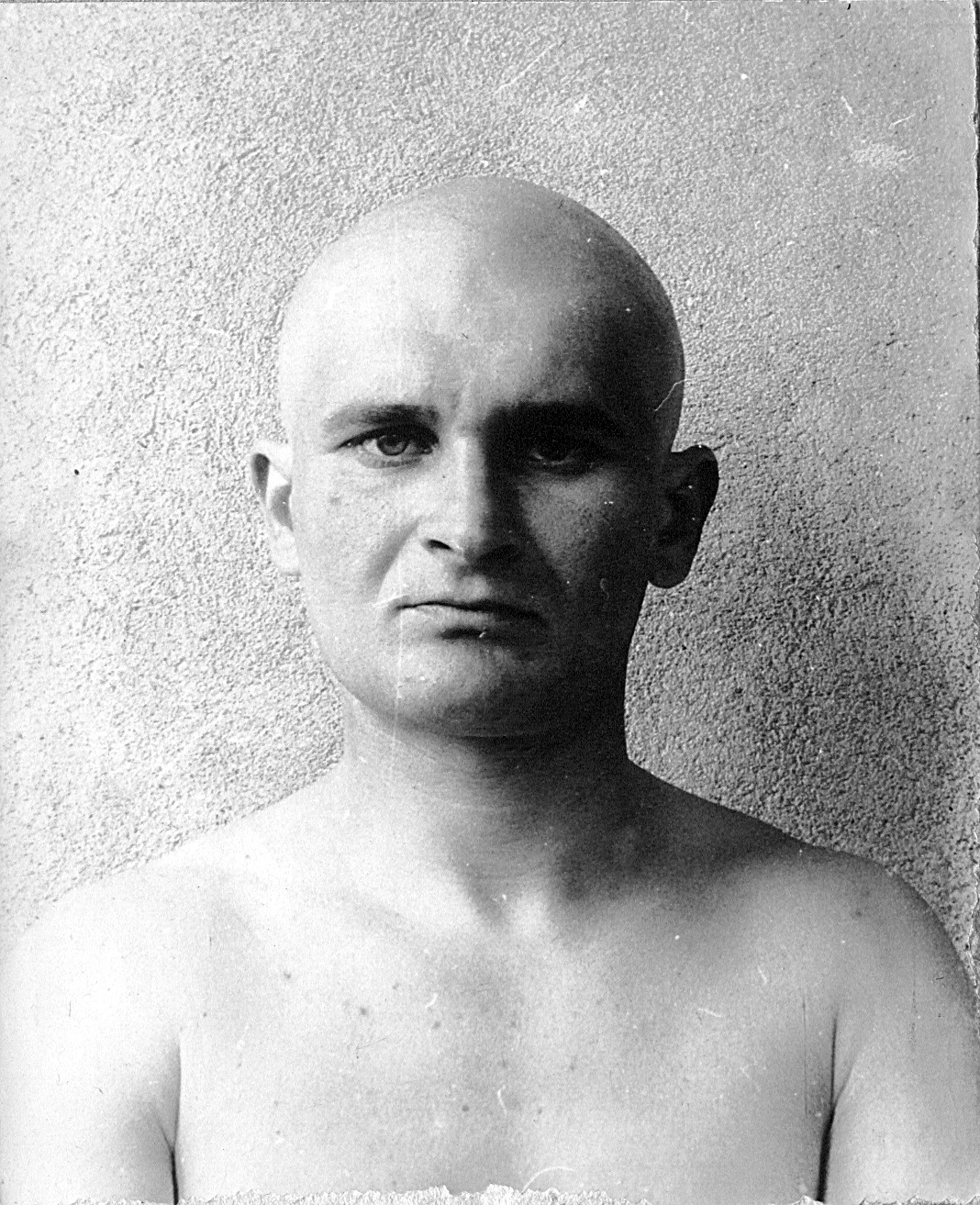
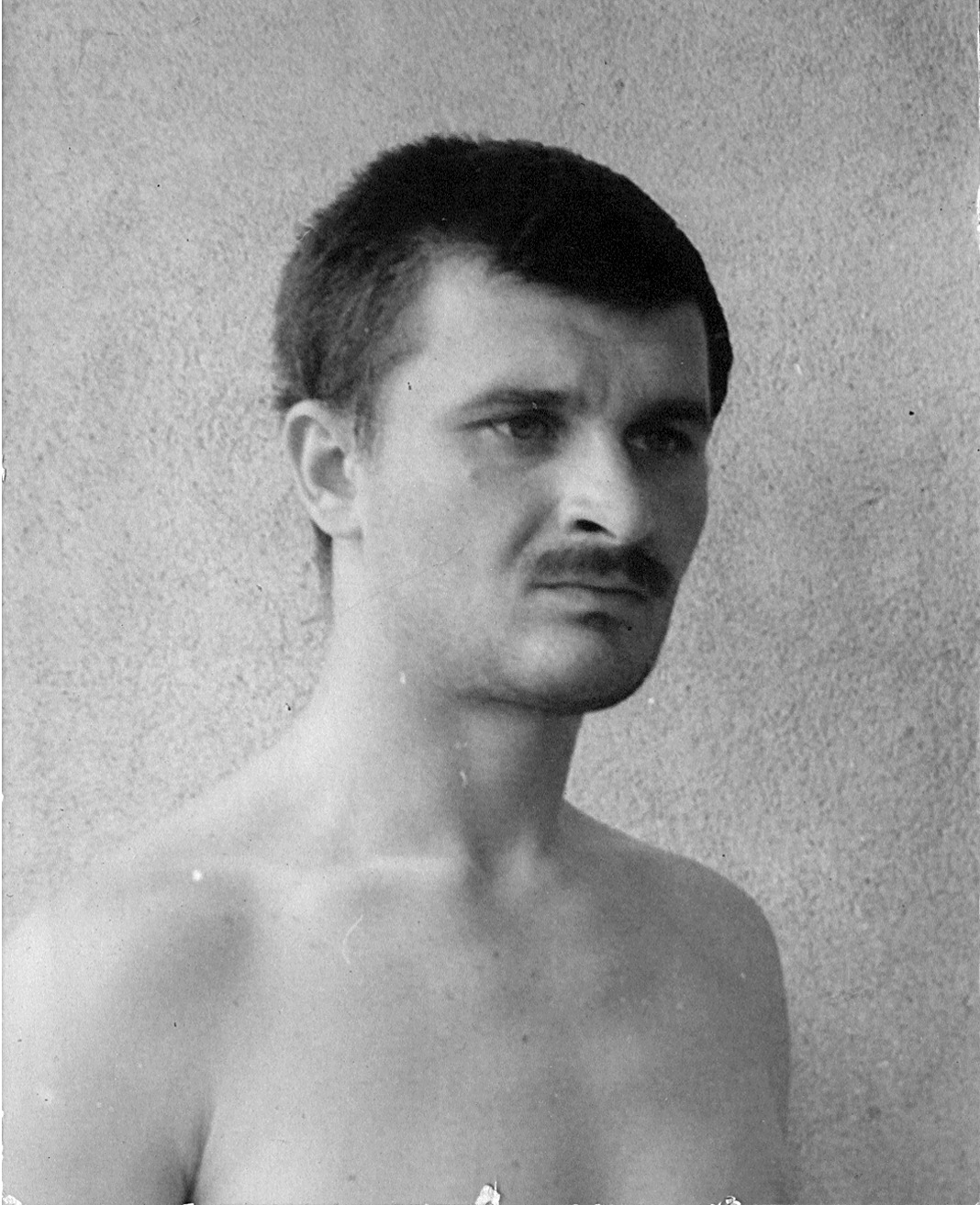
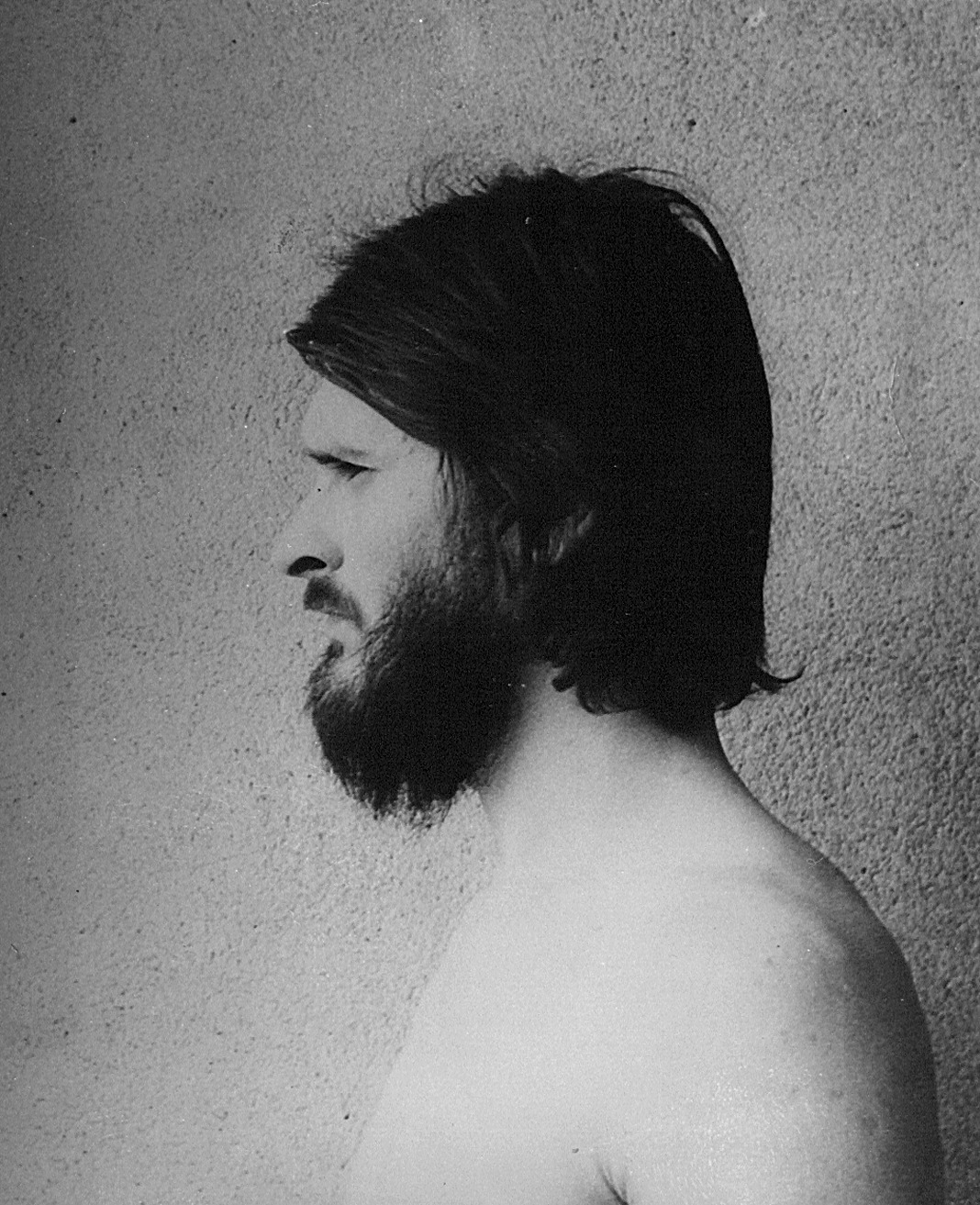
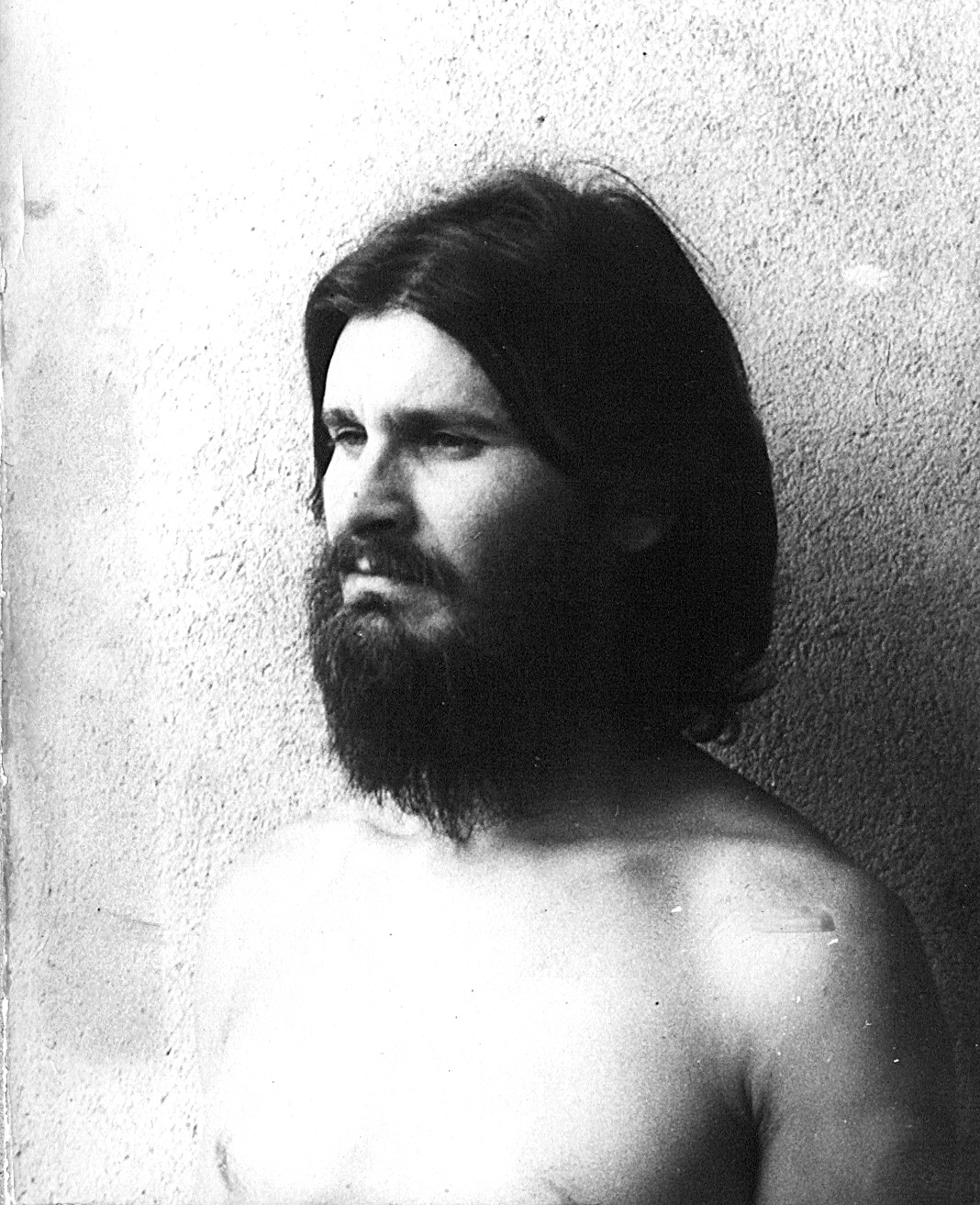
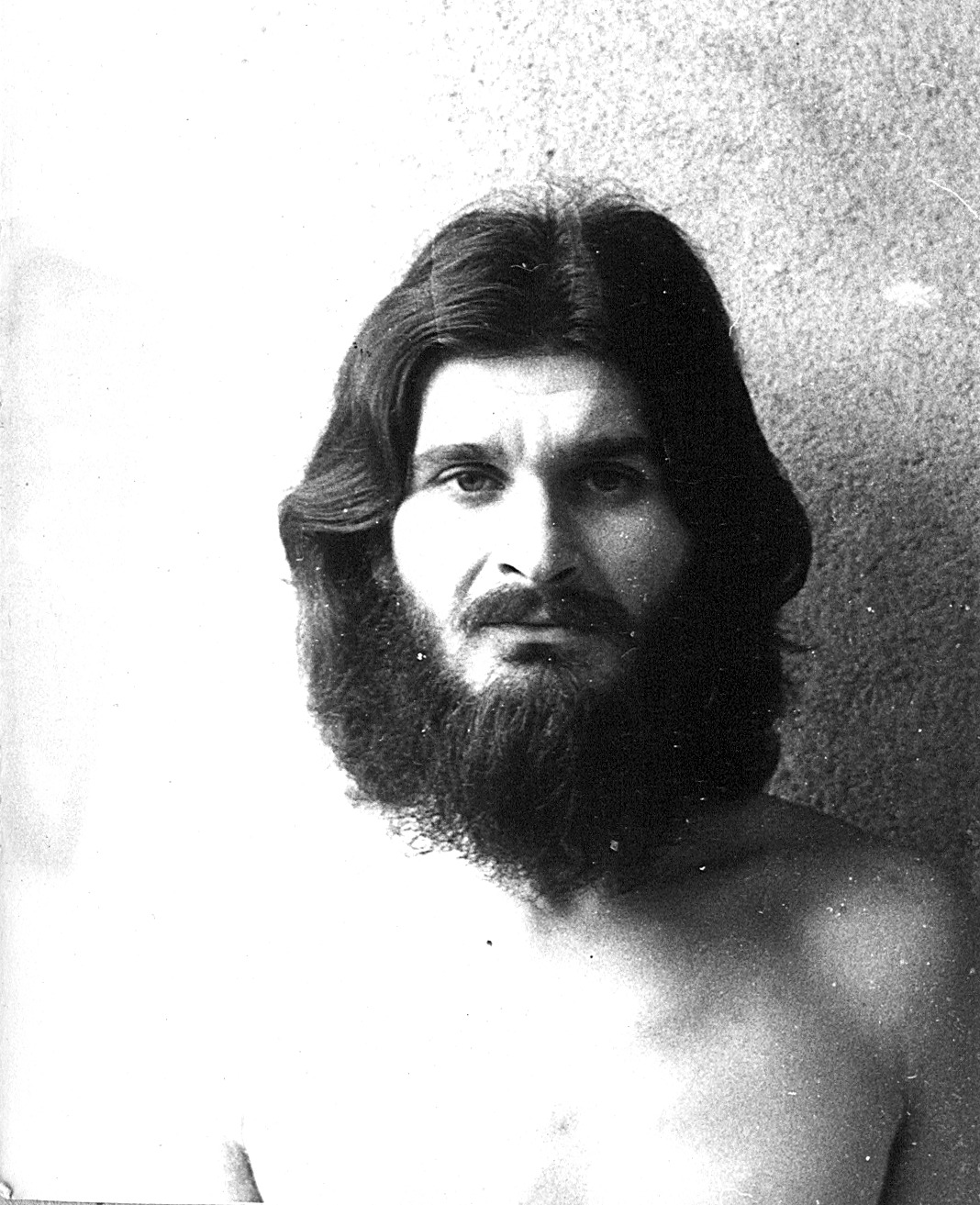
Practicing the analytical painting in the 1970s, the very process of painting served as my subject matter. Directly or indirectly, time of doing the painting could be clearly seen in the end product. Even then I used photography as my medium of expression, next to painting. For example, I got an idea to keep track of the growth of my own hair and beard in photo sequences, from being completely bald/clean shaven to having a drastically overgrown hair or beard. Some of the phases in this process, which lasted from May 1977 to November 1979, were also differentiated according to the 45 degree movement in the position of the head – from an en face to semi-profile to profile etc, until I made the closing en face portrait, with long hair and long beard. Representing the end of the closed circle, this portrait becomes the symbol of the time that has passed. (translated by Martin Mayhew)
Antun Maračić (1950–2023) was a visual artist, art critic, curator, and director of several Zagreb galleries (Extended Media Gallery, Student Centre Gallery, Zvonimir Gallery, and Forum Gallery) and, from 2000 to 2012, director of the Museum of Modern Art Dubrovnik. He graduated in painting from the Academy of Fine Arts in Zagreb, in the class of Šime Perić (1976), after which he became an associate of the Master Workshop of Ljubo Ivančić and Nikola Reiser. He organised his first exhibition while still a secondary-school student (in 1966, with Željko Subić), at the Centre for Culture and Education in Nova Gradiška, and began exhibiting intensively from 1976 onwards. That same year, together with Željko Kipke, he published his first artist’s book, The Book of Antun Maračić and Željko Kipke, after which he went on to produce several original books of photographs. From the earliest phase of analytical painting and conceptual photography in the second half of the 1970s through to his final works, Maračić’s artistic practice consistently centred on perception, process, and time as phenomena to be witnessed and documented. He was also preoccupied with the themes of absence and emptiness. His works are held in the collections of the Museum of Contemporary Art, the National Museum of Modern Art, the Croatian History Museum, the Print Collection of the National and University Library, and the Filip Trade Collection in Zagreb, as well as in the TBA21 Thyssen-Bornemisza Art Contemporary Collection in Vienna and the Troubleyn Collection in Antwerp. For his artistic and critical work, he received Vjesnik’s Josip Račić Award (2004) and the Annual Award of the Croatian Section of AICA (2016).
https://antunmaracic.net/
- Antun Maračić
- Duška Boban
- Glorija Lizde
- Petra Slobodnjak
- Ivana Pegan
- Karlo Čargonja
- Valentino Bilić Prcić
- Darija Jelinčić
- Nina Đurđević
- Ivan Gundić
- Luka Pešun
- Katarina Juričić
- Sanja Bistričić Srića
- Dea Botica
- Lana Stojićević
- Ana Vuko
- Ivan Buvinić
- Denis Butorac
- Ana Bilankov
- Darko Bavoljak
- Bojan Mrđenović
- Petra Mrša
- Hana Miletić
- Borko Vukosav
- Jelena Blagović
- Davor Konjikušić
- Domagoj Blažević
- SofijaSilvia
- Davor Sanvincenti
- Darije Petković
- Hrvoje Slovenc
- Jasenko Rasol
- Sandro Đukić
- Igor Kuduz
- Silvestar Kolbas
- Mirjana Vodopija
- Goran Trbuljak
- Josip Klarica
- Petar Dabac
- Ana Opalić
- Marko Ercegović
- Žarko Vijatović
- Ivan Posavec
- Boris Cvjetanović
- Sandra Vitaljić