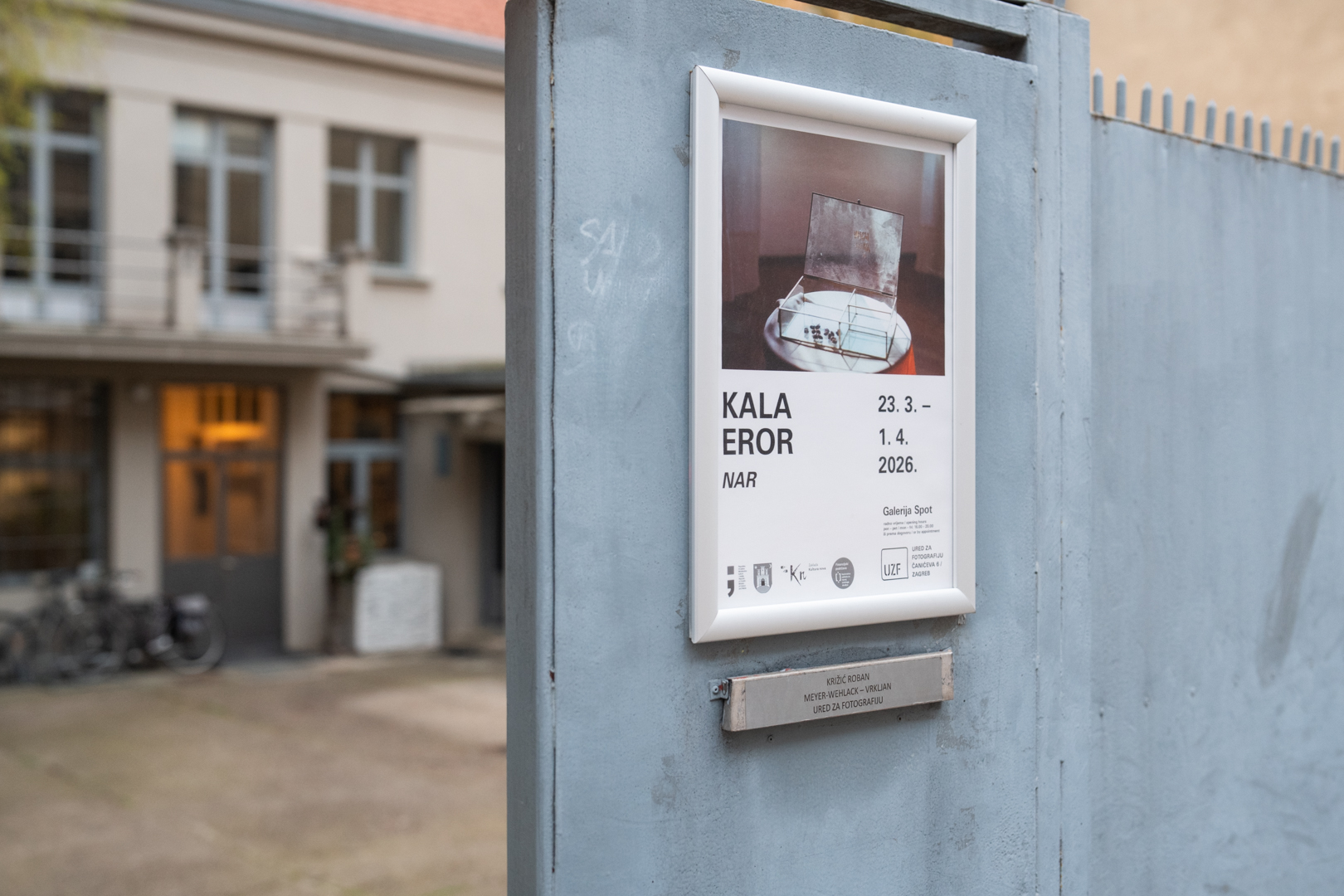
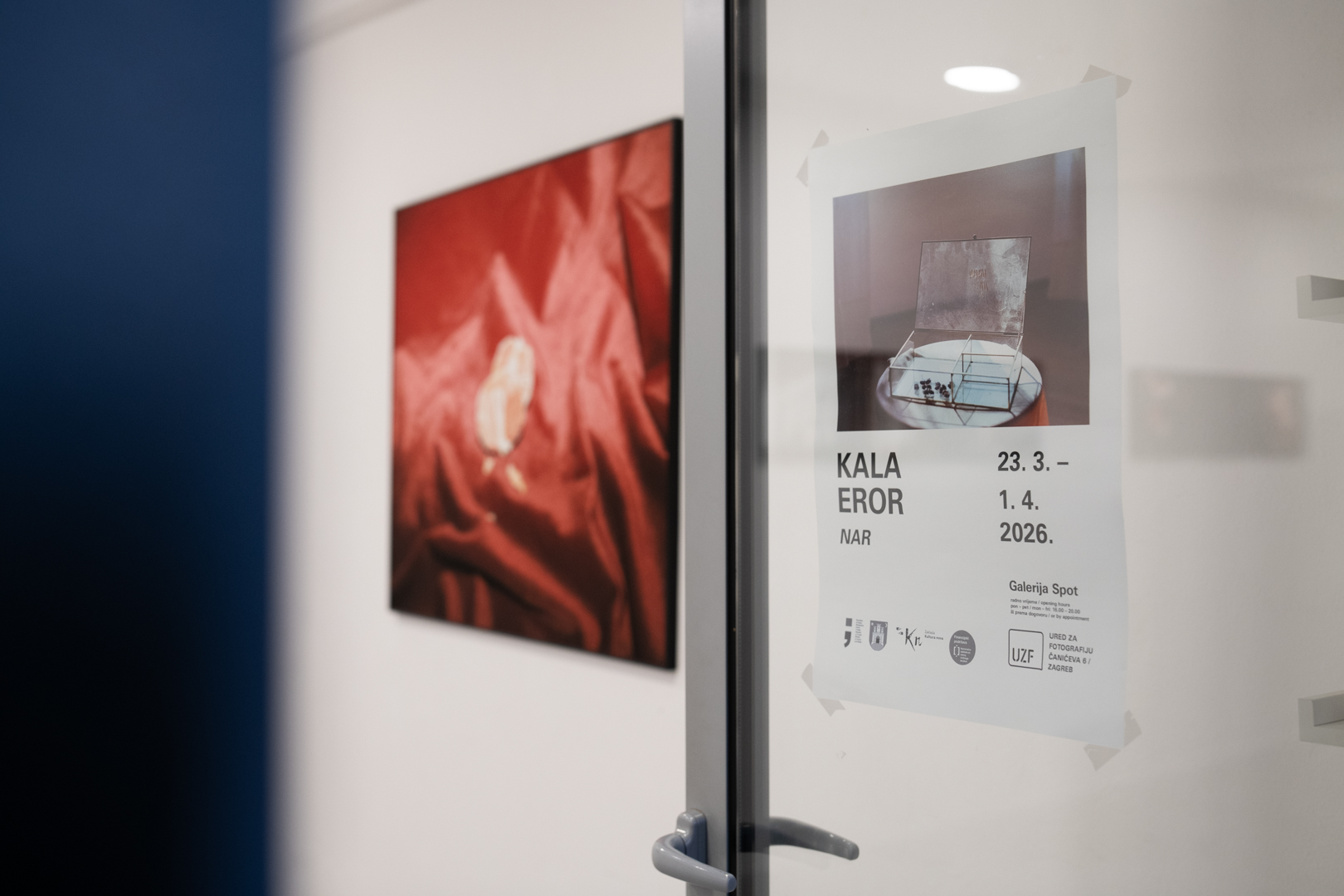
23rd March – 1st April 2026

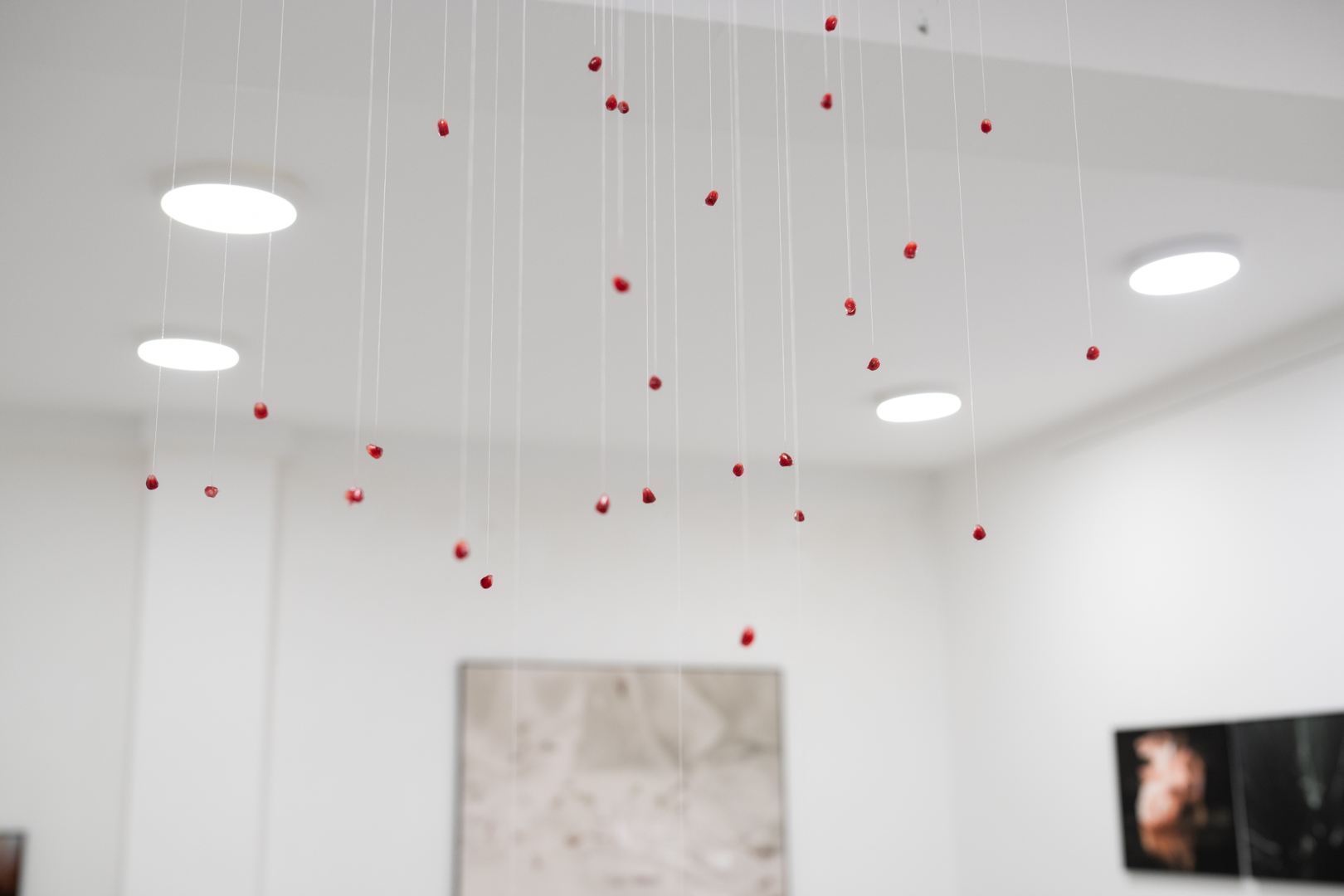
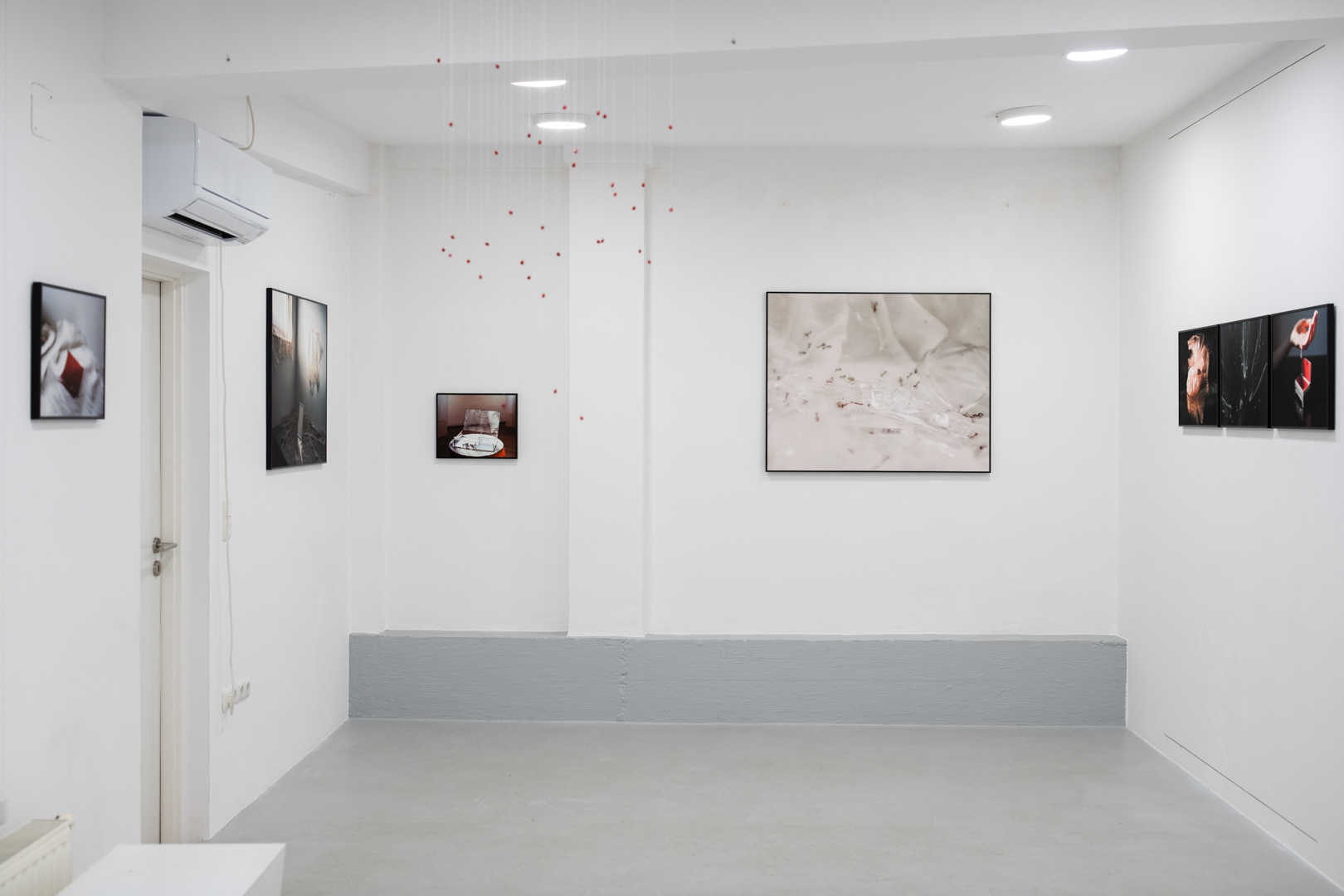
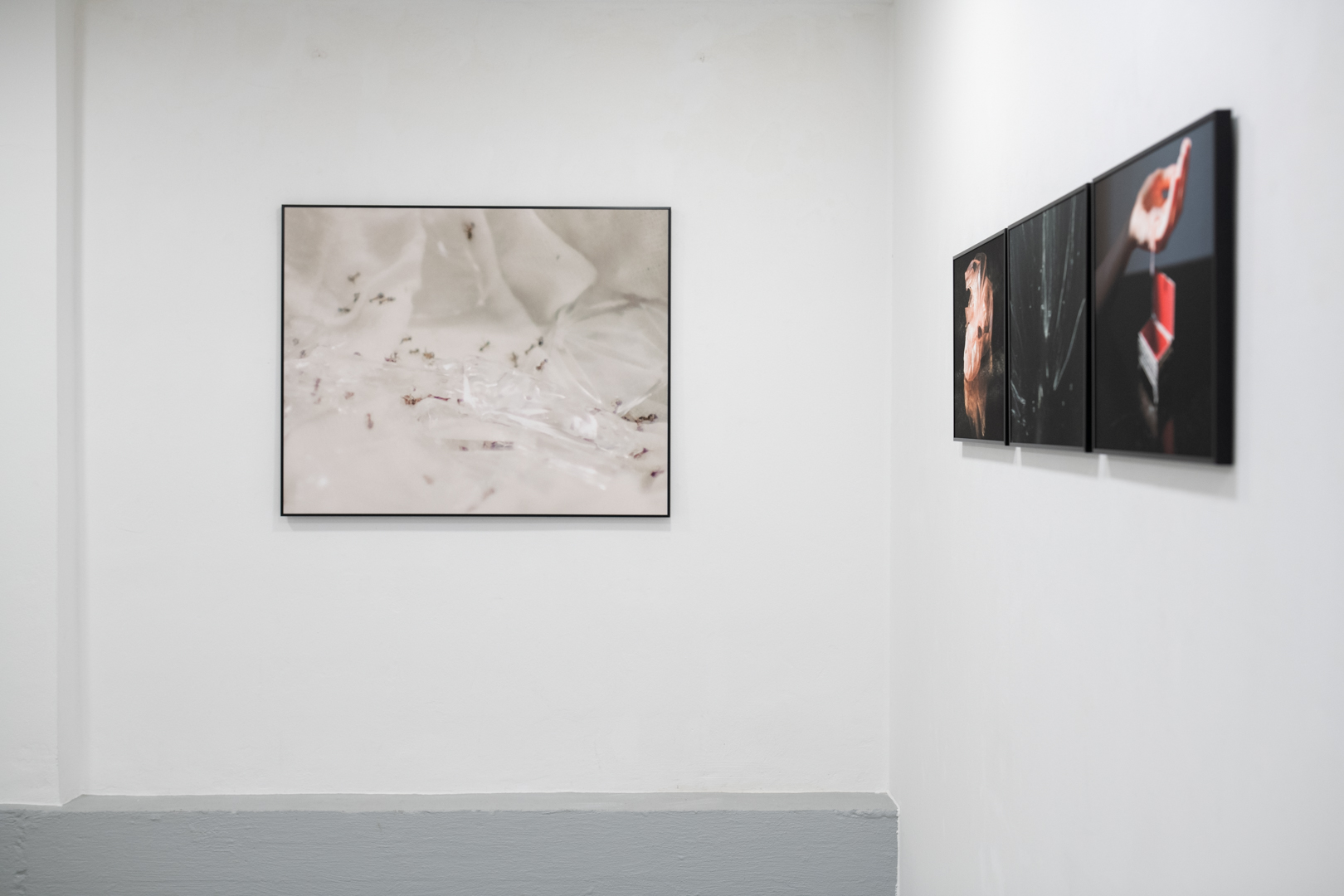
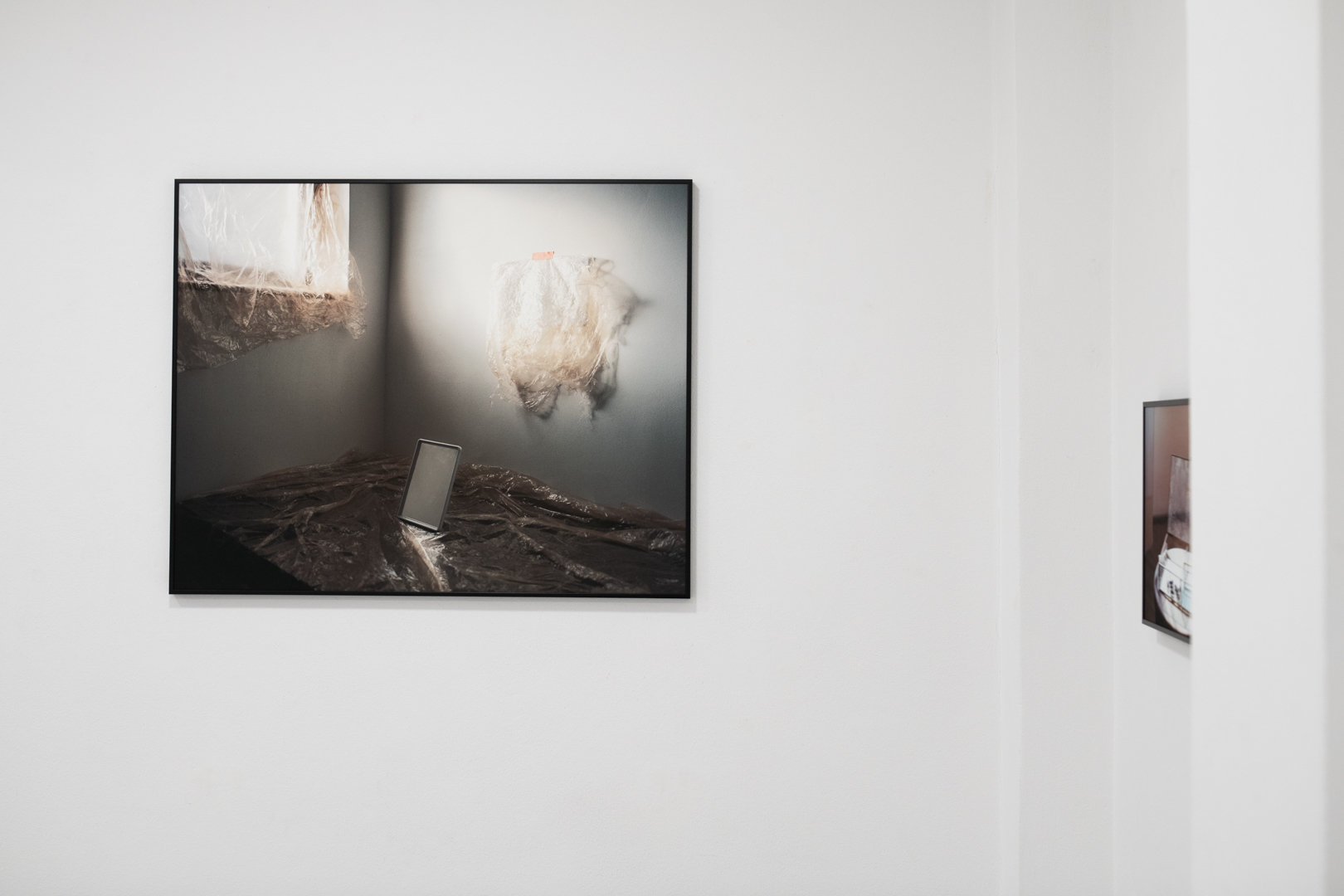
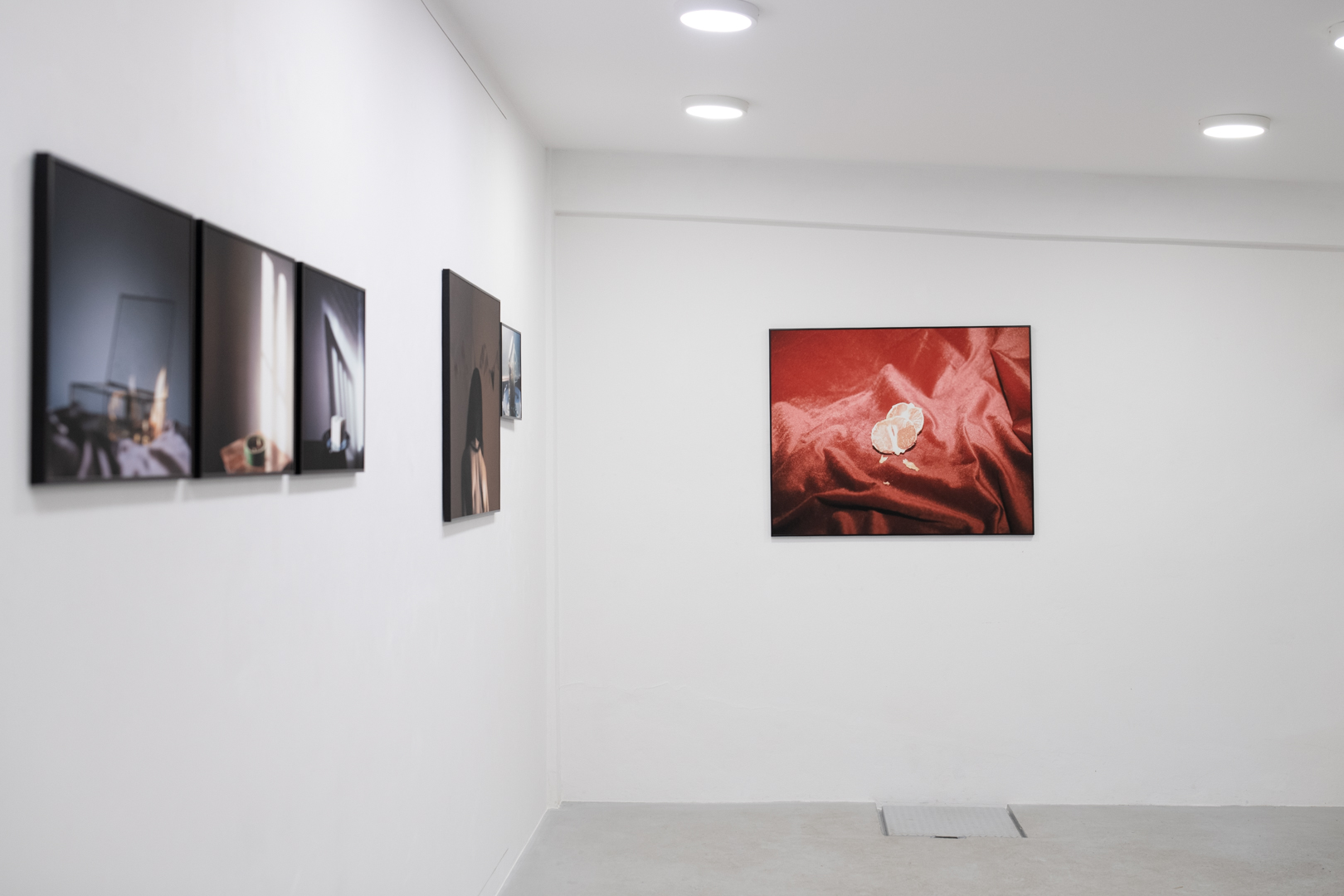
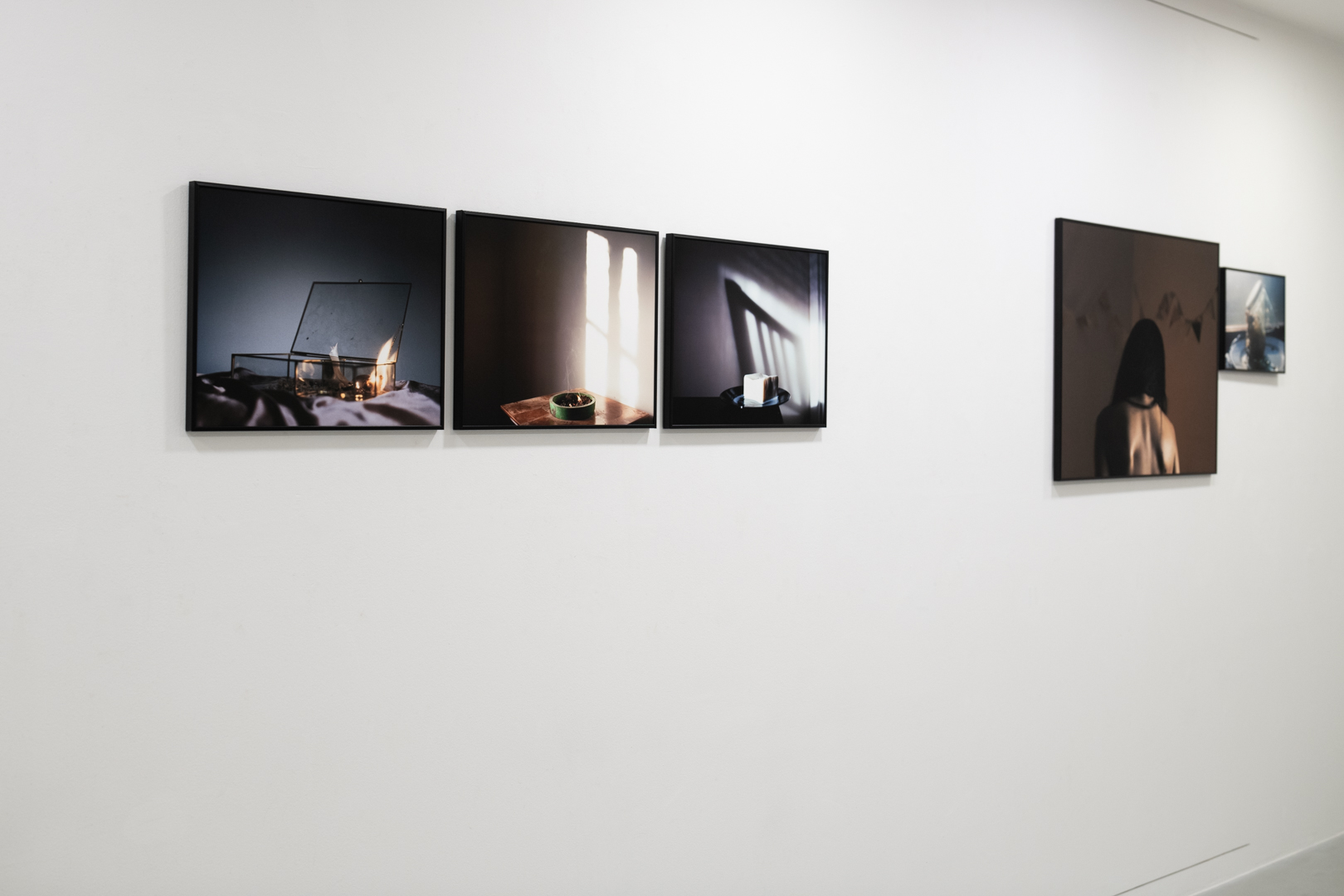
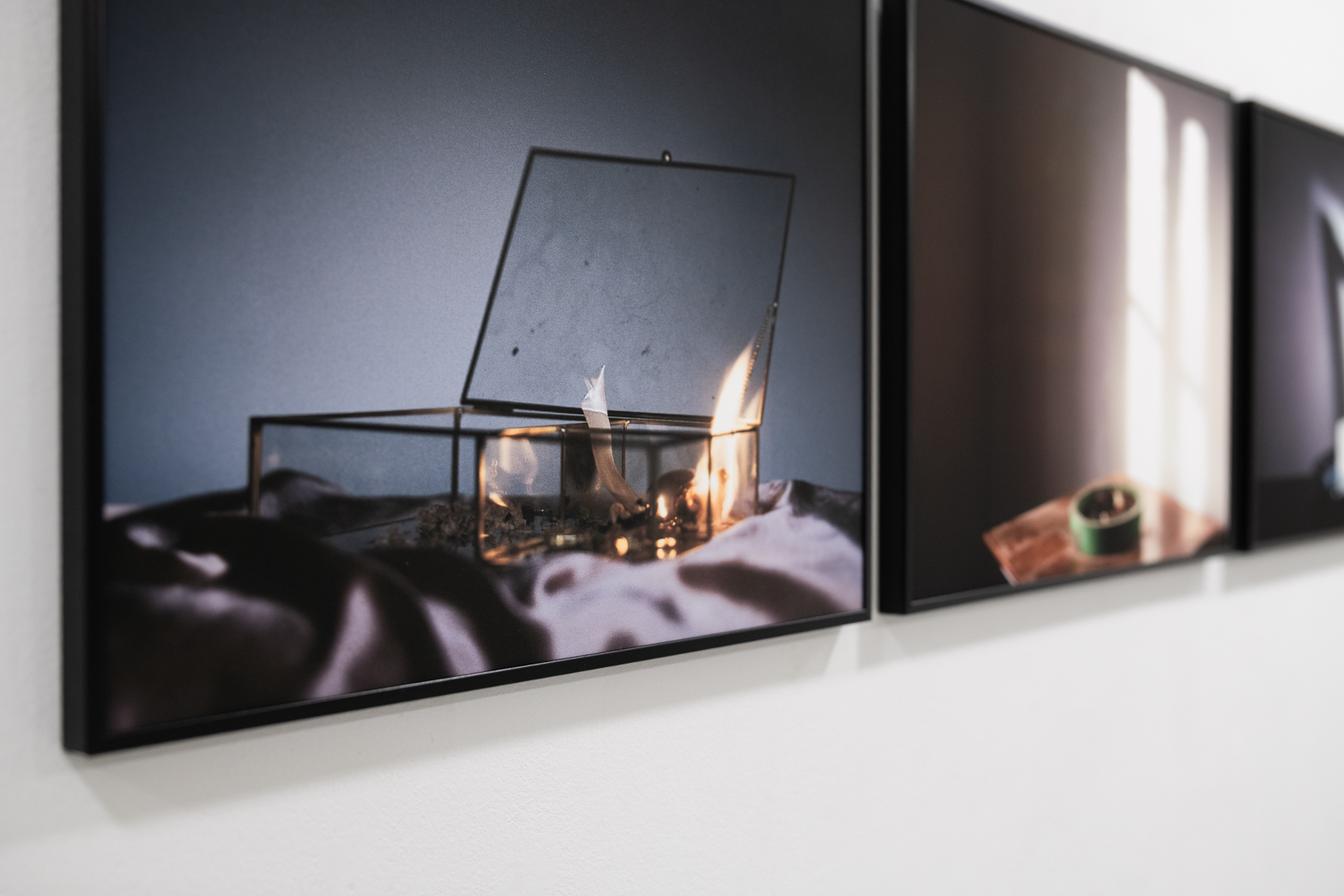
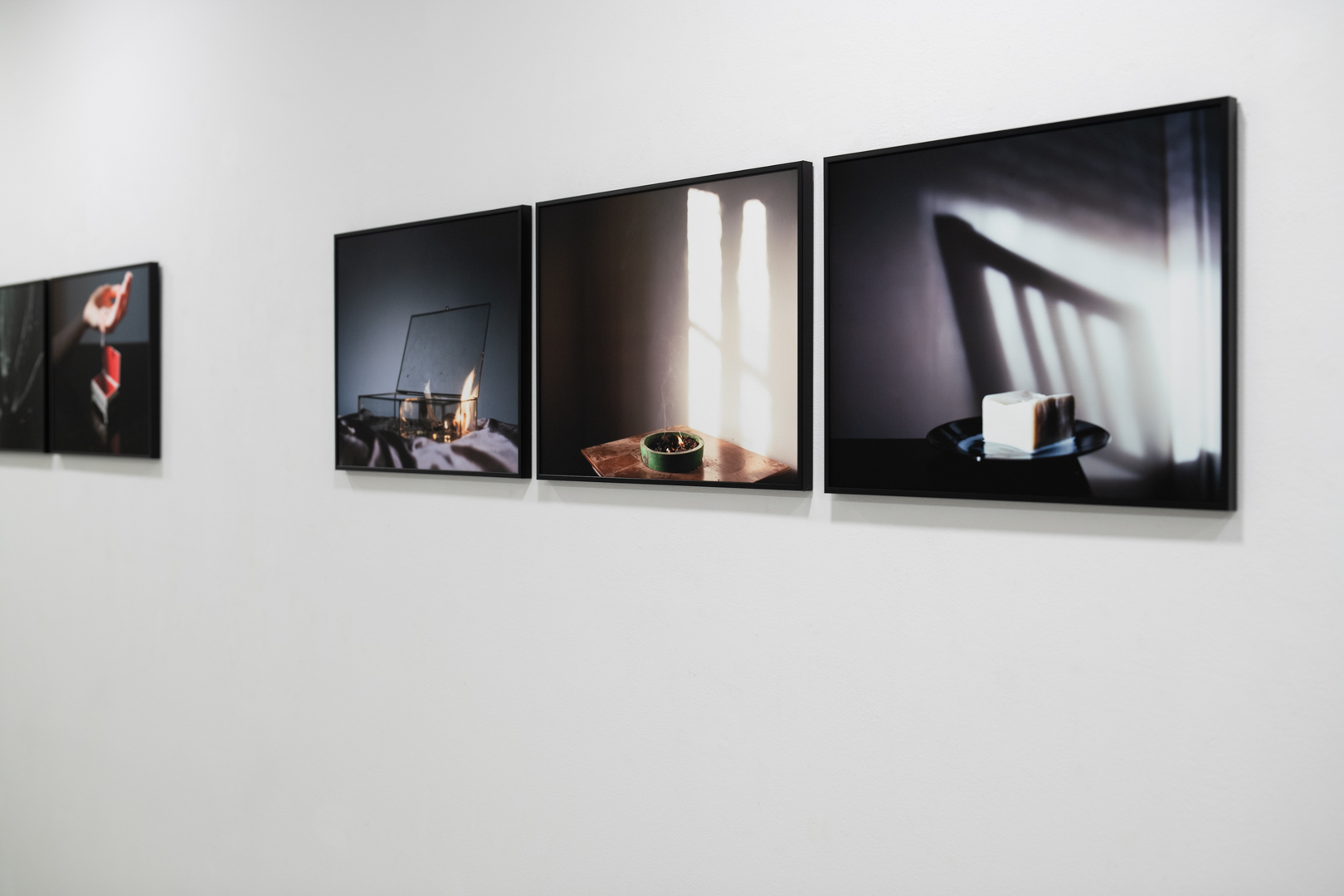
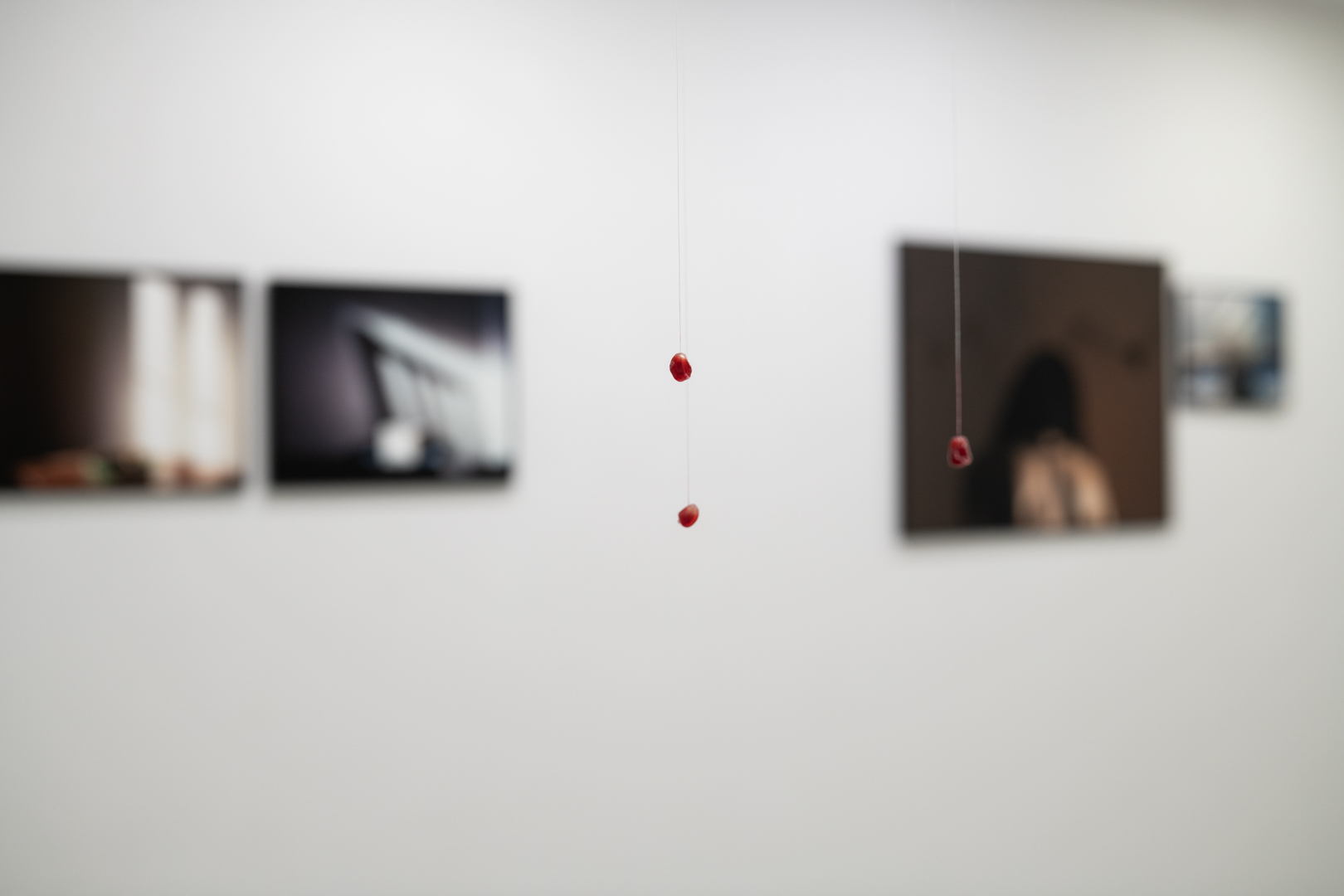
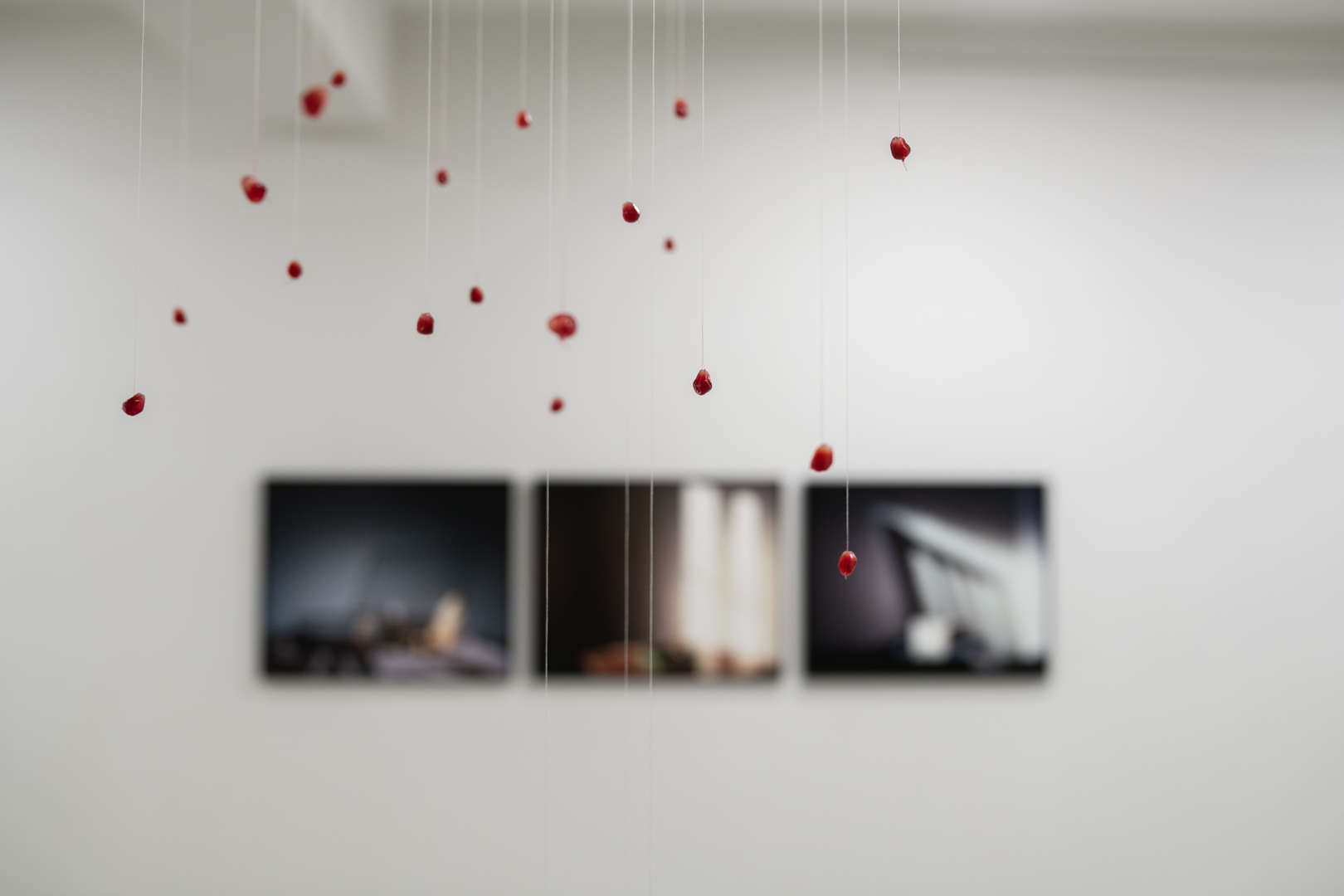
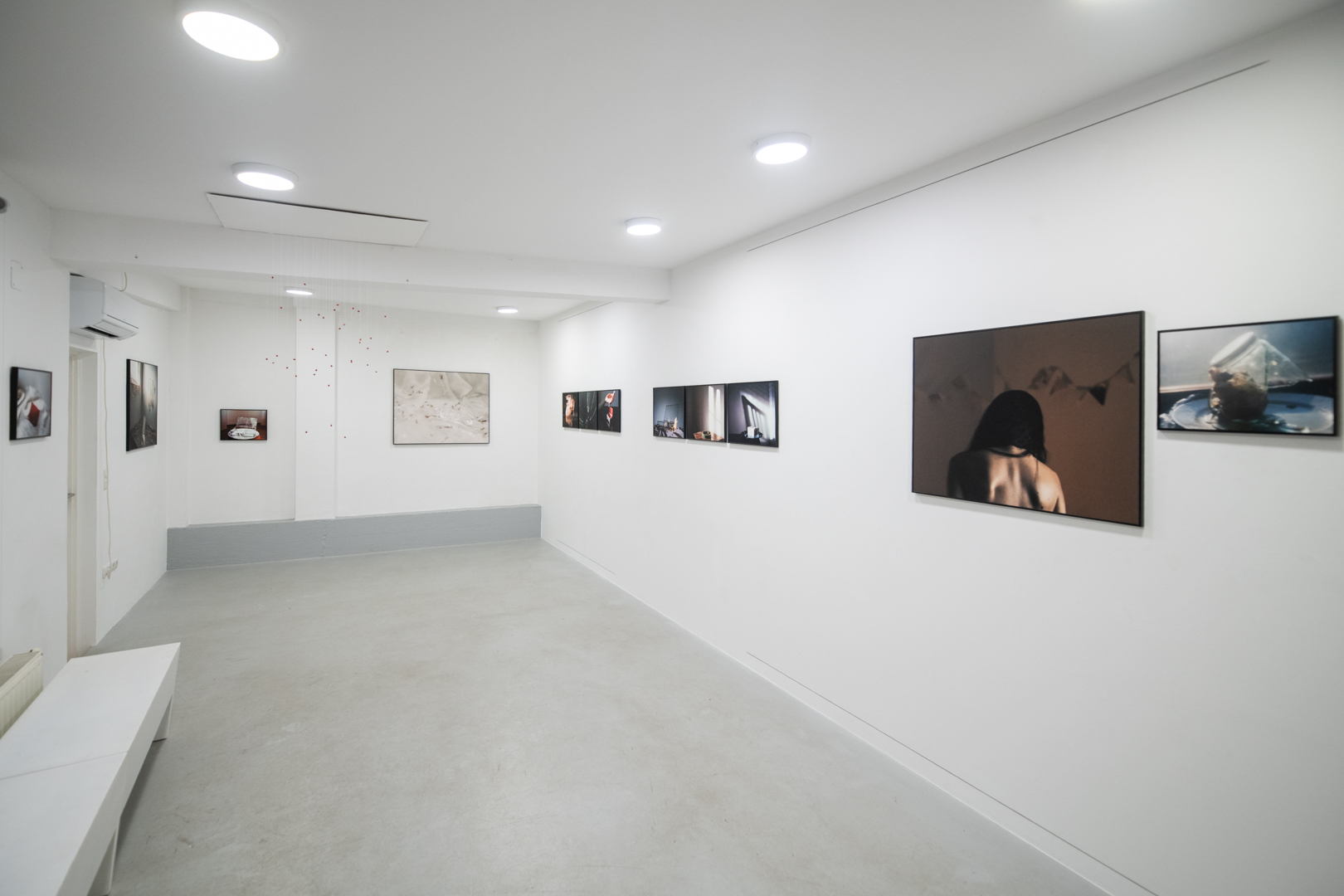
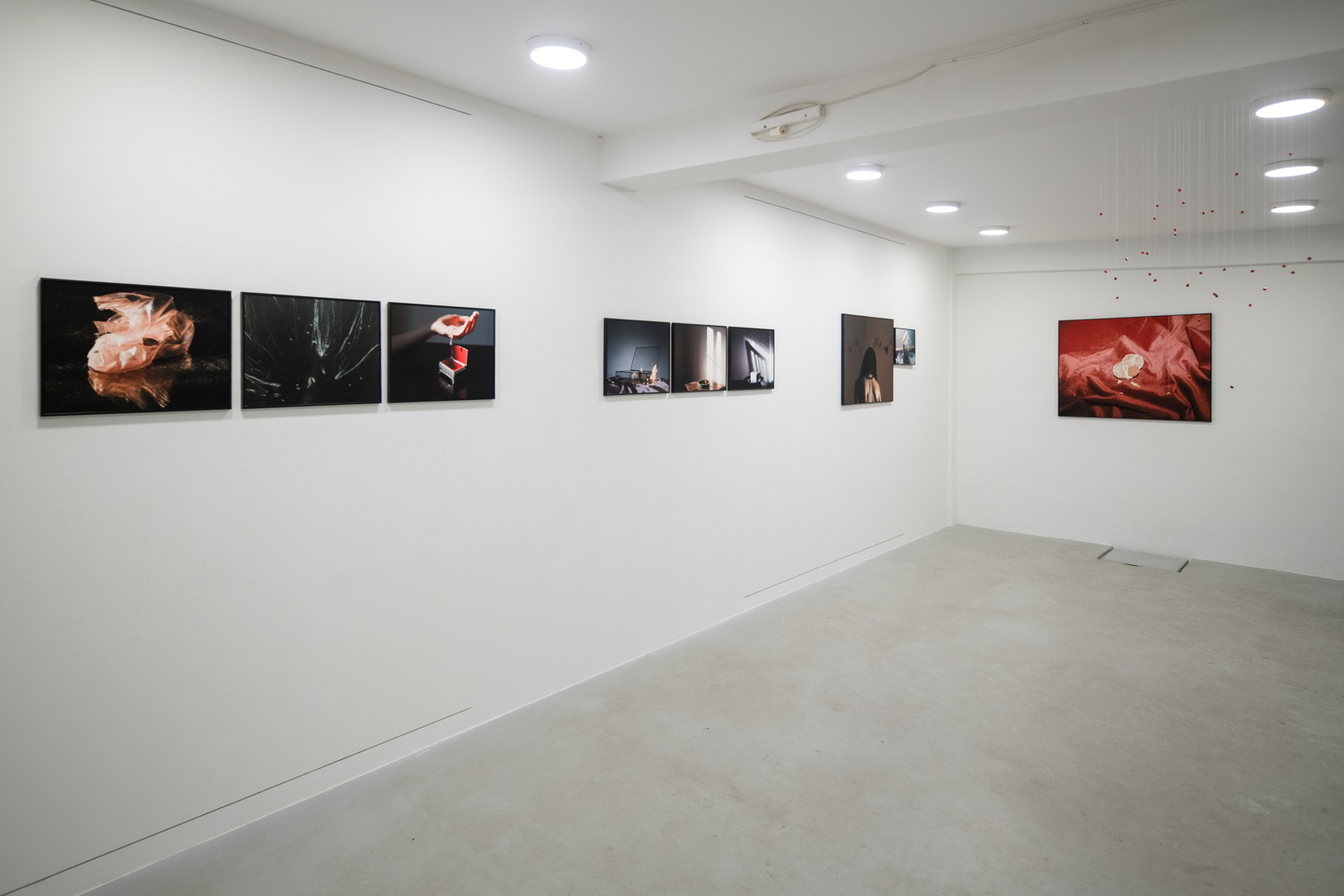
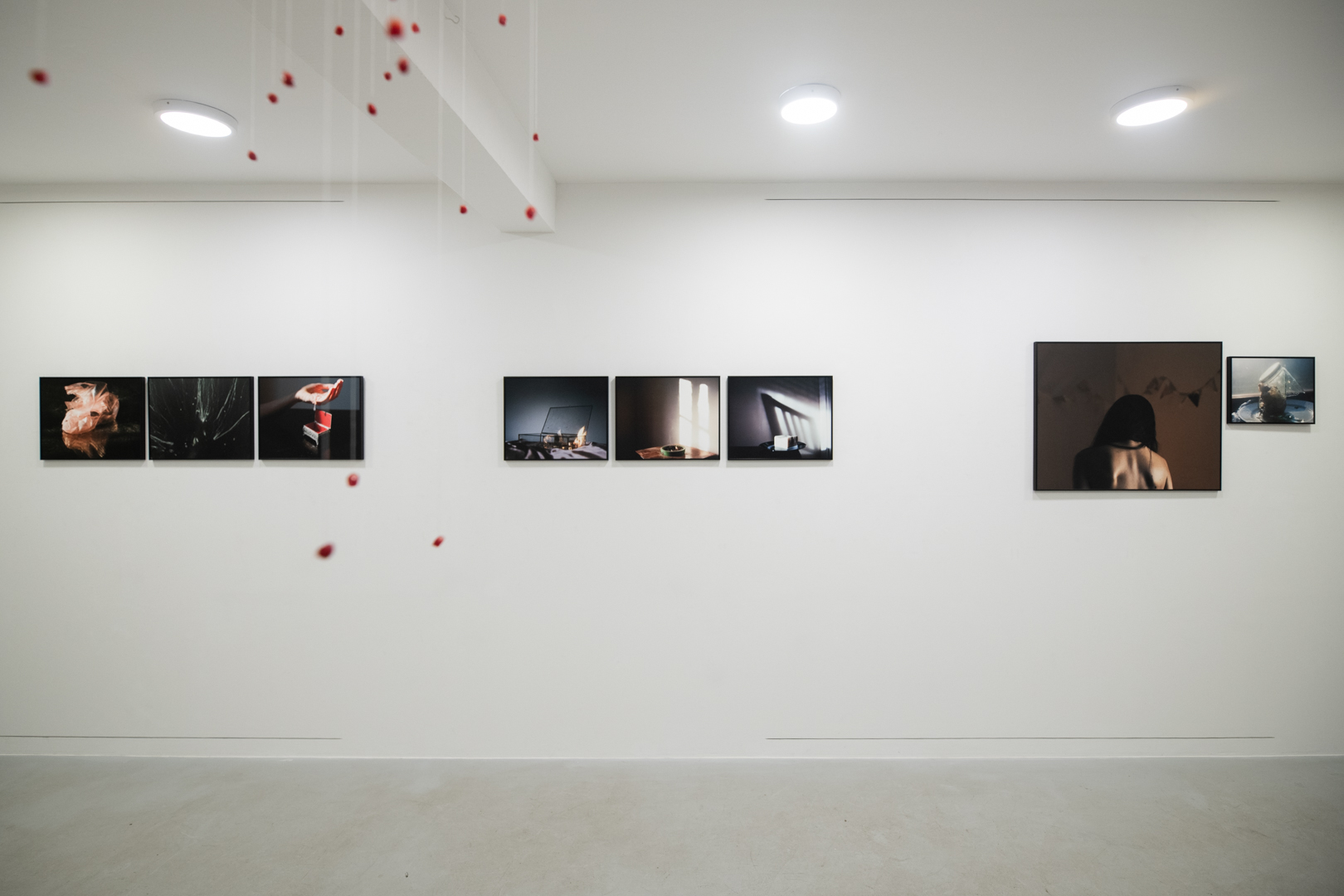
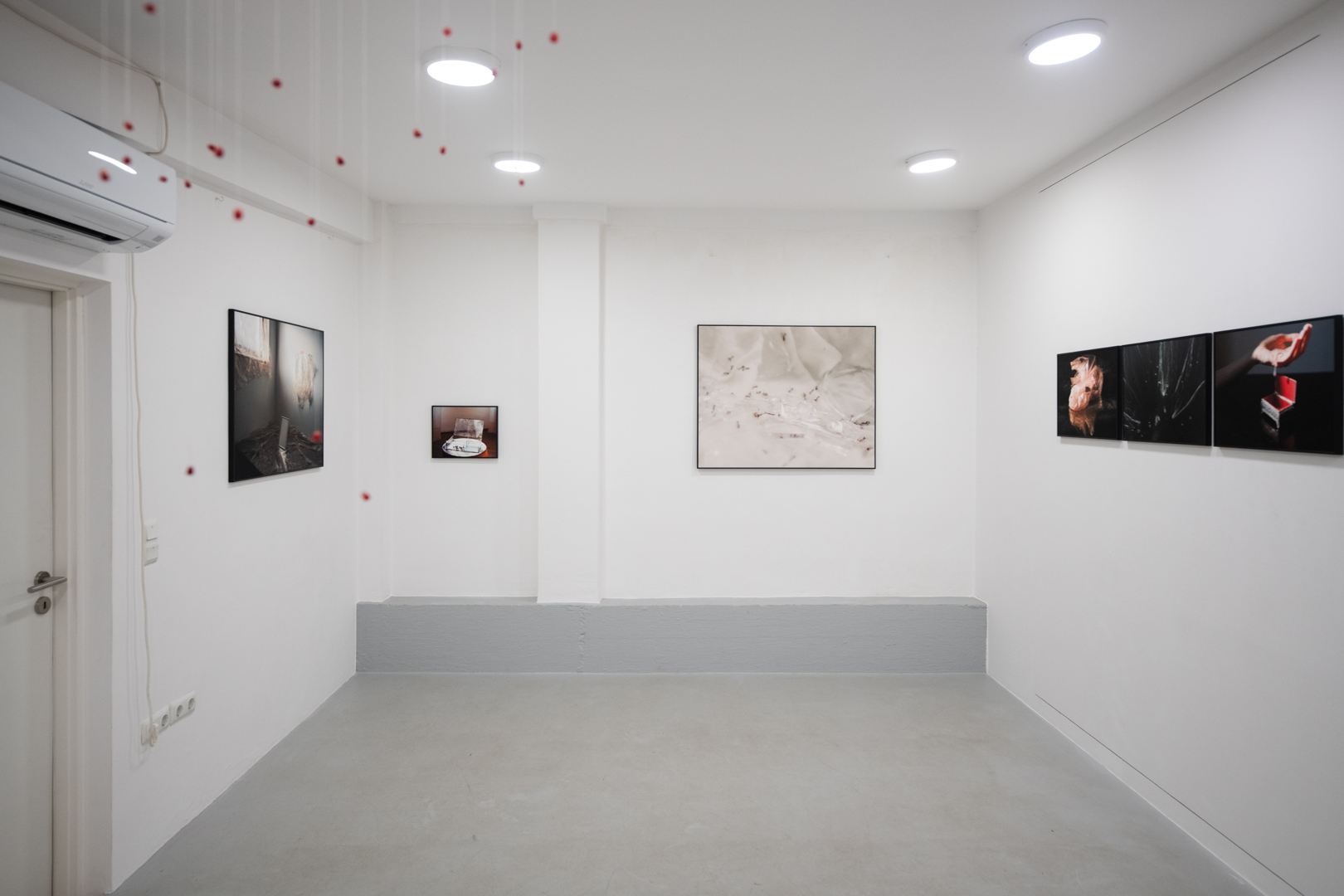
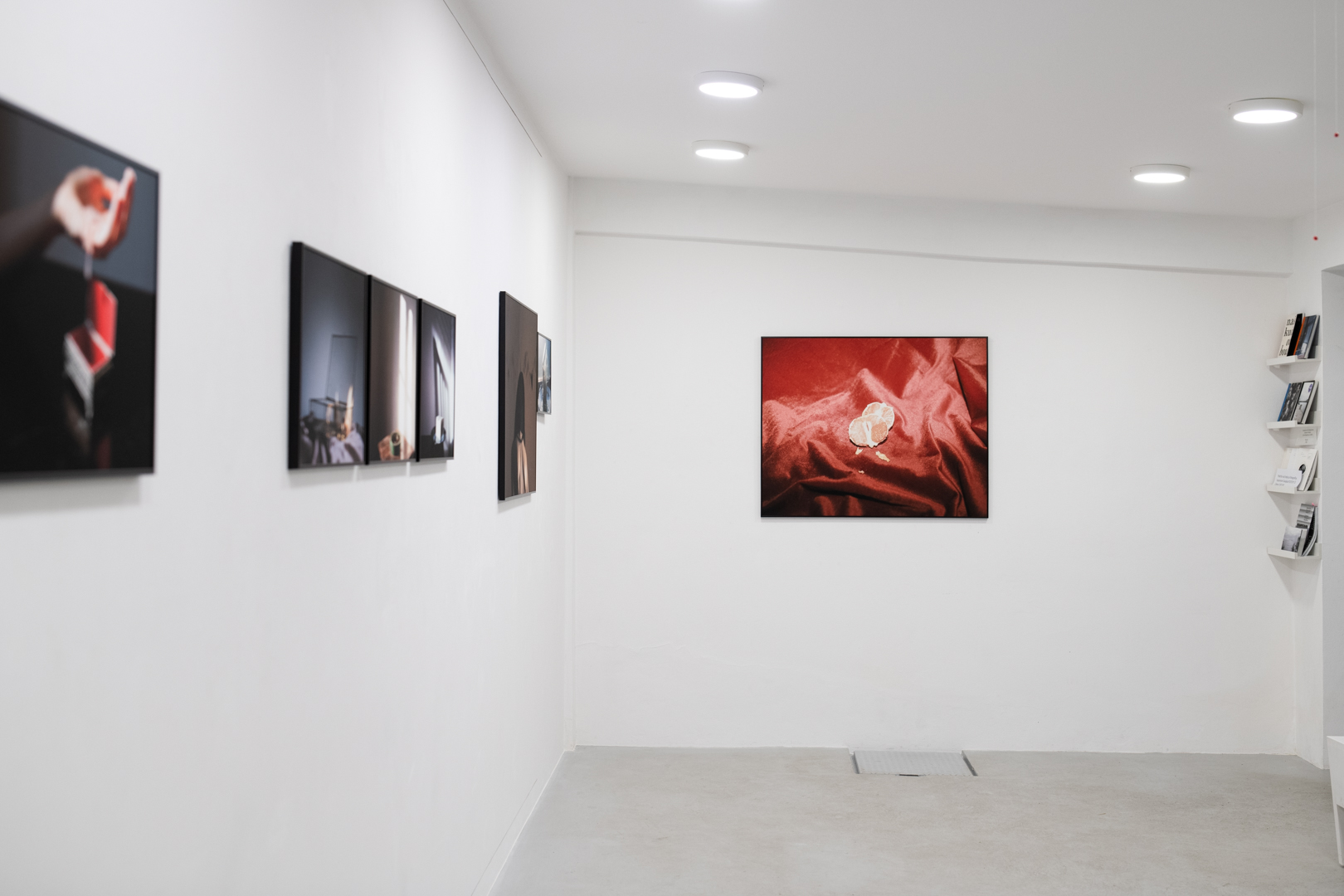
Set up photos: Ivan Buvinić
Growing up is not a sharp break, but a process of quiet, almost imperceptible transformation. It is a period of self-discovery that unfolds in relation to our surroundings and the people around us. In that in-between space between who we were and who we are becoming, everyday actions take on new meaning. Doing our own laundry, preparing meals, earning and managing money, and other seemingly mundane tasks become rituals of independence.
Kala Eror explores the transition from girlhood to womanhood. Girlhood is often portrayed as a fragile, fraught period – a time of oscillation between assuredness and doubt, between play and seriousness – a space in which identity is only just emerging, subject to experimentation and change. If we define girlhood as a space of identity ambivalence, the question arises whether that ambivalence disappears once we assume the socially prescribed role of adults, or whether it continues under different social pressures. Is maturity a stable state, or an ongoing negotiation with one’s identity?
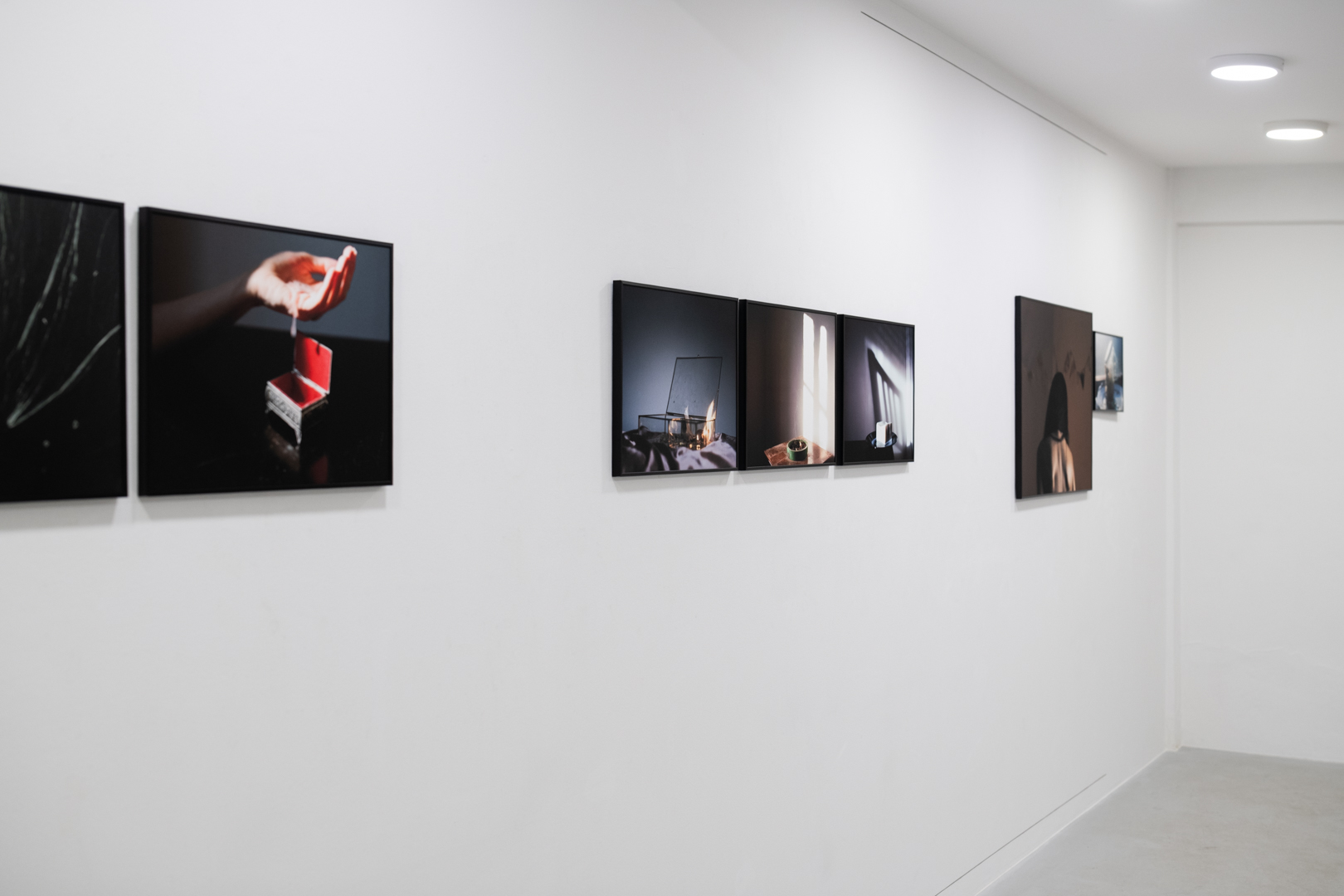
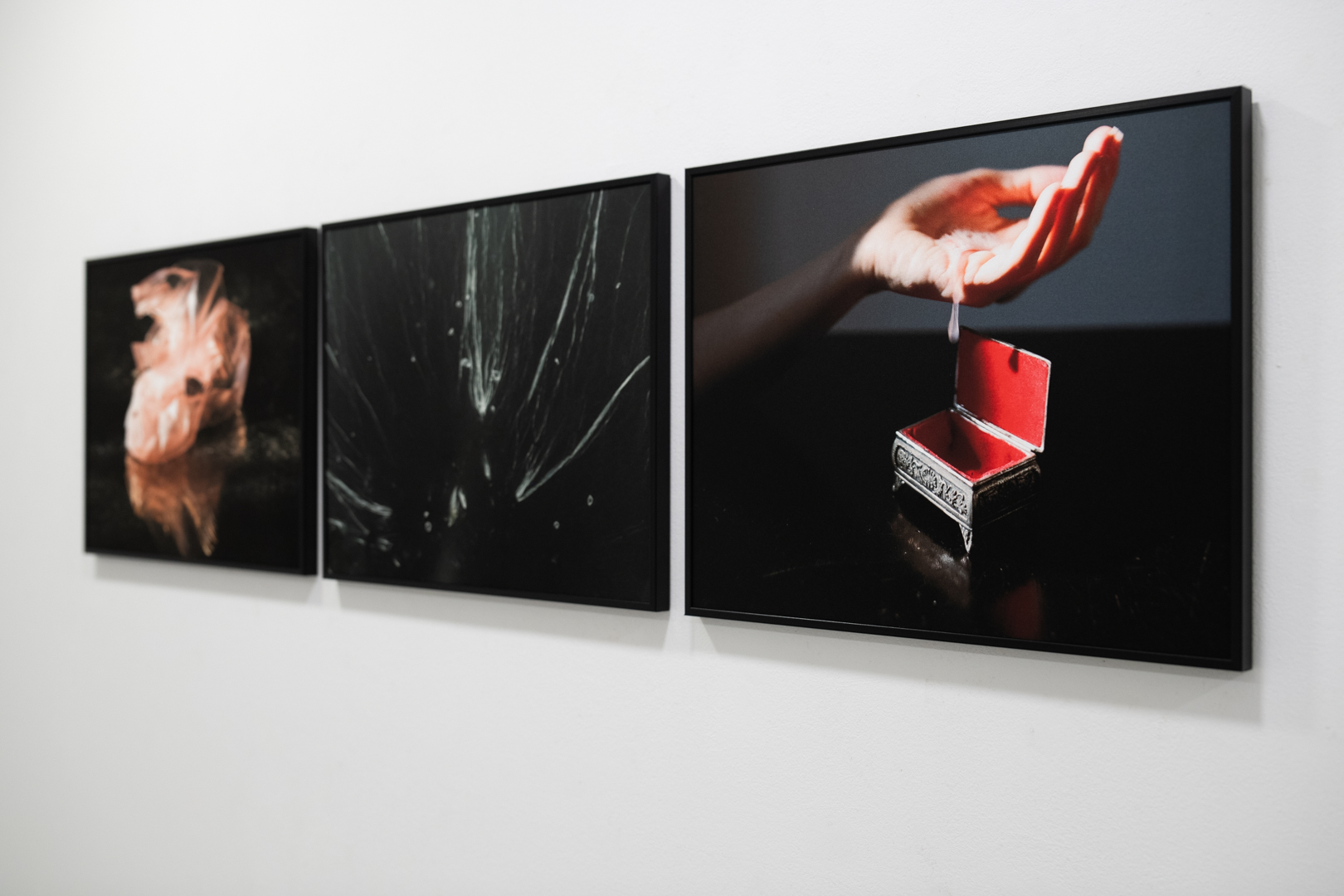
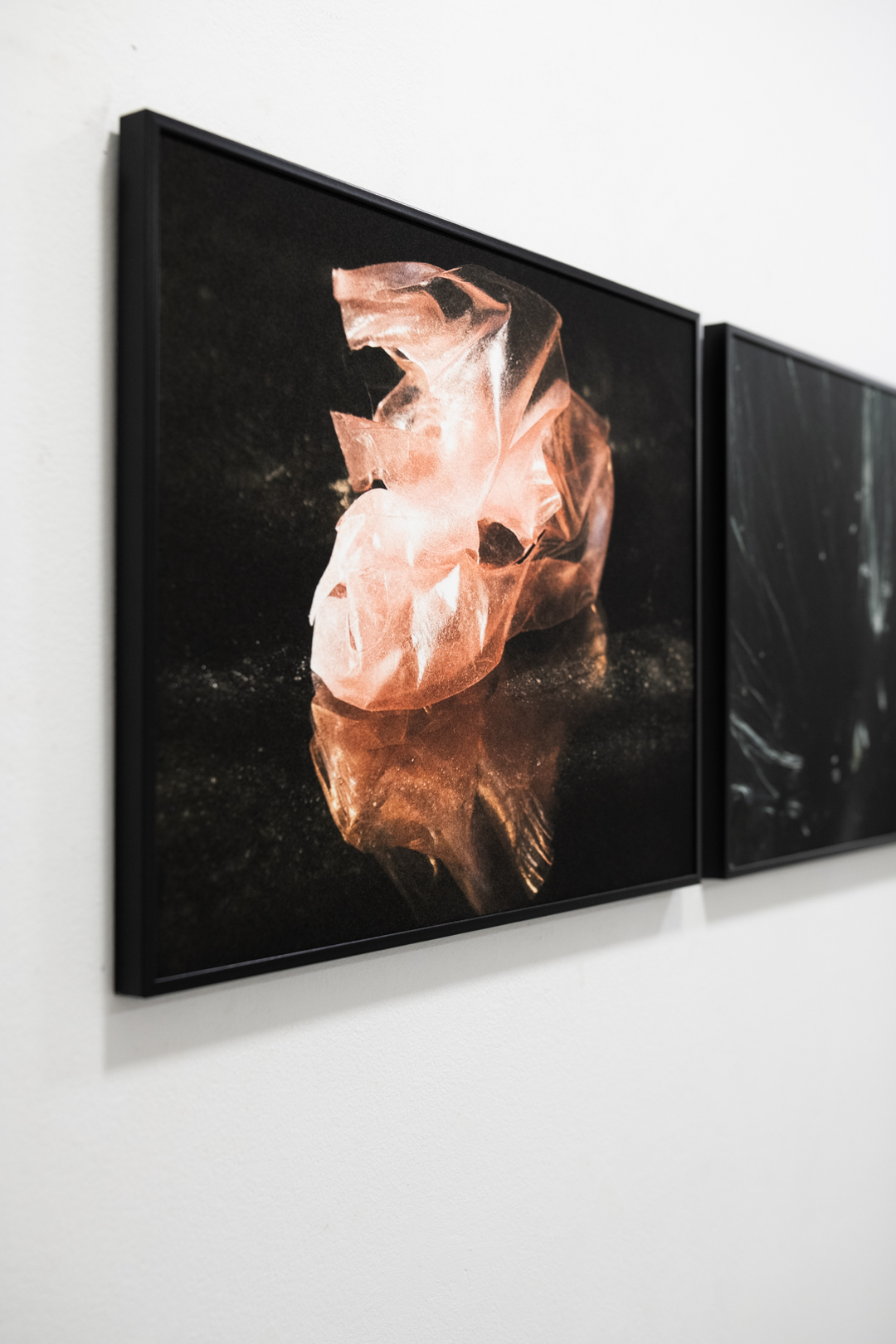
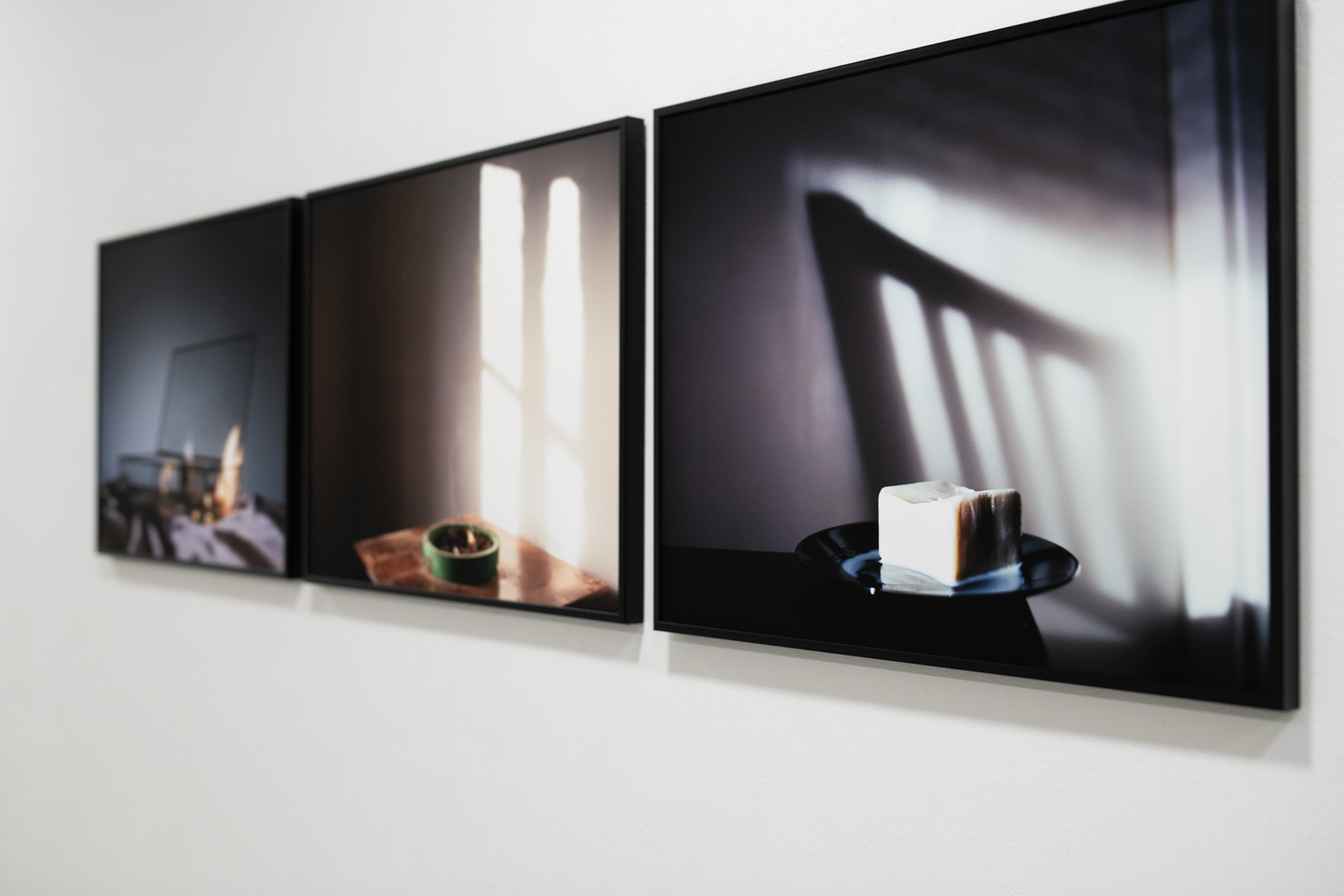
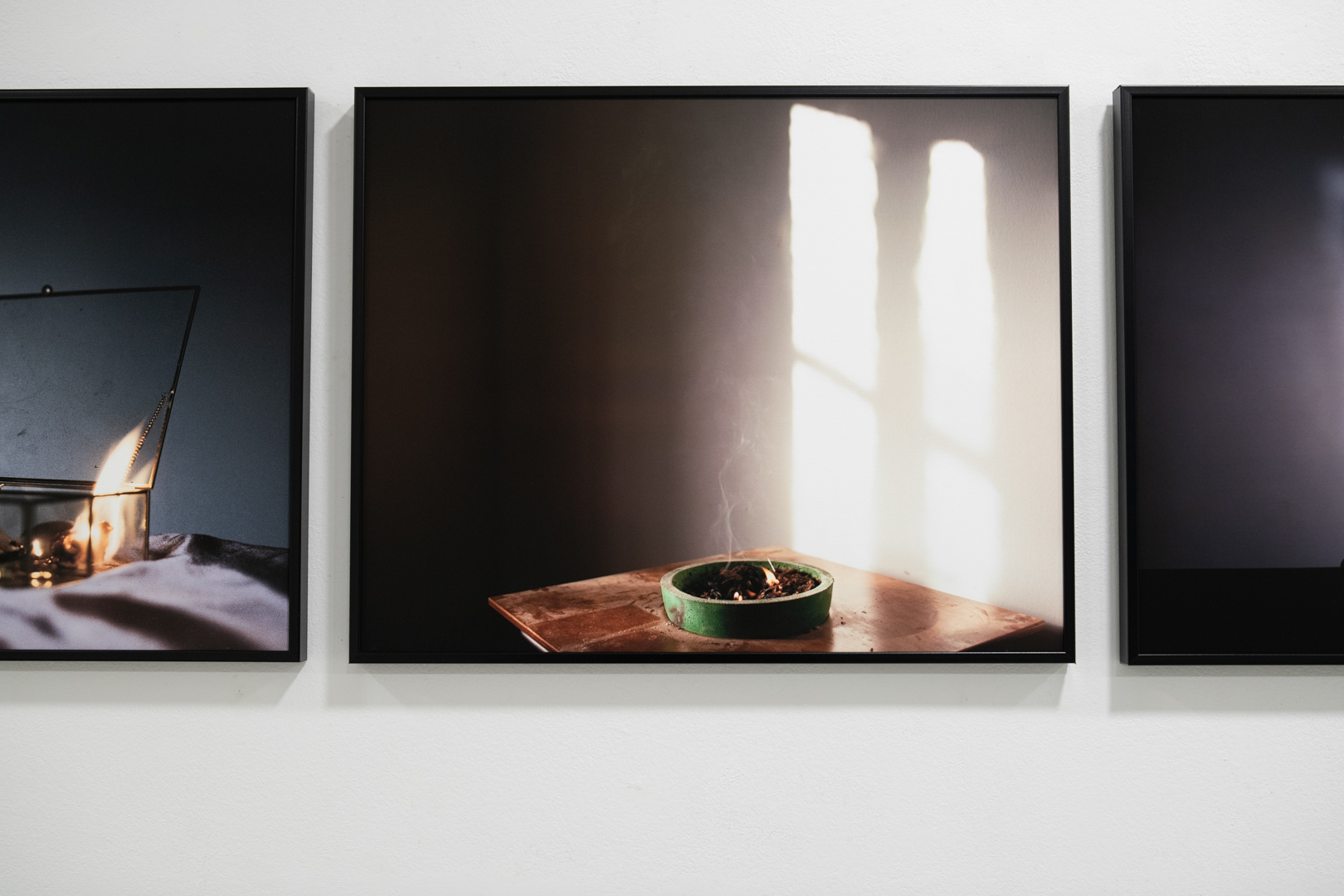
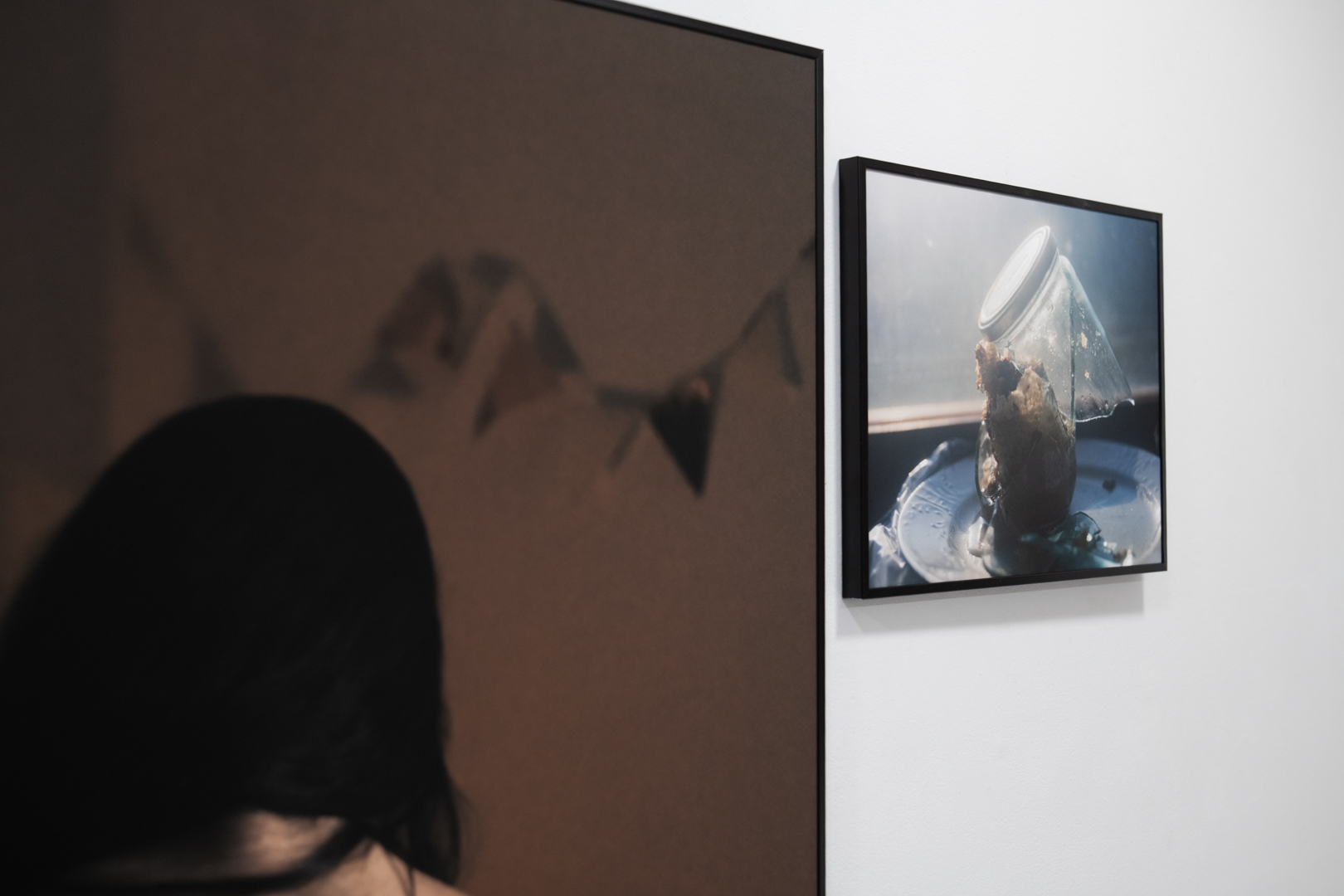
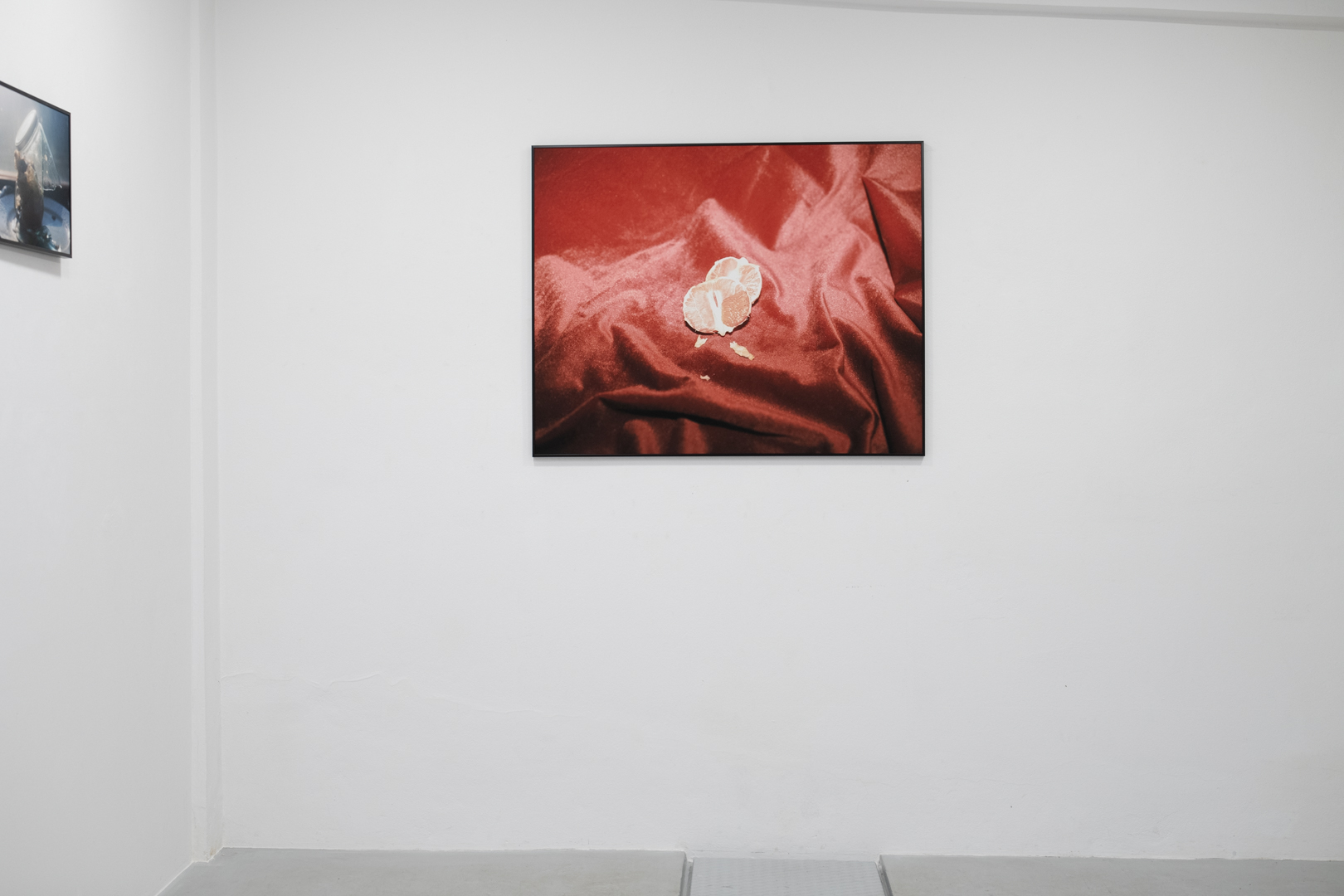
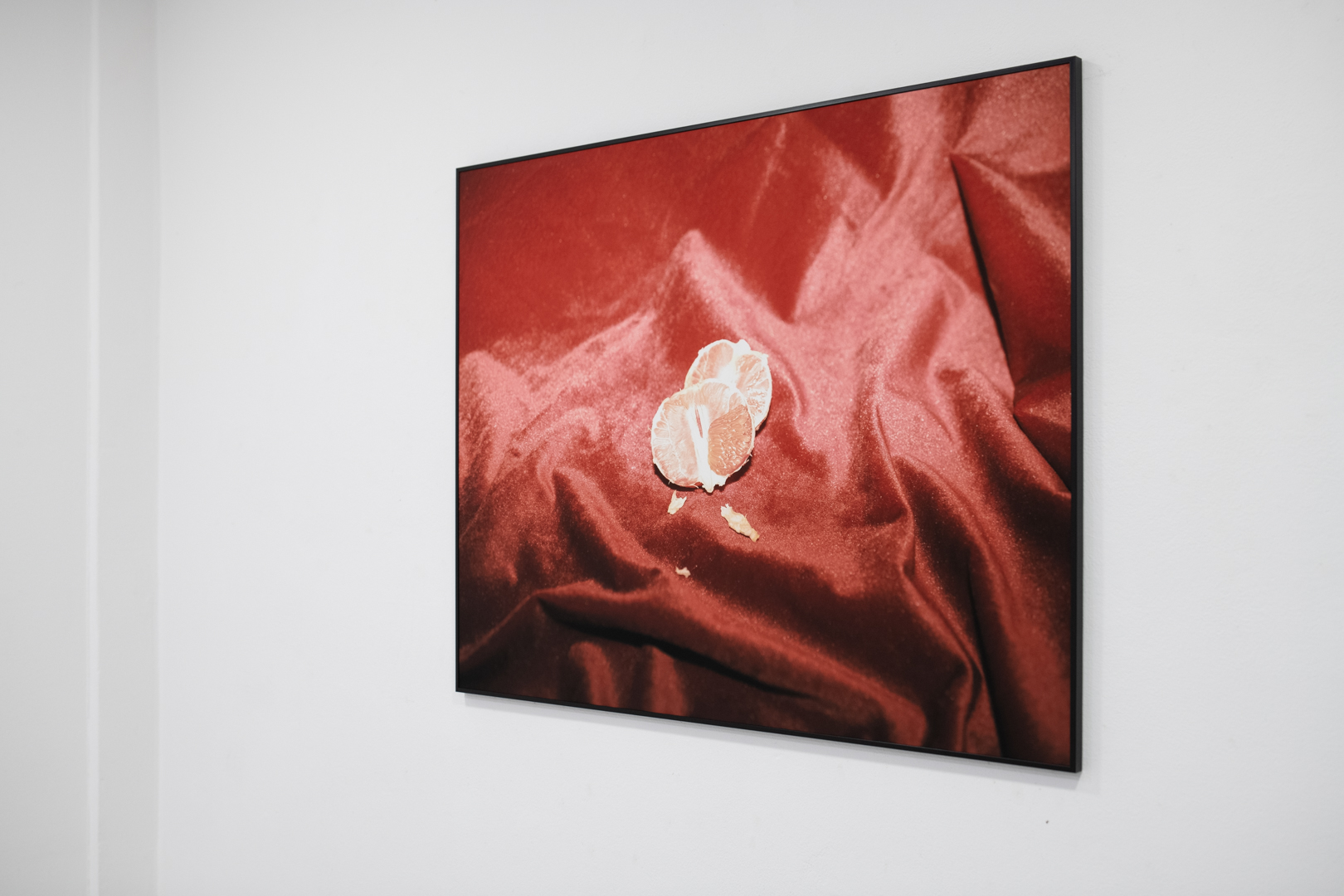
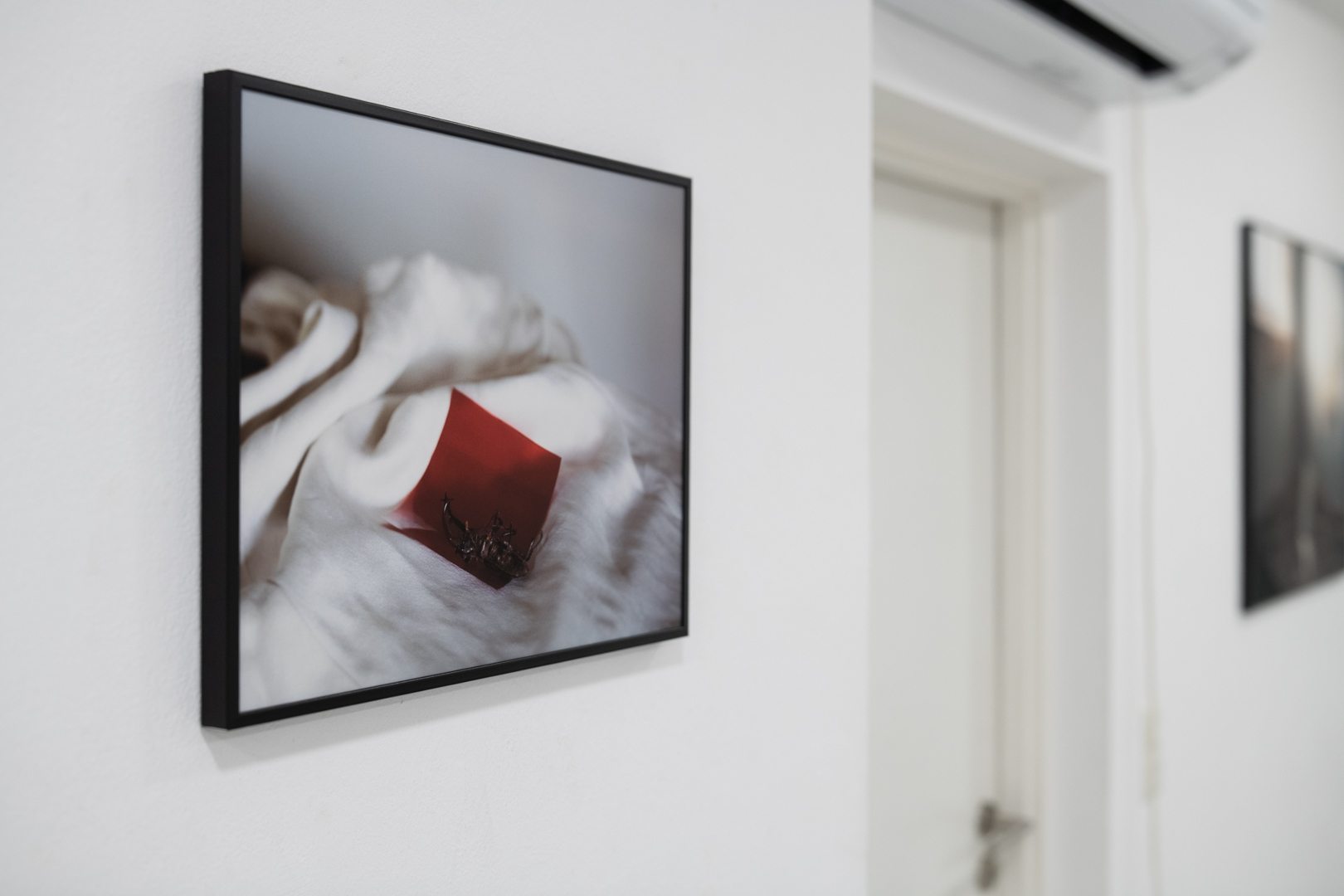
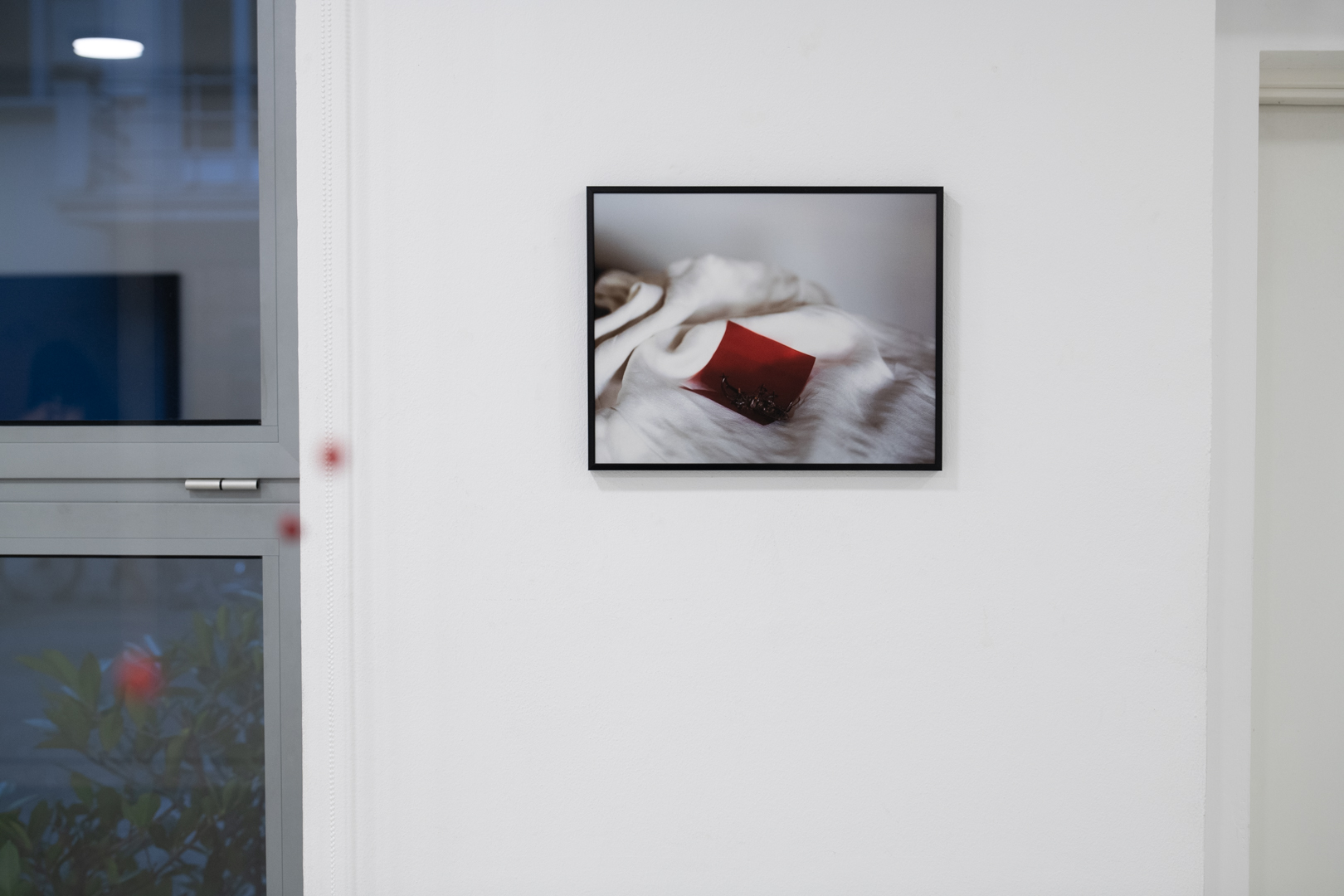
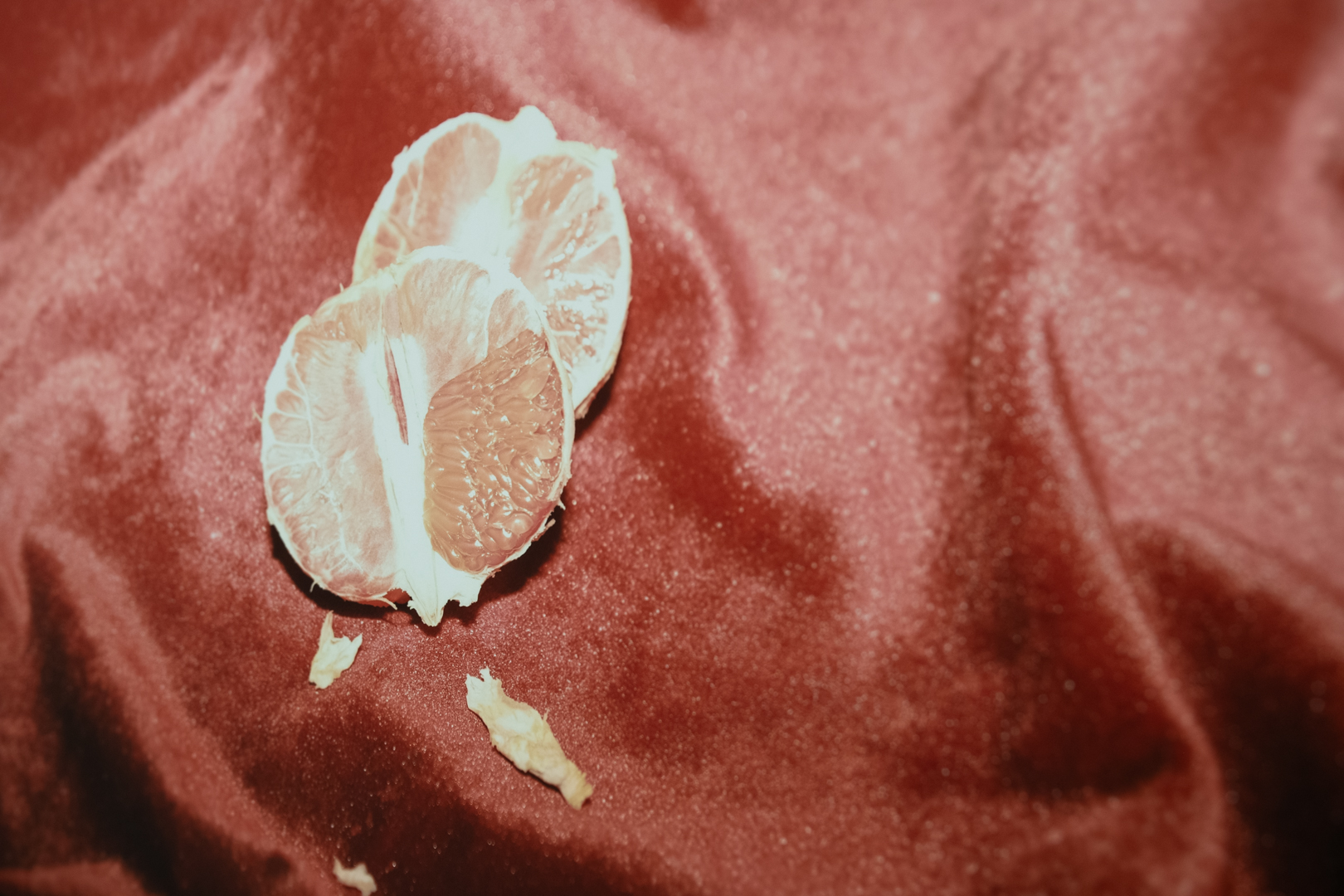
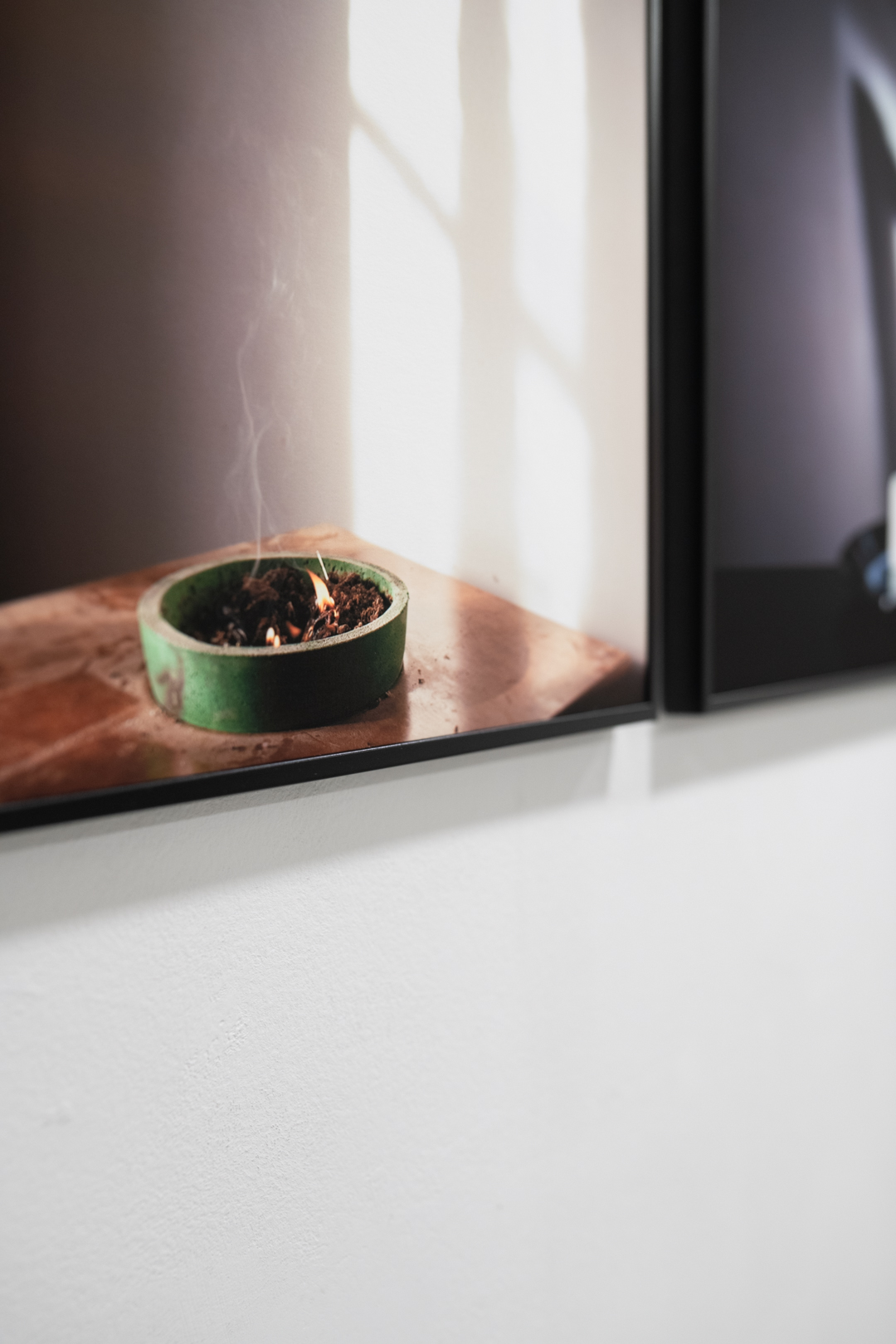
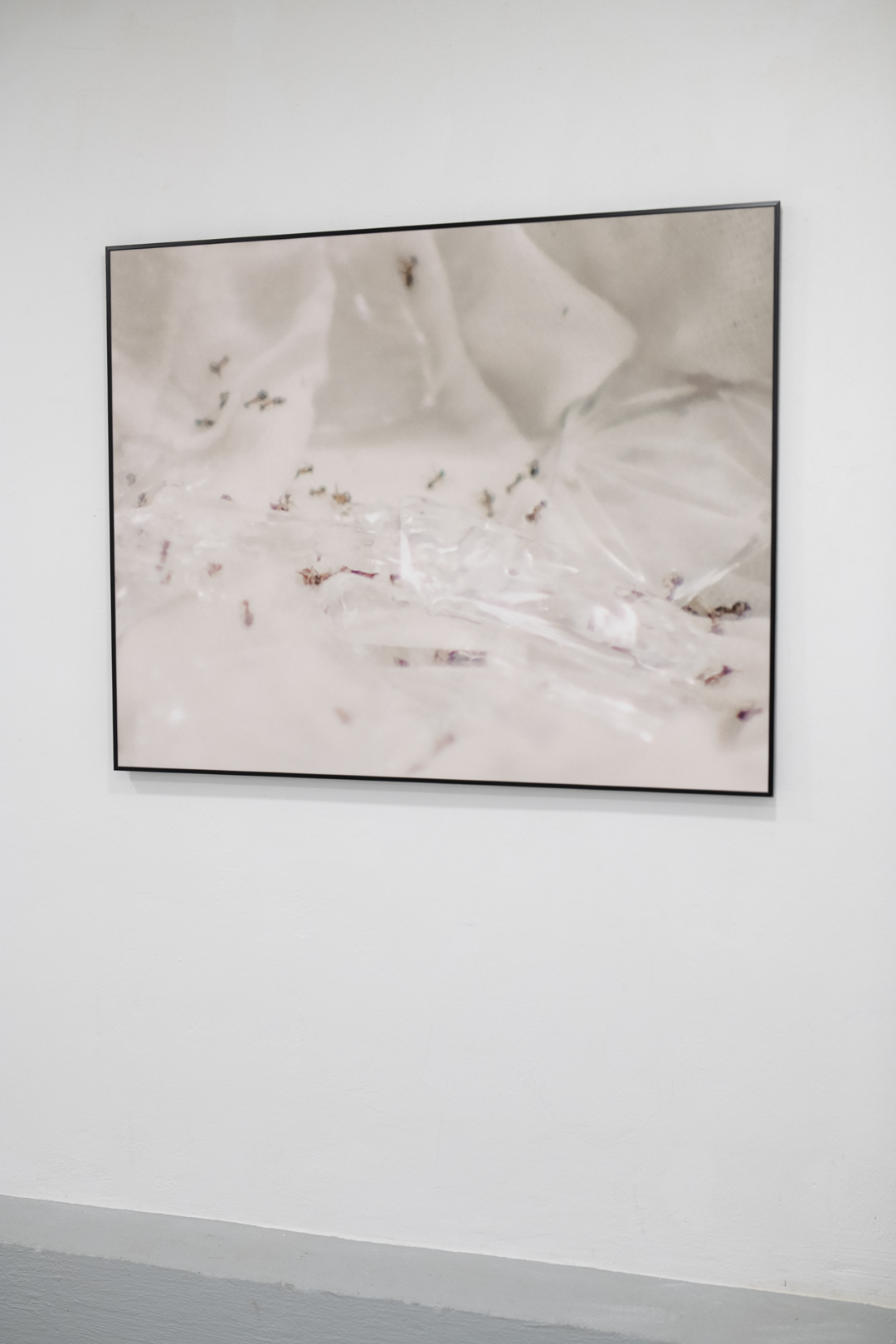
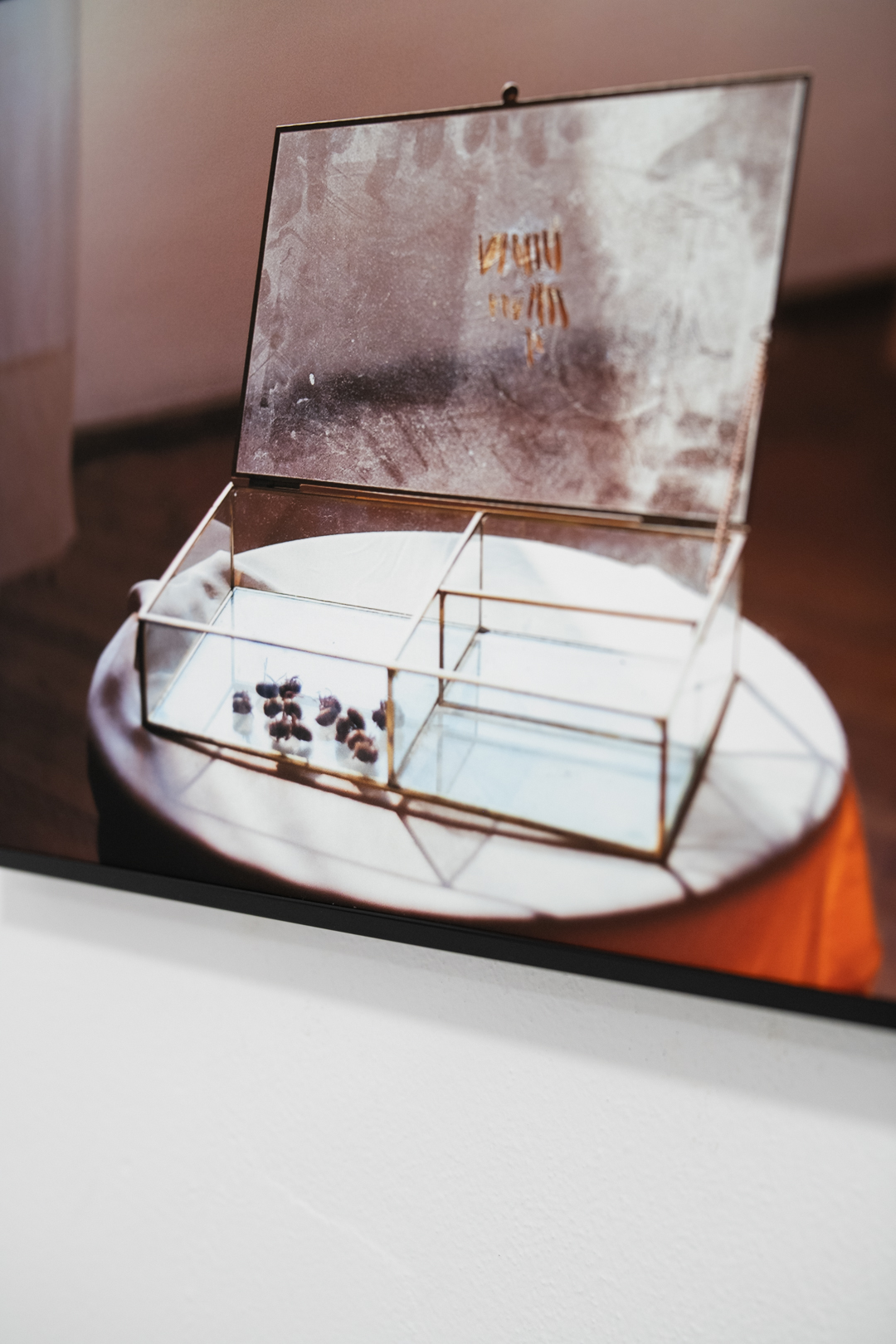
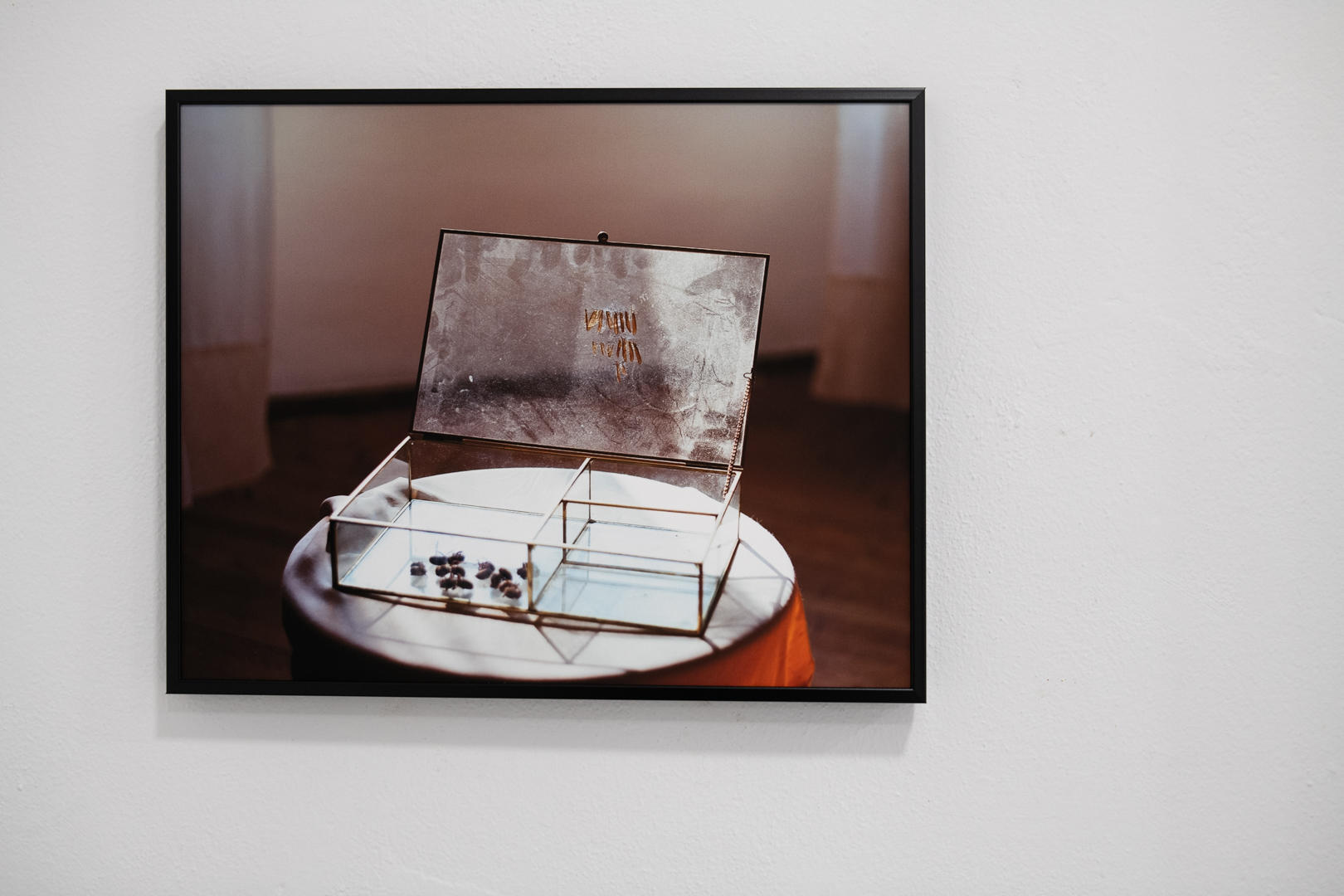
In the photographs, we see the intimate interior of a bedroom. The space is marked by the color pink, traditionally – and almost violently – assigned to girls. Pink is at once tender and provocative, naive and subversive. In girlhood, pink is expected, almost mandatory; in adulthood, it becomes suspect, infantile, and over-the-top. A label imposed before our first steps later becomes a burden – a sign of immaturity.
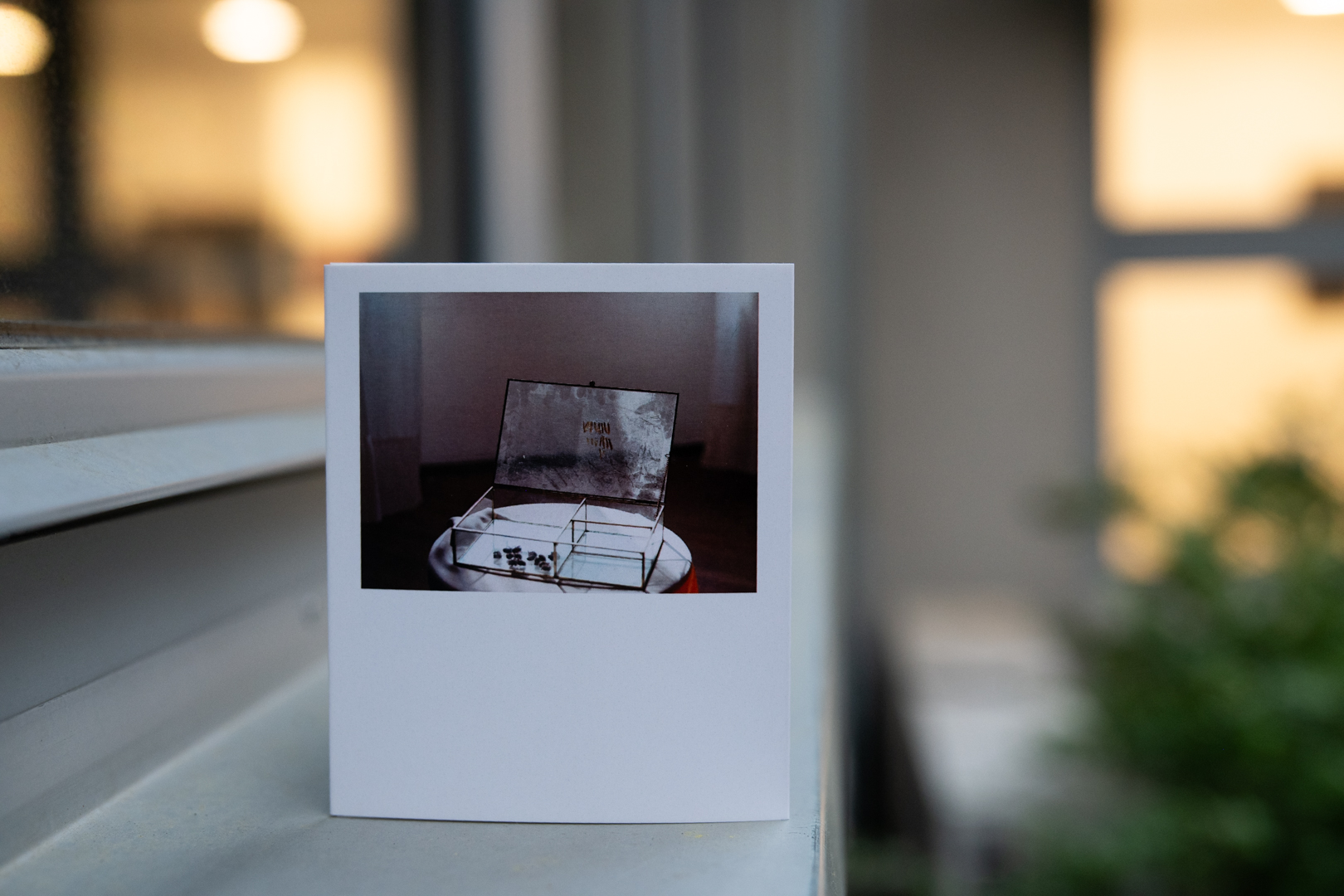
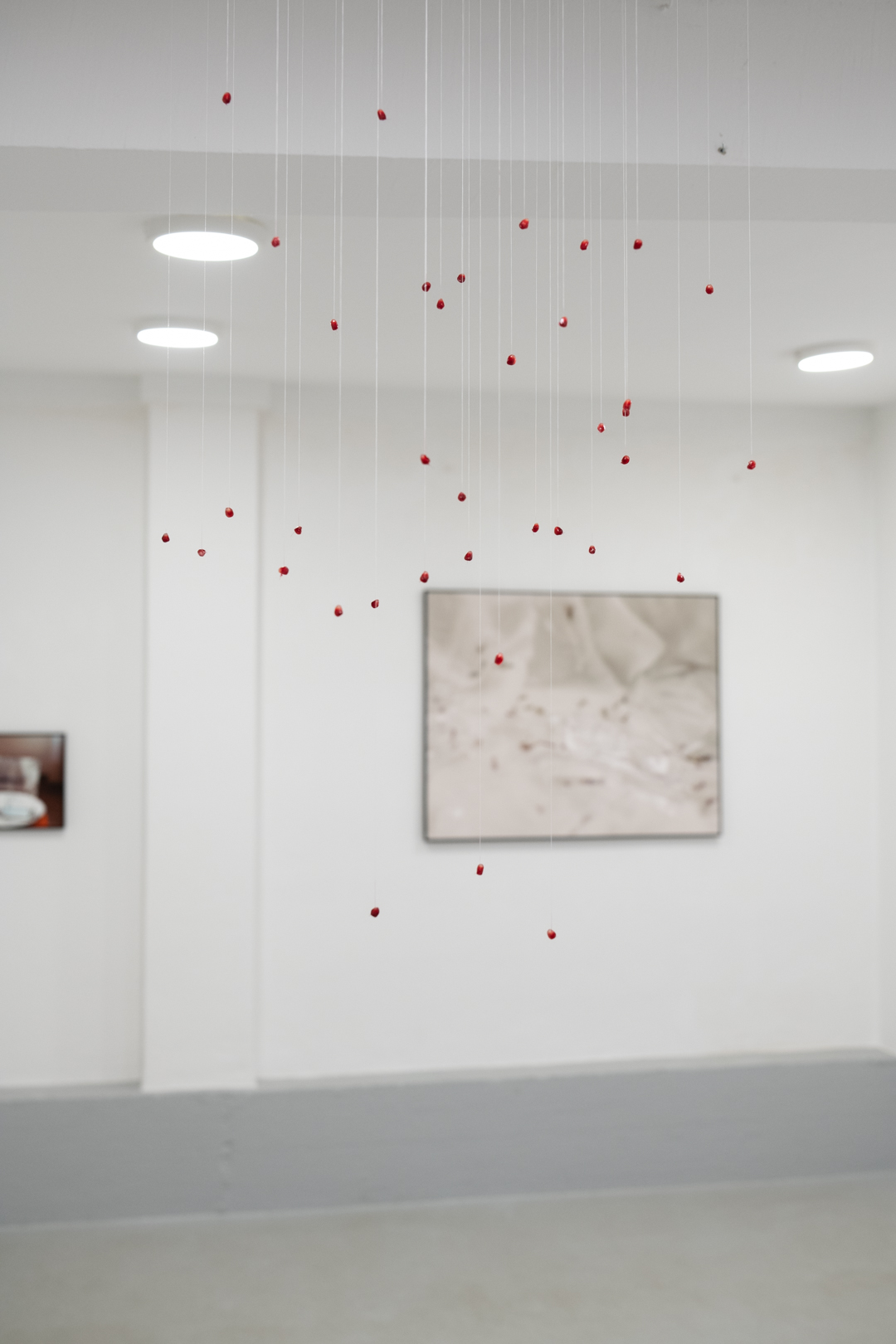
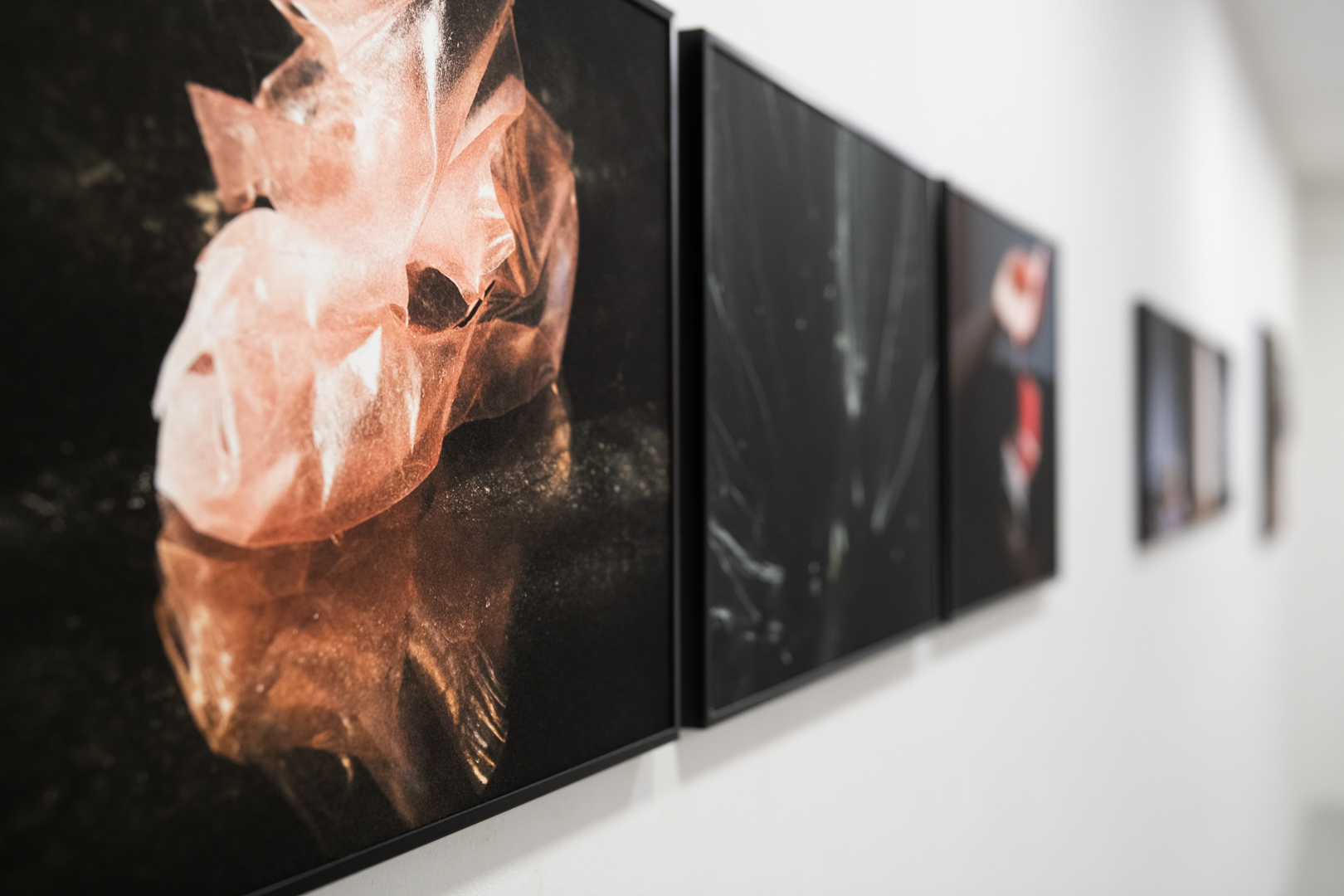
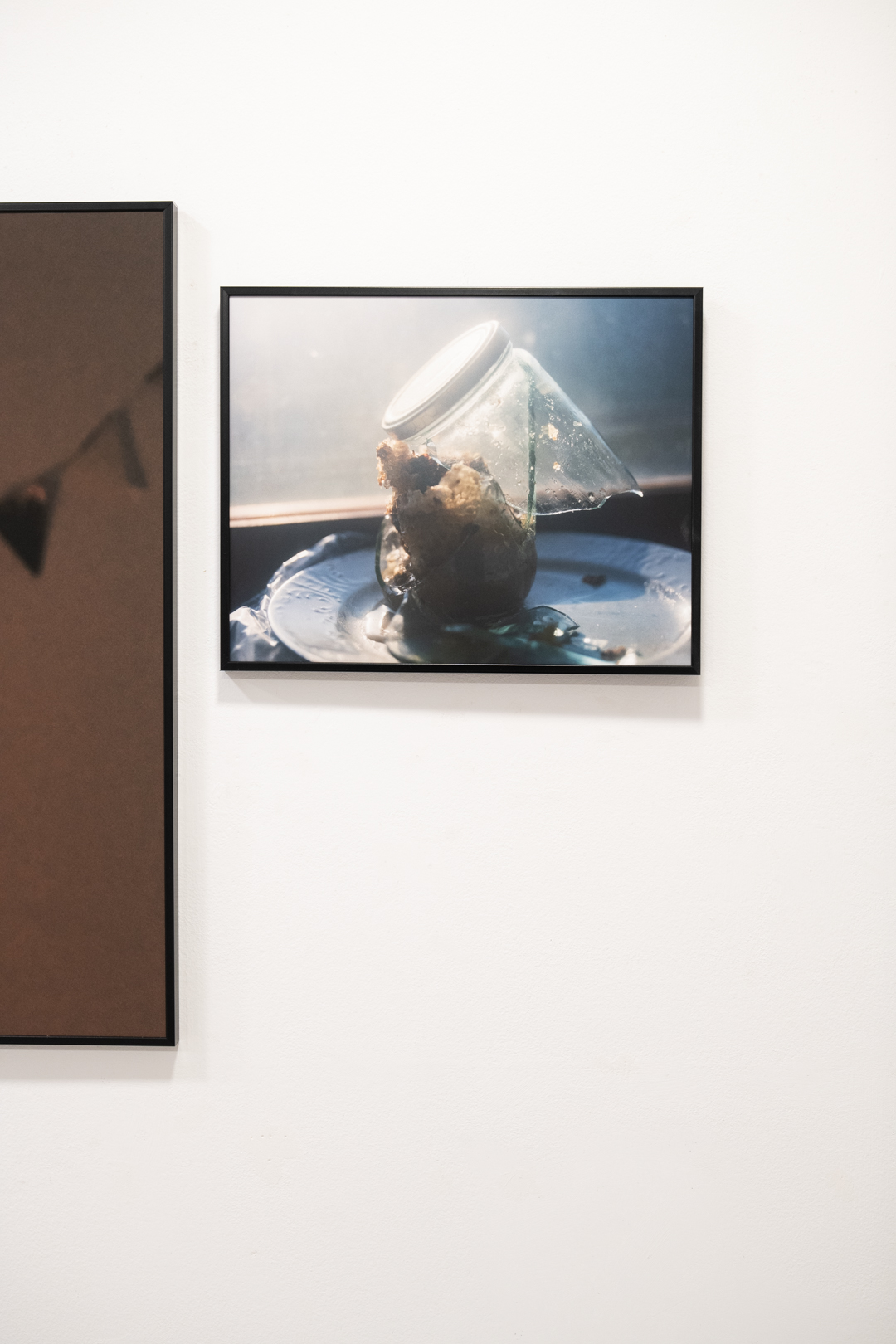
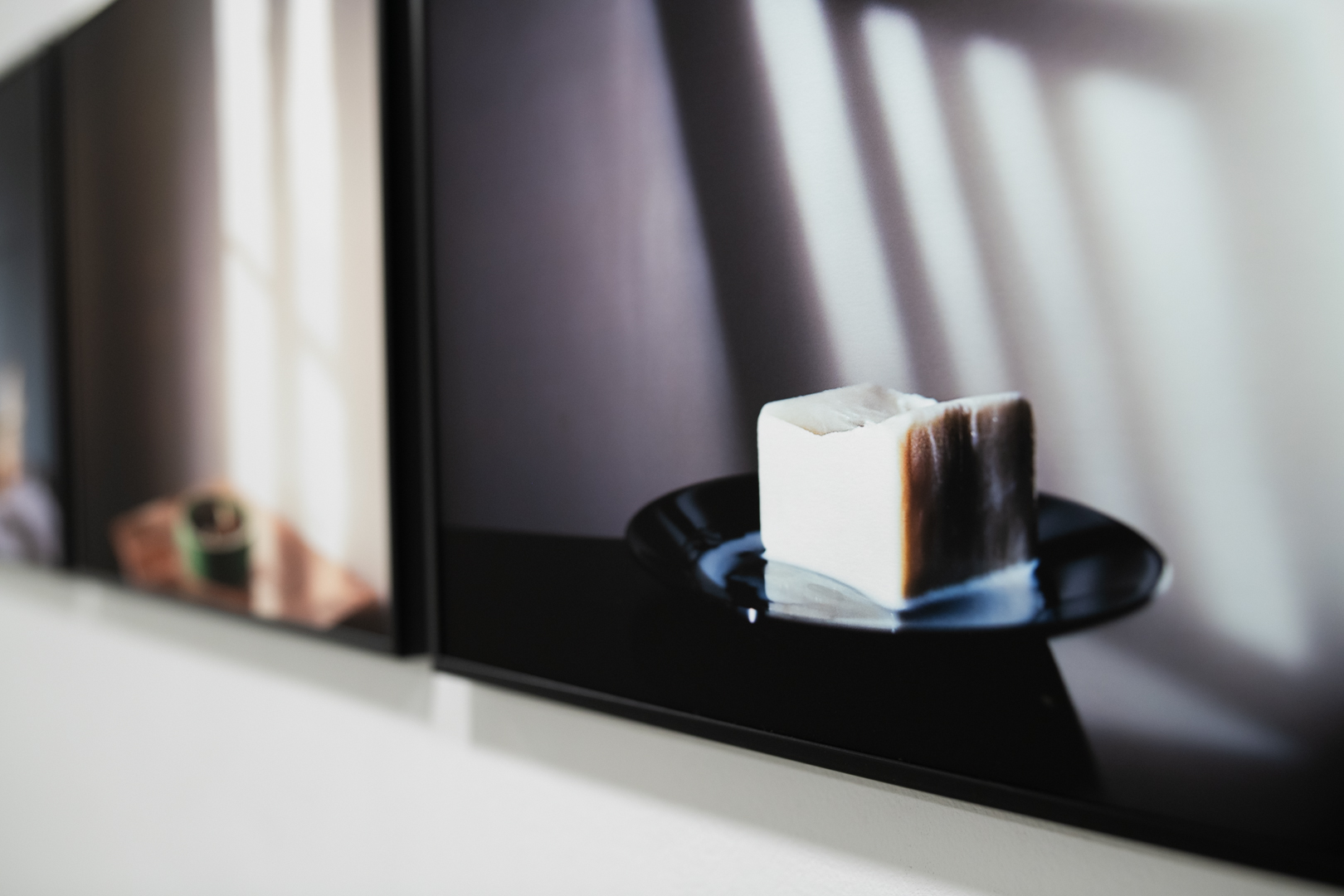
The objects the artist documents are mostly organic and perishable, frail, transient, and subject to change. We see dead insects, saliva, beetroot leaves. These motifs remind us that the process of growing up is unstable, shaped by a continual shedding of earlier versions of the self.
This exhibition does not provide a definitive answer to the question of when a girl becomes a woman, nor does it aim to do so. Instead, it focuses on details: the fragile body of an insect, saliva, and a broken jar of honey. It is precisely in these small, almost uncomfortable scenes that the transition becomes visible – not as some spectacular act, but as a process of breaking down, changing, and being reassembled. Growing up thus appears not as a neat, clear-cut boundary, but as a trace that remains on the body and in space.
Marko Drmać
Kala Eror (b. 1999, Zagreb) holds a BA in Cinematography from the Academy of Dramatic Art in Zagreb. During her studies, she regularly participated in end-of-semester exhibitions at the F8 Gallery, she attended photography workshops in Grožnjan, and worked as a teaching assistant for the “Alternative Photographic Processes” workshop led by Vjeran Hrpka. She also took part in the collaborative workshop “The Photobook as an Art Object”, organized with students from the Faculty of Architecture’s School of Design and the Austrian Fotohof collective. In 2019, she received the Rector’s Award for her work on the opera Cinderella. She works as a photographer and set designer, and assists the camera team on student and professional film productions. She also worked on the feature documentary Not for Sale, produced by Factum and directed by Marina Aničić-Spremo. She lives and works in Zagreb.