Gaze Without Domination – Helen Levitt and the Ethics of Street Photography
August 24, 2026
Tena Starčević writes about an exhibition by American photographer Helen Levitt at the KBr Fundación MAPFRE Photography Center in Barcelona. The exhibition was open until February 1, 2026, and can also be viewed virtually at this link.

Exhibition set-up, photo: Tena Starčević
Street photography has always appealed to me because of its ability to visually document everyday life without a predetermined script. When I began taking a more serious interest in the genre, nearly every recommendation pointed to one name – Henri Cartier-Bresson. His concept of the “decisive moment” has, with good reason, become a fundamental reference point in street photography, not only as an aesthetic ideal but also as a methodological framework that legitimized spontaneous photography in public space. However, the canonization of his work did not occur in a vacuum: it was supported by his strong institutional standing. As a co-founder of Magnum Photos and an author whose work entered museum collections, monographs, and art-historical narratives at an early stage, Cartier-Bresson was not only one of the key photographers of his time, but also a figure who helped shape the criteria used to evaluate photography. Within this context, his approach to street photography became established as the norm, while other, often subtler and less authoritative ways of seeing remained outside the dominant historical narrative.
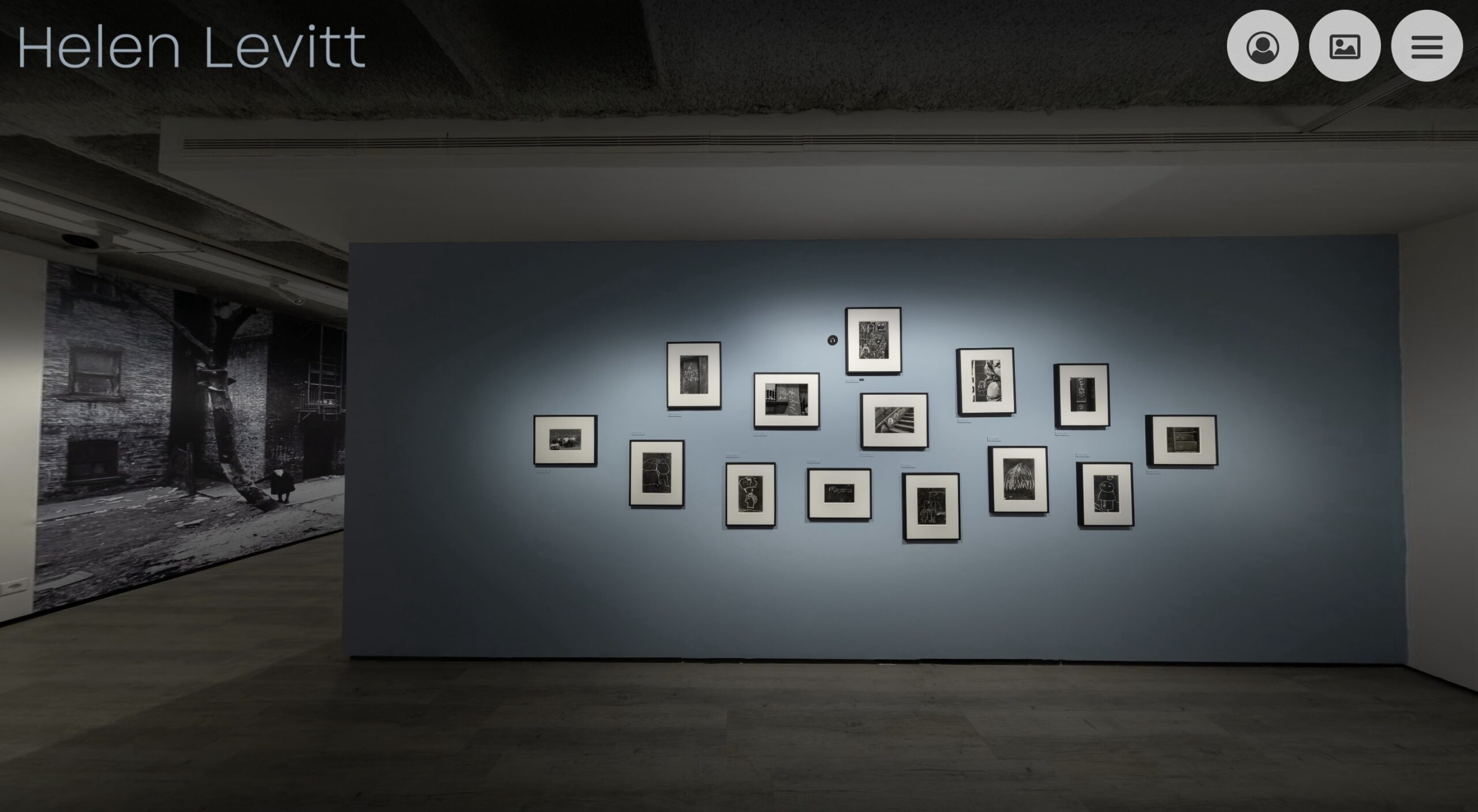
Virtual exhibition, screenshot
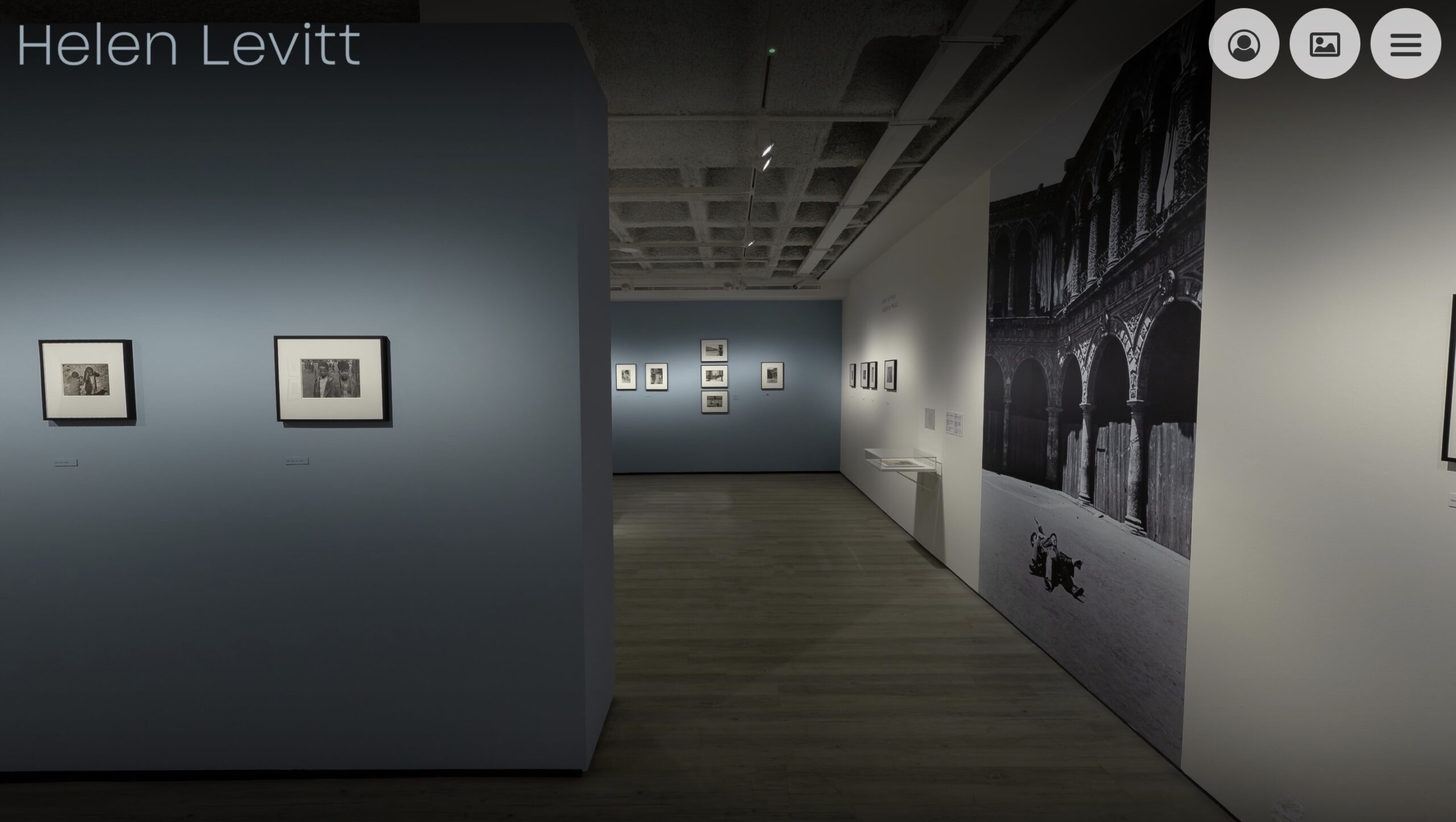
Virtual exhibition, screenshot
In recent years, discussions of the female gaze have become increasingly prominent in the discourse of photography. However, the term “women’s photography” did not emerge as an attempt to establish a new photographic genre, nor does it serve as a neutral descriptive category. Rather, it functions as a critical provocation intended to expose a paradox within art history, which treats the male gaze as universal, while the female gaze is systematically positioned as an exception or a marginal phenomenon. Although the past few decades have seen a rise in retrospectives dedicated to women photographers such as Diane Arbus and Lisette Model, the question remains whether this represents a genuine reassessment of the history of photography or merely the retrospective inclusion of women within pre-existing, often rigid photographic narratives structured largely around male photographers. A similar dynamic can be identified in the case of the American photographer Helen Levitt, whose work came back into focus in the early 2000s and has, over the past decade, inspired a series of new retrospectives and critical re-evaluations. But her significance lies not only in the fact that she has long occupied a place in the history of photography as one of the few recognized female authors, but also in her documentary practice, which is grounded in a presence without domination – a gaze that is at once discreet and deeply immersed in everyday life.
Helen Levitt, born in Brooklyn in 1913, began working with photography in the mid-1930s, when she took to the streets of New York to photograph scenes of everyday life, especially in Harlem and Latino neighborhoods. Her practice focused largely on street photography, with particular attention to children, passersby, and fleeting moments of urban life. Although her work is often associated with the tradition of documentary photography, Levitt’s oeuvre increasingly reveals a hybrid approach situated between documentary and artistic practice. Her primary concern was not the literal representation of social inequality or poverty within particular communities, but rather the documentation of spontaneous, humorous, and vivid moments of everyday life.
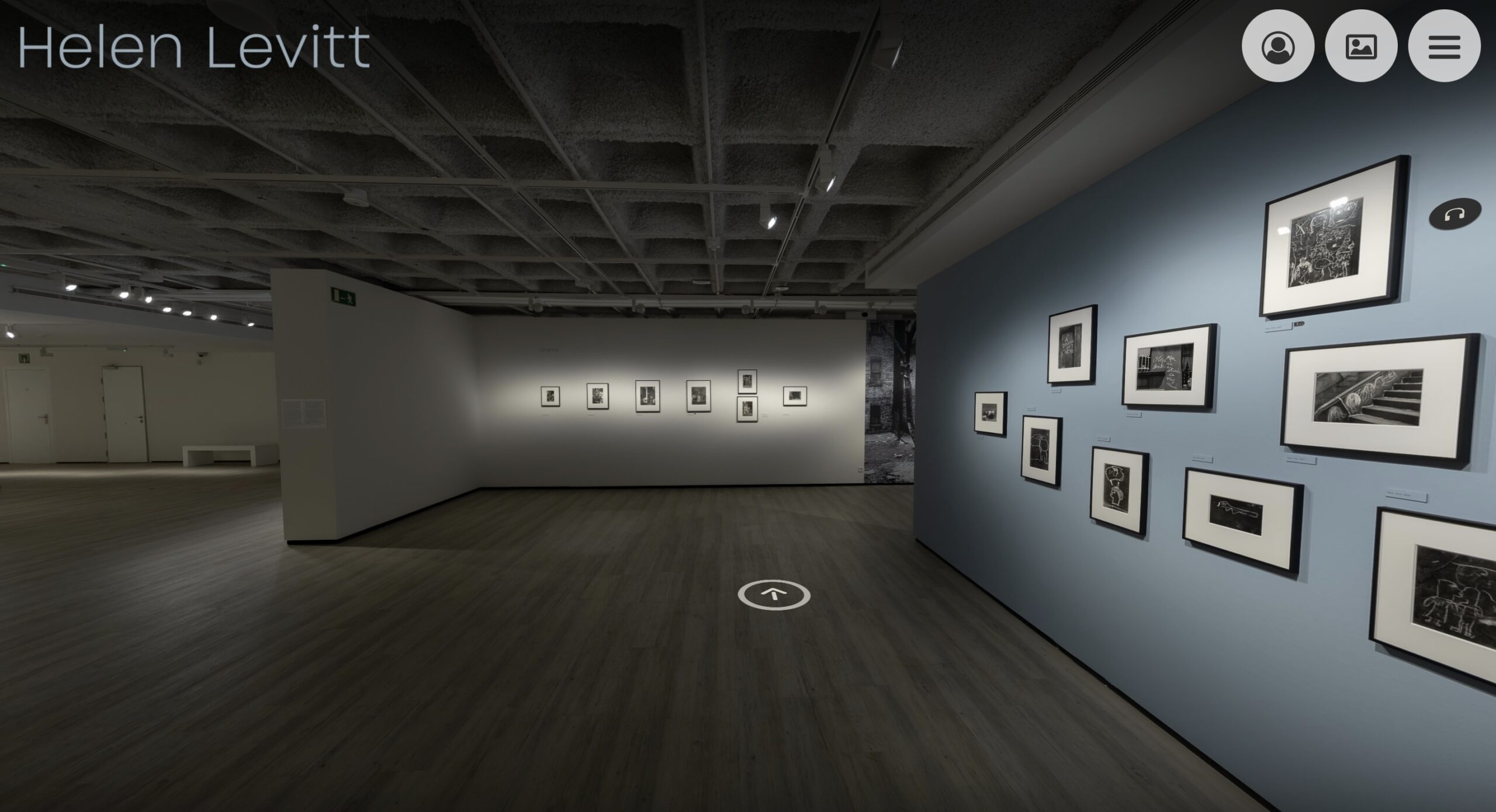
Virtual exhibition, screenshot
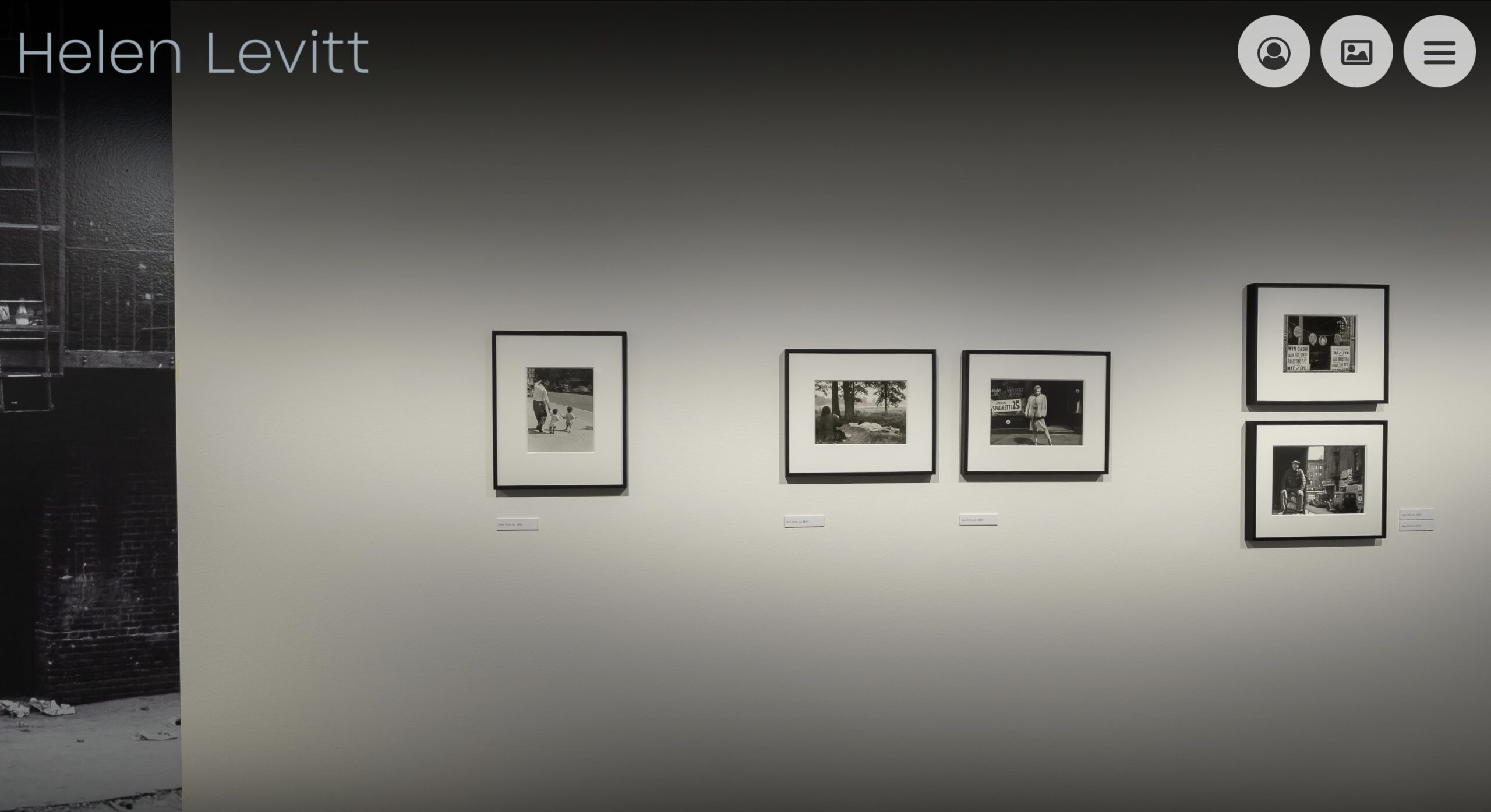
Virtual exhibition, screenshot
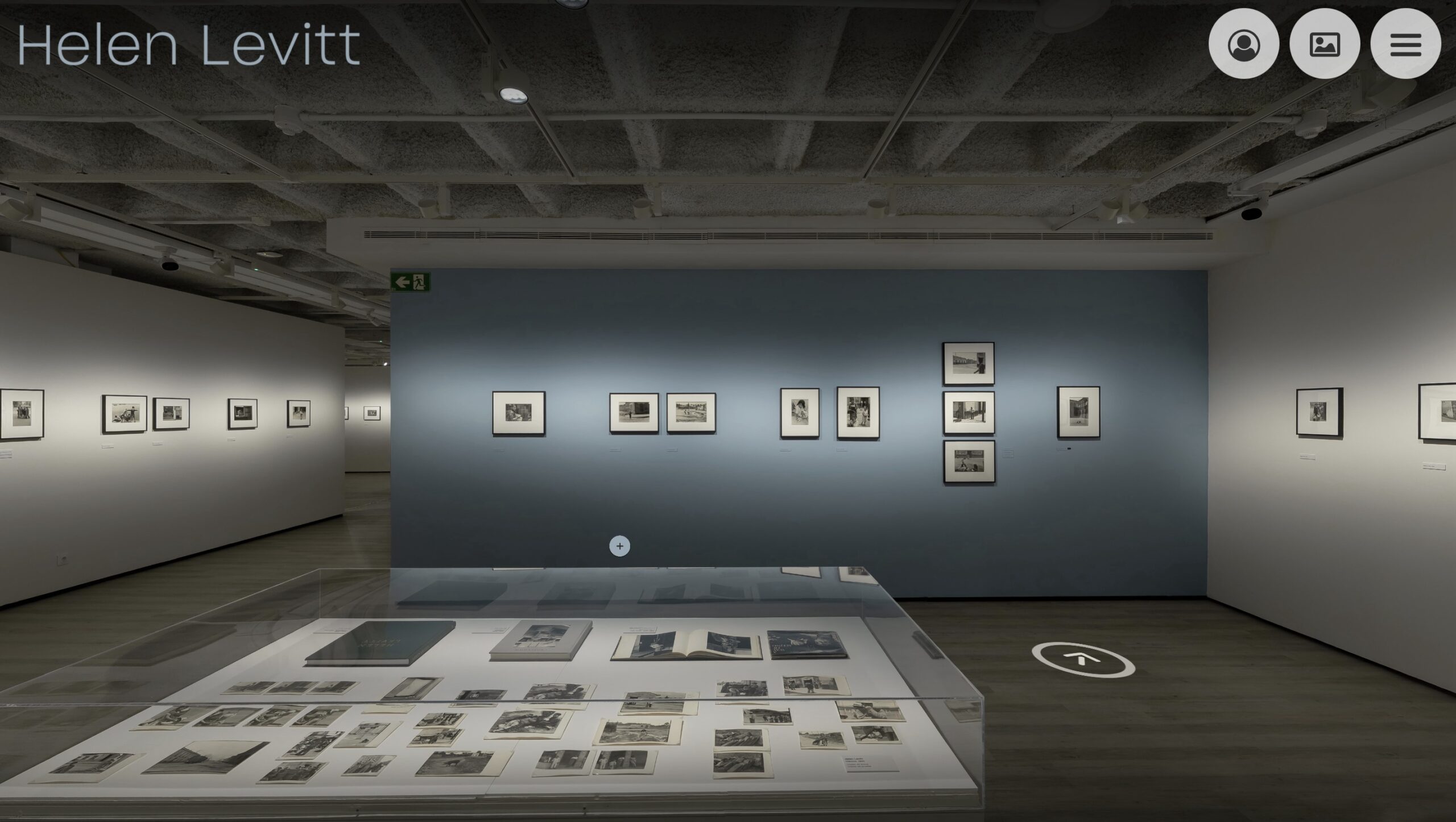
Virtual exhibition, screenshot
Helen Levitt is currently the subject of an exhibition at KBr Fundación MAPFRE, a photography center located on Barcelona’s waterfront and dedicated to presenting major figures in both historical and contemporary photography. Arranged chronologically, the exhibition unfolds across several separate rooms, offering an overview of Levitt’s work through clearly defined thematic sections and recurring motifs. Moving through the exhibition feels like leafing through a monograph: each room opens a new chapter in Levitt’s oeuvre, while a clear sense of continuity is maintained throughout. Although the different series are thematically distinct, certain motifs and approaches recur across her entire career, linking individual fragments into a coherent whole. The photographs on display are relatively small, album-sized prints, making them impossible to view properly from a distance. They require the viewer to come closer, look attentively, and spend time with them – a gesture that feels more like entering someone else’s intimate space than the conventional experience of viewing an exhibition. Such exhibition design slows the viewer’s gaze and compels them to pause and engage more closely with the photographed subjects. In addition to the framed photographs, the exhibition includes display cases containing original contact sheets, large-scale wall prints, and a projection of Levitt’s 1948 film In the Street. This curatorial approach offers insight into her creative process, allowing her body of work to be understood not simply as a collection of images, but as a dynamic visual practice that evolved across different media and formats.
Helen Levitt’s photographs are characterized by a strong sense of presence – both that of her subjects and of the photographer herself. It is only possible to feel at ease in front of the camera when there is a sense of trust in the person taking the photograph. Looking at her work, the viewer can clearly sense this quality. Levitt moves through the city not as an outside observer, but as someone who belongs to the spaces and communities she photographs. Perhaps it is precisely her position as a woman photographer, someone who does not appear authoritative or superior, that helps explain why the children in her photographs seem so relaxed. Levitt establishes a genuine rapport with them – she does not instruct them, direct them, or interrupt their play. In the photographs, they draw with chalk on pavements and building façades, climb trees, play at sword fighting, get up to mischief, and explore the world without fear of being scolded. They seem entirely themselves in her presence: they do not perform, adjust their behaviour, or “pose”. In this relationship, the camera is not an instrument of control but an affirmation of their freedom, capturing them exactly as they are, without correction or judgment.
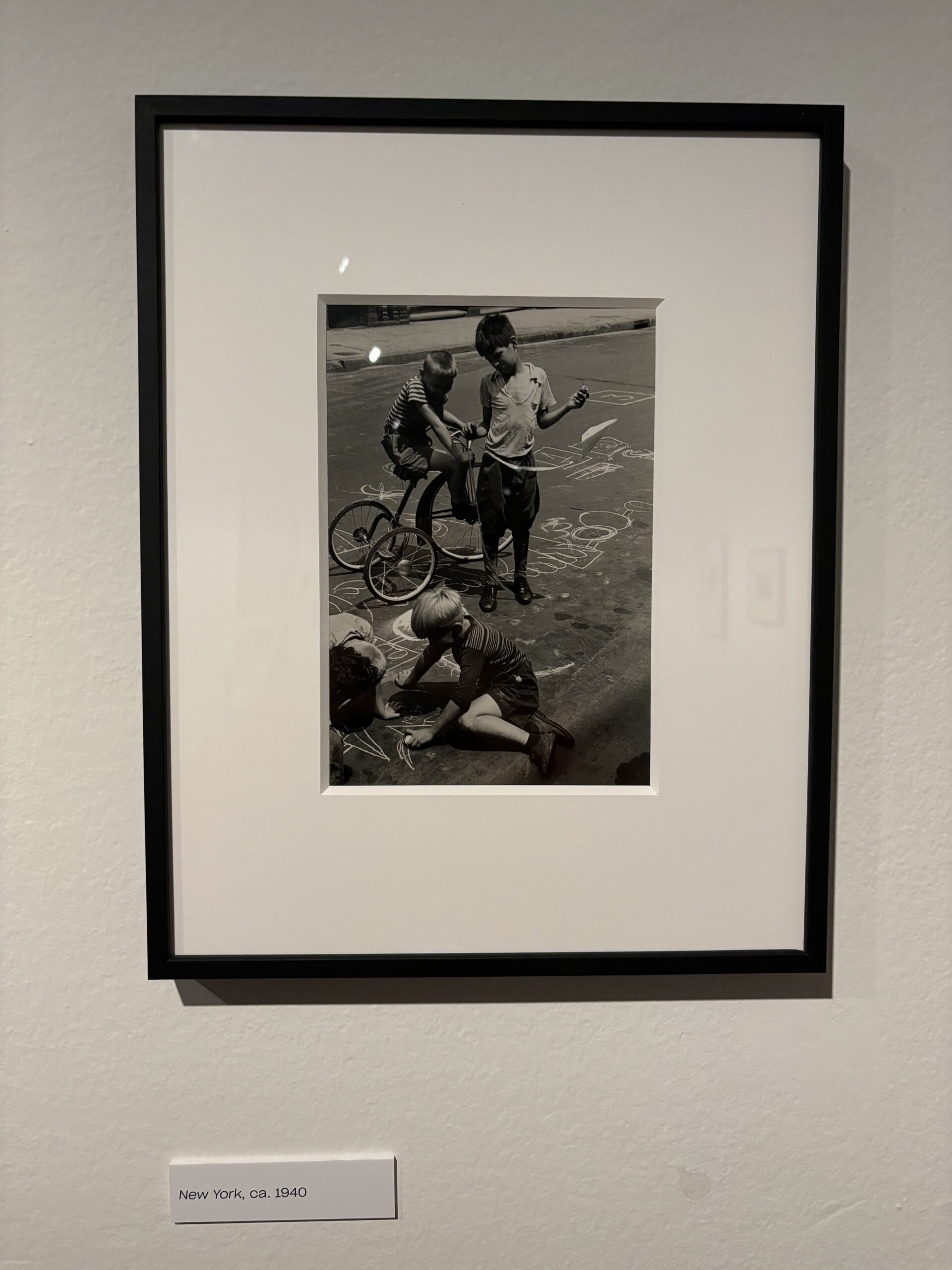
Exhibition set-up, photo: Tena Starčević
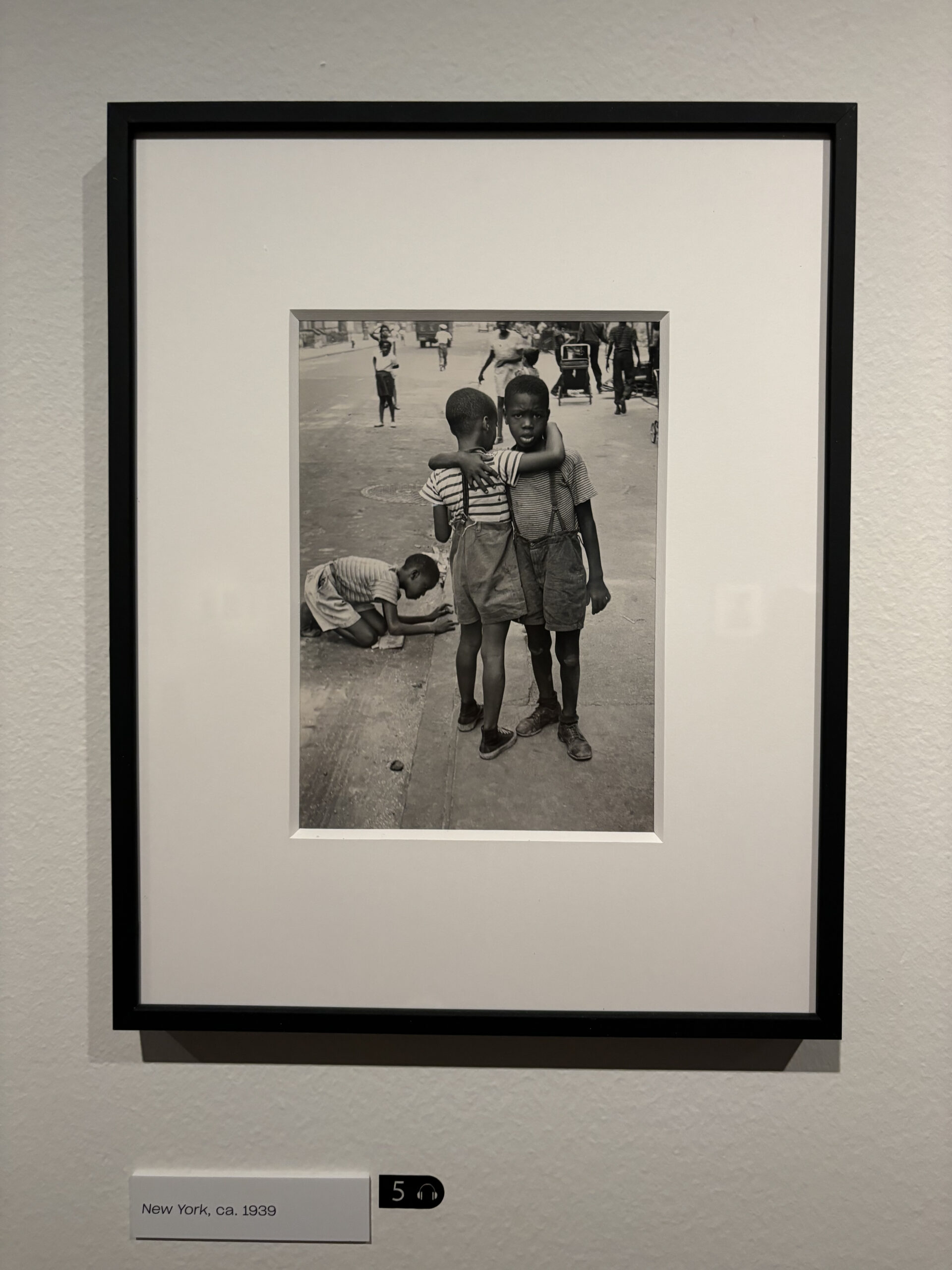
Exhibition set-up, photo: Tena Starčević
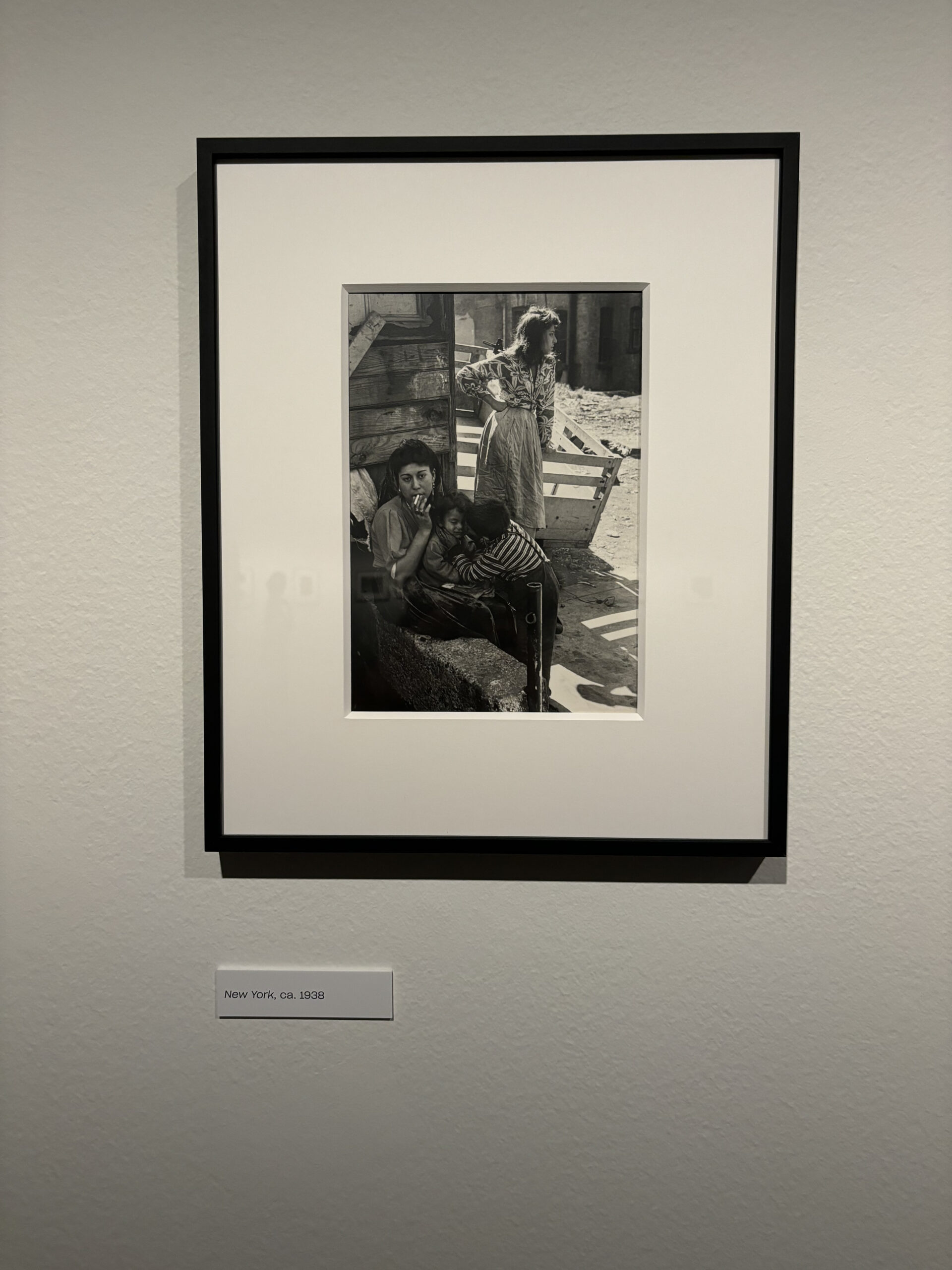
Exhibition set-up, photo: Tena Starčević
My attention was quickly drawn to the photographs of children’s chalk drawings on pavements, walls, and doors – fleeting interventions in public space that Levitt documents with the same attention she gives to her human subjects. These drawings offer a glimpse into the world of children’s imagination, which is at once playful, funny, and surprisingly clear in its visual expression. Their fragmented quality, rough lines, and free association of symbols create a visual language that calls to mind the later work of Jean-Michel Basquiat, particularly his use of signs, figures, and text that read like spontaneous records of thought. Like Basquiat’s early graffiti, these drawings function as brief visual impulses – imperfect and ephemeral, but highly suggestive. Humour plays a key role: distorted figures, unusual inscriptions, and deliberately “incorrect” bodily proportions do not attempt to describe reality, but freely reshape it. Through such scenes, Levitt not only captures children’s imagination, but also raises the question of who has the right to the street. When children inhabit it, the street ceases to be merely a space of transit and becomes a site of play, imagination, and temporary freedom.
The section of the exhibition devoted to the war years makes a particularly powerful impression, featuring photographs taken during the 1940s. Although the images do not explicitly depict scenes of destruction, the strain of wartime is evident in the adults’ faces. While children spend their days at play, the adults’ expressions reveal a sense of unease – their brows are furrowed, their shoulders tense, and their gazes often distant. It is precisely this contrast that reveals the artistic dimension of Levitt’s photographs: she managed to document the war not through literal images of soldiers, uniforms, ruins, or tanks, but by capturing the traces it left on the lives of ordinary people.
Exhibition set-up, photo: Tena Starčević
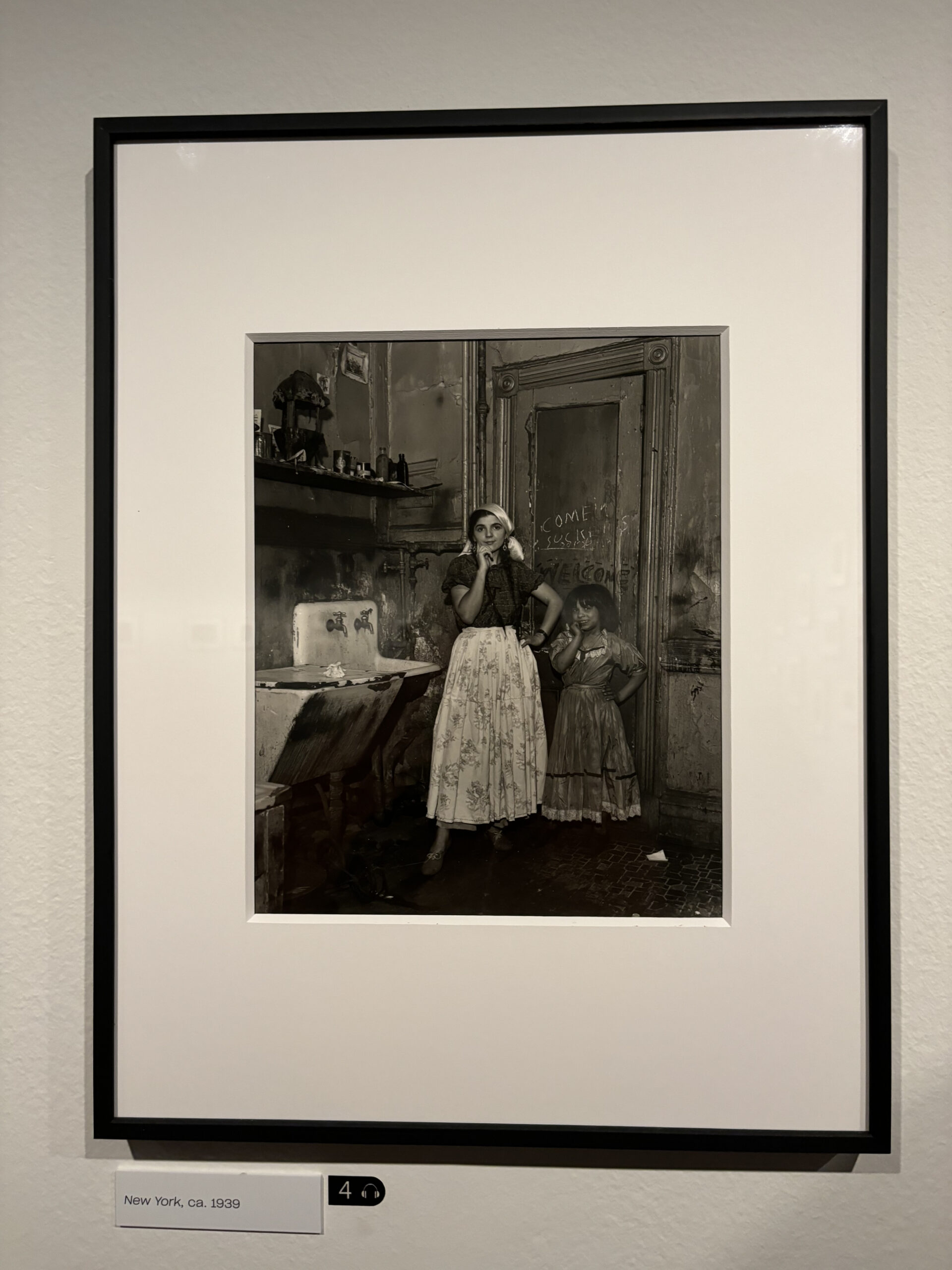
A similar sensitivity toward the Other and those perceived as different is also present in the series Gypsies, created in the early 1940s. This lesser-known but particularly important body of work focuses on Roma and migrant communities in New York. Here too, Levitt’s attentiveness to her subjects is clearly present, but her sense of humour is even more pronounced – not humour directed at the community, but humour shared with them. One photograph shows a Roma woman and her daughter in a dilapidated interior that clearly shows their harsh living conditions. Yet above their heads, the word WELCOME is written in large letters in chalk across the door. The inscription conveys both irony and warmth – an awareness of their own circumstances, but also an ability to retain a sense of humour despite them. It is precisely in this combination of dignity and everyday life that Levitt’s departure from stereotypical documentary photography becomes apparent.
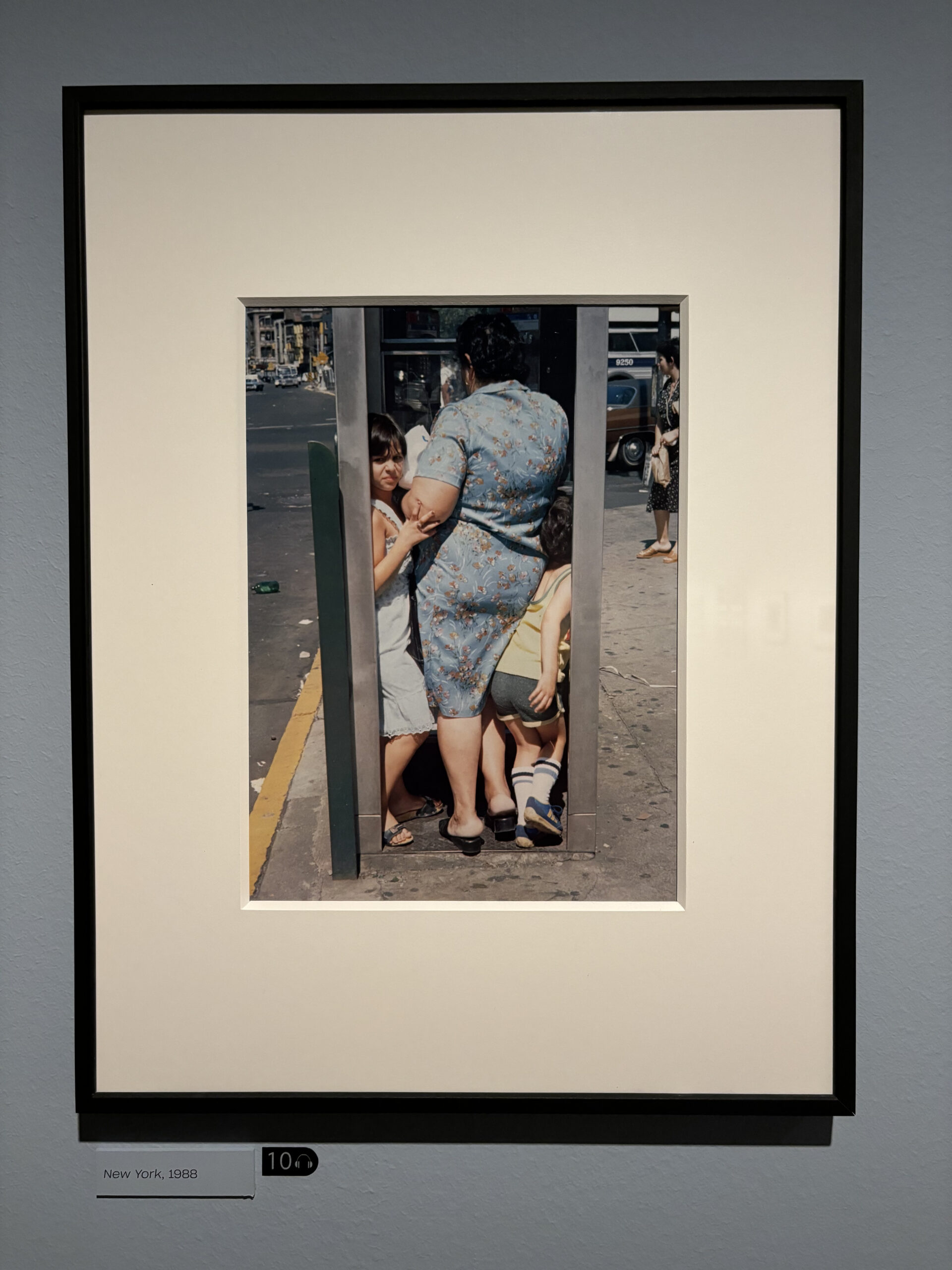
Helen Levitt began experimenting with colour photography in the late 1950s, but many of her earliest colour negatives from 1959 and 1960 were stolen from her home during a burglary. As a result, she did not return to colour until the 1970s, when she began producing new series. Particularly striking in this context is a colour photograph from 1988 depicting a mother and her children inside a cramped phone booth. Although we see the woman only from behind, with no identifying features visible, we can assume that she is engaged in an important conversation while the children crowd closely around her. Here, the phone booth becomes a temporary space of intimacy, but also a clear marker of working-class life – an infrastructure born of necessity rather than choice. The power of this photograph lies in its carefully considered composition and in the way it articulates the relationship between private and public, care and necessity. Compared with Levitt’s black-and-white work, her colour photographs introduce a different visual rhythm: colour takes on an atmospheric role, while her gaze remains equally unobtrusive. Rather than representing a radical stylistic shift, the use of colour adds another layer to the scene – the city remains the same, but is now rendered in nuances that had always been part of Levitt’s gaze.
Exhibition set-up, photo: Tena Starčević
Perhaps this is precisely why revisiting Helen Levitt’s work matters today – not simply to insert women’s names into the history of photography, but to learn what it means to see differently. At a time when public space is increasingly becoming a site of contestation – over who has the right to occupy it, who gets to document it, and who claims it as their own – Levitt reminds us that presence does not necessarily imply domination. There is a way of inhabiting space that does not seek power or impose a particular gaze, but instead shares it. If exhibitions like this can bring about change, that change will not be measured by the number of women represented in museum collections, but by whether – through them – we have learned to see differently.
Tena Starčević
(translated by Tihana Bertek)
Visual materials were sourced from here.