Island and Around
October 19, 2026
We present the transcript of Evelina Turković’s preface from the exhibition catalogue for Antun Maračić’s Lokrum, held at Sebastian Gallery in Dubrovnik in 2004.
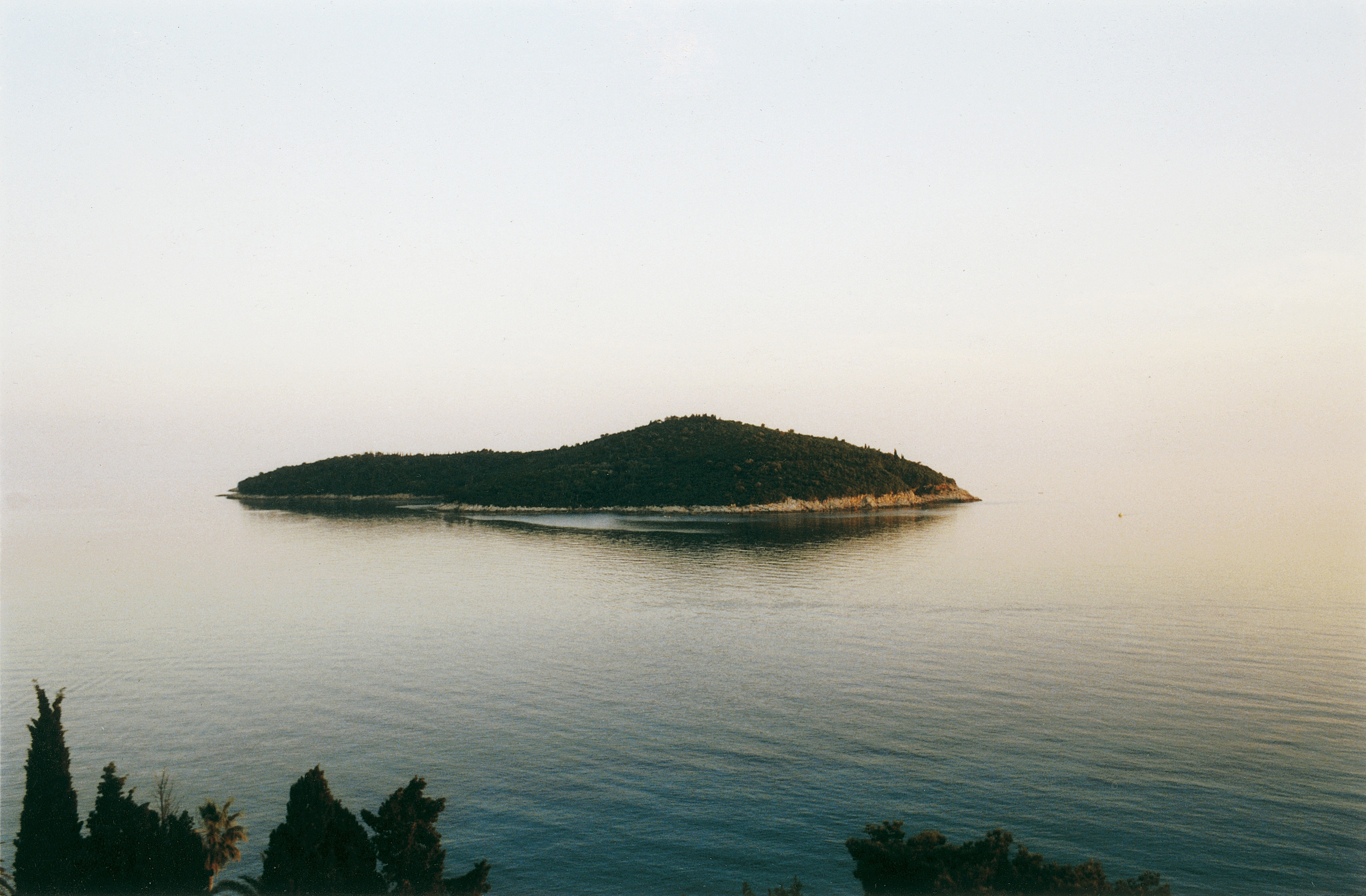
Antun Maračić, from the series “Lokrum”, 2000–2013
Antun Maračić surveys the island of Lokrum from a distance. In his photos, he neither approaches nor steps upon it. He never splits the panorama up into detailed scenes; arcadia is kept at a distance. Although it can be identified as a given island, an island with a name, a location on the map, this island is at the same time shown in such a state that it can mean “island” in general. In Maračić’s photographs, then, it appears at the moment of detachment from the sign for island, when there is some dubiety about the placing of the border between the concrete and the mere concept of island. In the whole still-unfinished cycle of photographs that has been in the creation for almost four years already and that numbers hundreds of shots, the distance between camera and island is constant. And although it may seem like a conceptual characteristic worked out in advance, this distance is actually an accidental circumstance. Taking over a job in the Art Gallery, Dubrovnik, in autumn 2000, Antun Maračić moved into an office from the window of which there is just such a view of Lokrum, and he simply started taking it. In all the photos, Lokrum is in the centre of the frame: that little spot of greened land and stone surrounded by the sea is the very focus of the view. Light, wind and rain are the generators of events. In all possible circumstances the scenes are so beautiful that the author had determinedly to rid himself of any fear of possible accusations of oversimplified slick appeal. The frame is determined by the overlap between the centre of the viewfinder and the middle of the motif, with as much of the surrounding area coming in as is determined by the boundaries of always the same wide-angle lens. Any very manifest photographic design, all kinds of possible interventions, determination and construction of the view are reduced to the smallest possible measure, to a sheer documentary record of the motif set by the place. This kind of authorial reticence has resulted in all the attention being directed on the scene itself. Maračić shows a clear and undisturbed gaze, a view that does not suggest and does not comment. And it is this kind of procedure that makes these photos possible at all. The static nature of the author’s approach enables the changes in the motif to become visible. For as he himself says, every time when he experienced a “sensation of something new”, and this occurred at irregular intervals, sometimes several times in a day, and sometimes after a pause of several weeks or so, Maračić would simply take always the same composition.[1]
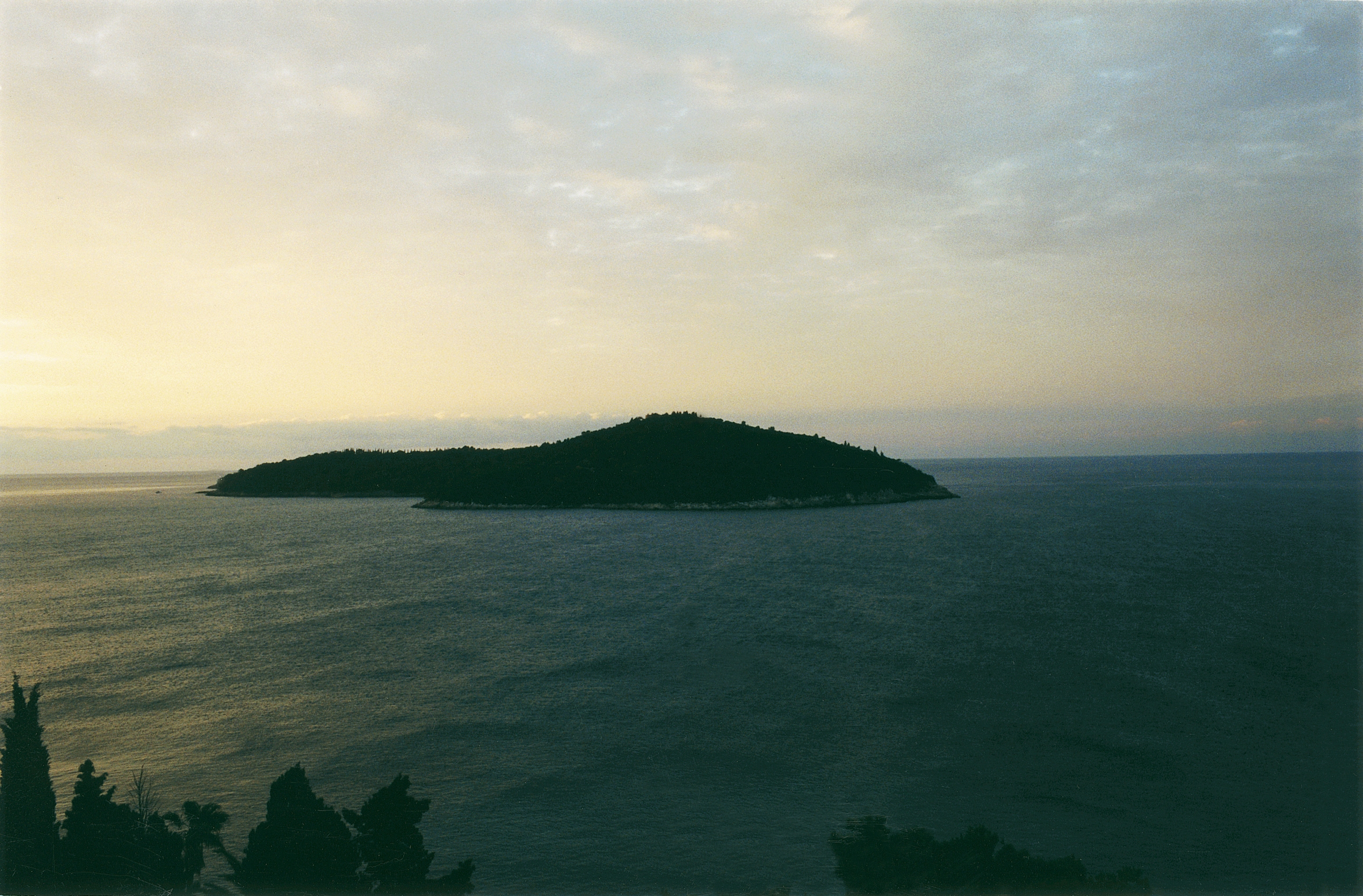
Antun Maračić, from the series “Lokrum”, 2000–2013
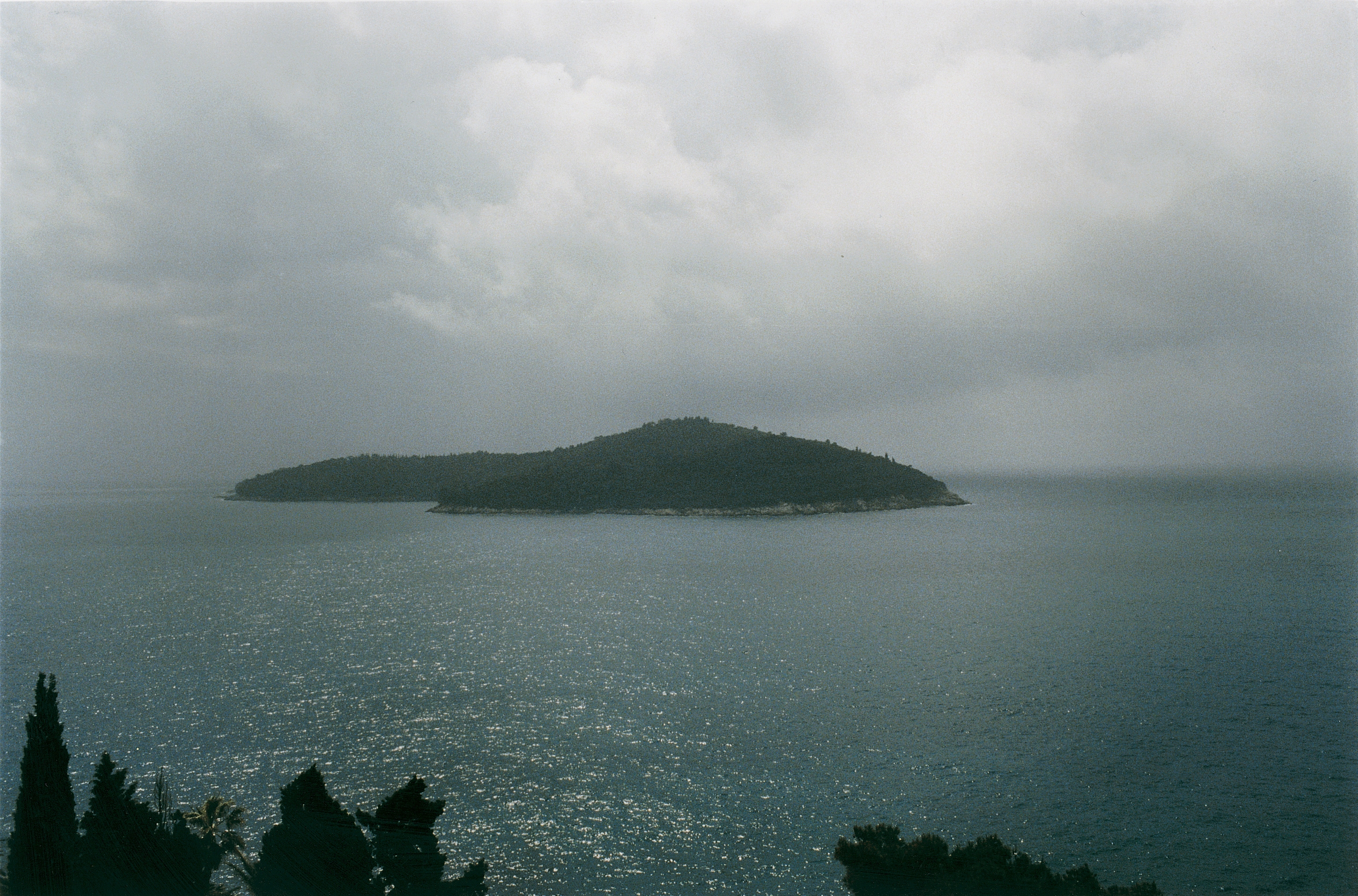
Antun Maračić, from the series “Lokrum”, 2000–2013
Photograph or film
Maračić’s personal input takes place at another level, at the moment of presentation. But then, too, he applies simple segueing. The moment that is at the instant of the shooting torn out of its real-life existence is subsequently incorporated into a new sequence – a sequence of shots of the same frame. Necessarily one now perceives it as a new temporal sequence; as image of constant change. And this newly-established unit does not repeat its original, natural, temporal flow, it appears as a completely new, artistic construction in time, as an acceleration that makes perceptible to the human eye a certain change – a change in the natural continuity that is much slower and less perceptible. We can compare it with the effect of time-lapse cinematography, the result being a film in which we can watch, for example, the growth of some plant. It seems that we can perceive time only if we have previously chopped it up into its component parts. And such cut moments can then be later put much closer together. In order to perceive time, real, infinite, immeasurable time, it needs to be compressed, transformed into some smaller measure, the measure of human time and the capacities of our perceptions.
But then something unusual takes place. Such an acceleration of real time is at the same time a deceleration. Seamless duration is split into individual static little pictures. Each little picture is a frozen frame of time, a completely stilled scene that enables the slow, thorough consideration of what otherwise passes imperceptibly past.
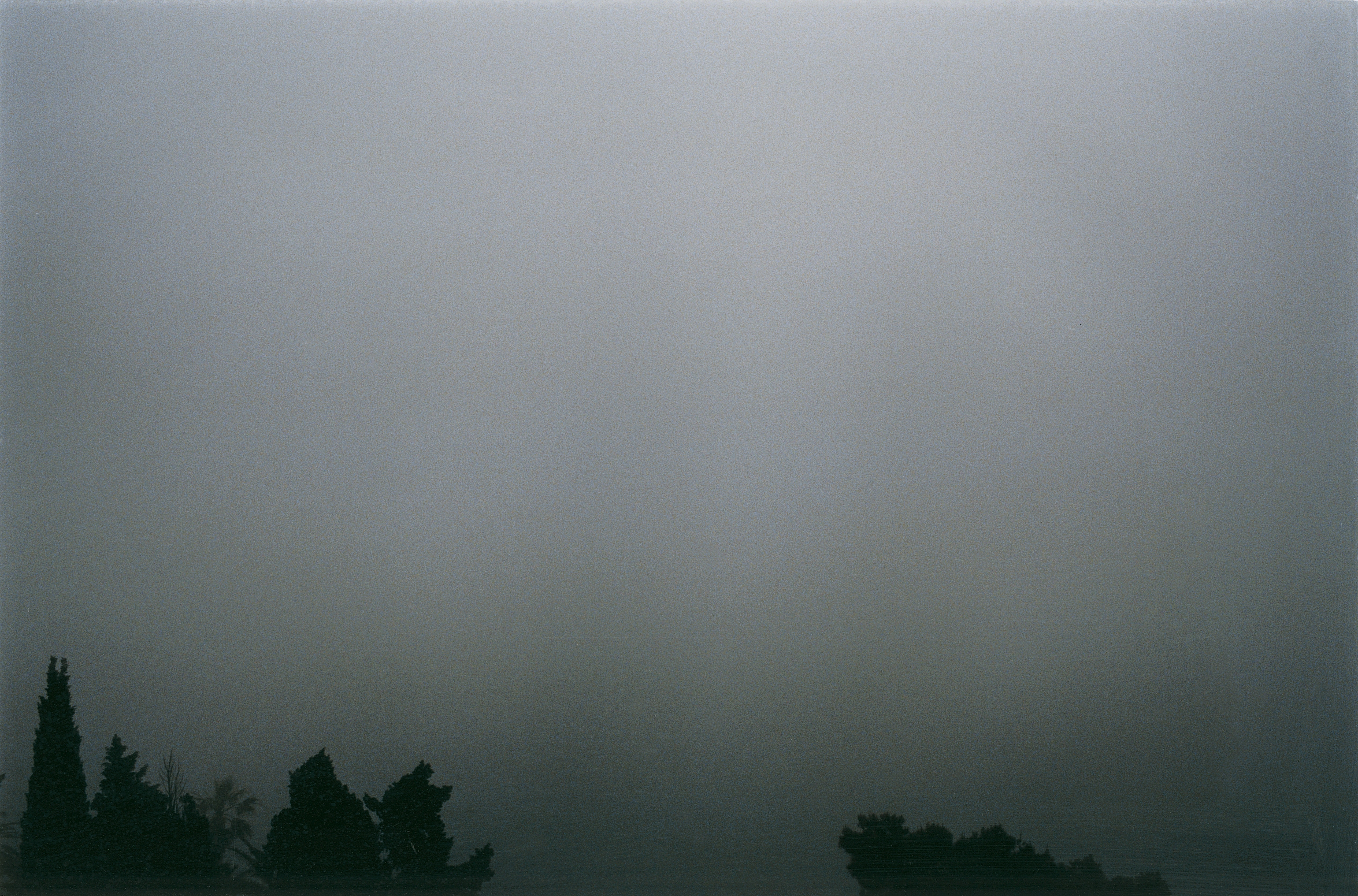
Antun Maračić, from the series “Lokrum”, 2000–2013
Substance or ether
And what is it that we actually see? The Island of Lokrum, in all weather conditions, summer and winter, early in the morning, at twilight…Sprinkled around with boats, or deserted, amidst all kinds of effects of air and light. The island here is the only solid substance, the clod of hard material among the other more fluid natural elements. Anchored in the centre of the photograph: dark, clear outlined, only here and then misted by the onslaughts of sirocco and rain. It is the firmest motif, and yet it is not the centre of events. In fact, paradoxically, it is the least important element in the story of itself. Because this always-the-same dark spot in a surrounding of constantly different and extremely subtle variations of transparency, in a sea of many interesting textures of water, air, clouds, light, is experienced as a kind of black hole. It becomes a place of darkness or even a spatial cut. (It is felt as the kind of brusque scalpel cut on the canvas of Lucio Fontana who through his excurse into nothingness makes the surface of the picture more real and more present). But as the solid material of the island becomes the empty space of the image, so everything around it – actual emptiness – turns into fullness: the circumambient sea and air. However ethereal and fluid it might be, the surrounding space is what, when it comes down to it, we are looking at in these photographs. Or as Tomo Šuljak, who himself, as director, once lived and moved in the same room in the Gallery, and looked upon Lokrum every day: “the island is the occasion”.
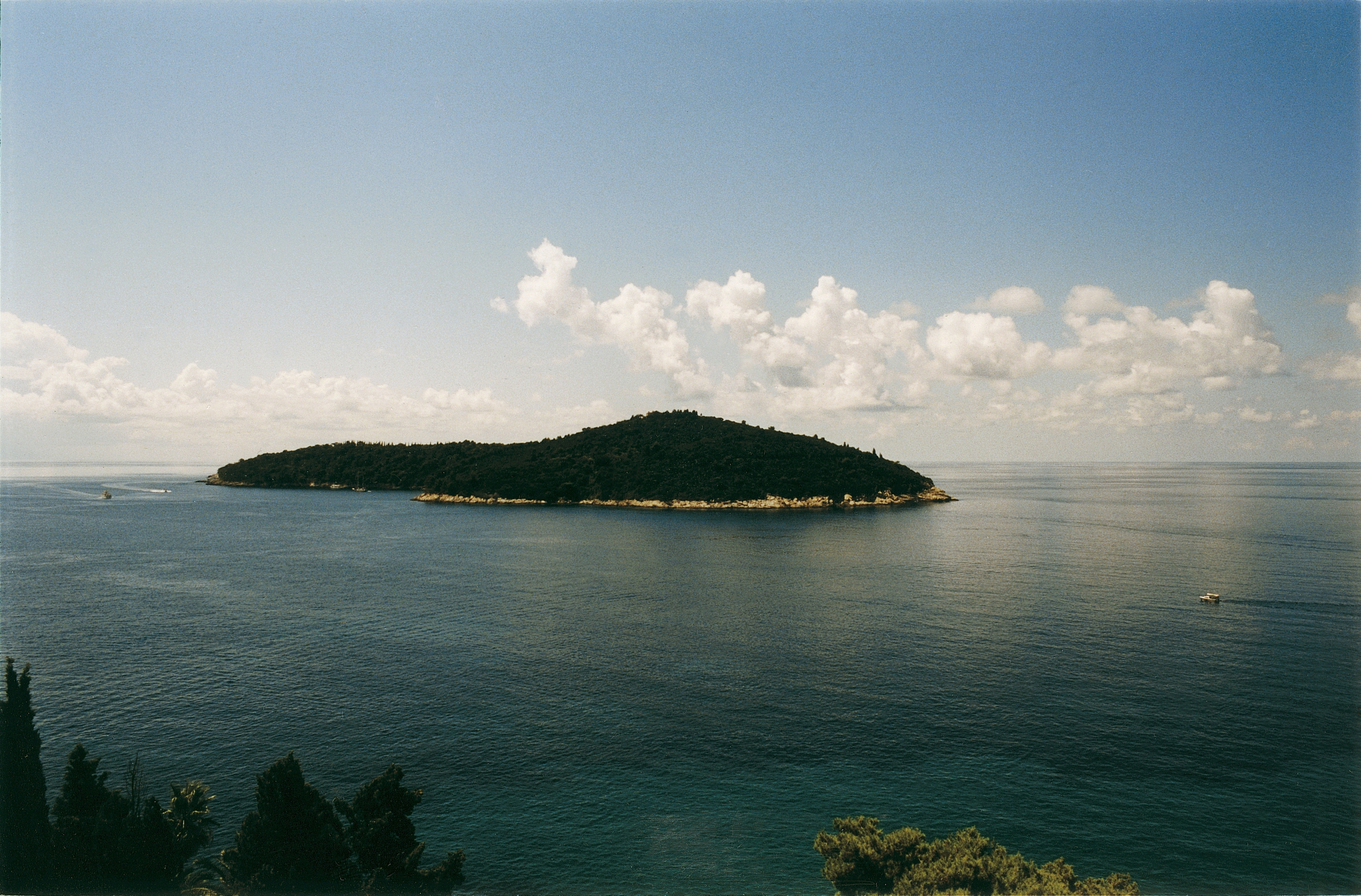
Antun Maračić, from the series “Lokrum”, 2000–2013
Man or nature
In the whole of this great space there is no visible human being. Humanity is never seen, but still it couldn’t be said that it does not have a part to play in this story of the island. Looking at the photographs, the observer inevitably threads the individual scenes together into a single unique sequence. Only the capacity to link one scene with another registers the passage and hence constructs the course of change. The significance of the work is not in the individual, it is formed only in the set of the works, only in the continuation. The space is thus necessarily linked with the time. The observer creates the time of space, and space becomes the reality experienced.
Through looking, each one of us is placed within this broad space and abstract time, and each individual scene literally becomes our here and now. Each one of the photographs is one tick of the clock, an illuminating tick-tock, a measure of the sensation of one’s own existence. The moment seen or noted is the moment lived. We take these scenes of nature devoid of humanity thus as a mirror of ourselves and our time. Without any great narration, shot very neutrally, these landscapes are transformed into a screen on which the most personal journal of our own existence can be projected, first of all the author’s, and also that of every observer who has entered into the spirit of it. Scenes external to people, opposed to them even, are seen in the end as people’s internal space and time. Although the person is here most of all beyond the self, people are at the same time completely within themselves, along with themselves. The moments recorded of the existence of an island become the unit of measurement of a life lived.
Evelina Turković
(translated by Graham McMaster)
___________________________________________________________
[1] This kind of procedure is nothing new in the visual arts. We might recall the example of Monet’s series of pictures of Rouen Cathedral or Knifer’s self-portraits. Maračić too in the mid-1970s did a work in which for a week, each morning at eight, he took his own self-portrait. Later, he would shoot always the same scene of a city yard, seen through a flat window.