Tena Starčević in conversation with Finnish artist Utu-Tuuli Jussila, whose work is presented as part of this year’s Kranj Foto Fest. We bring you the conversation as part of the “Regional Photo Focus” section.
Kranj Foto Fest: Conversation with Utu-Tuuli Jussila
September 24, 2026
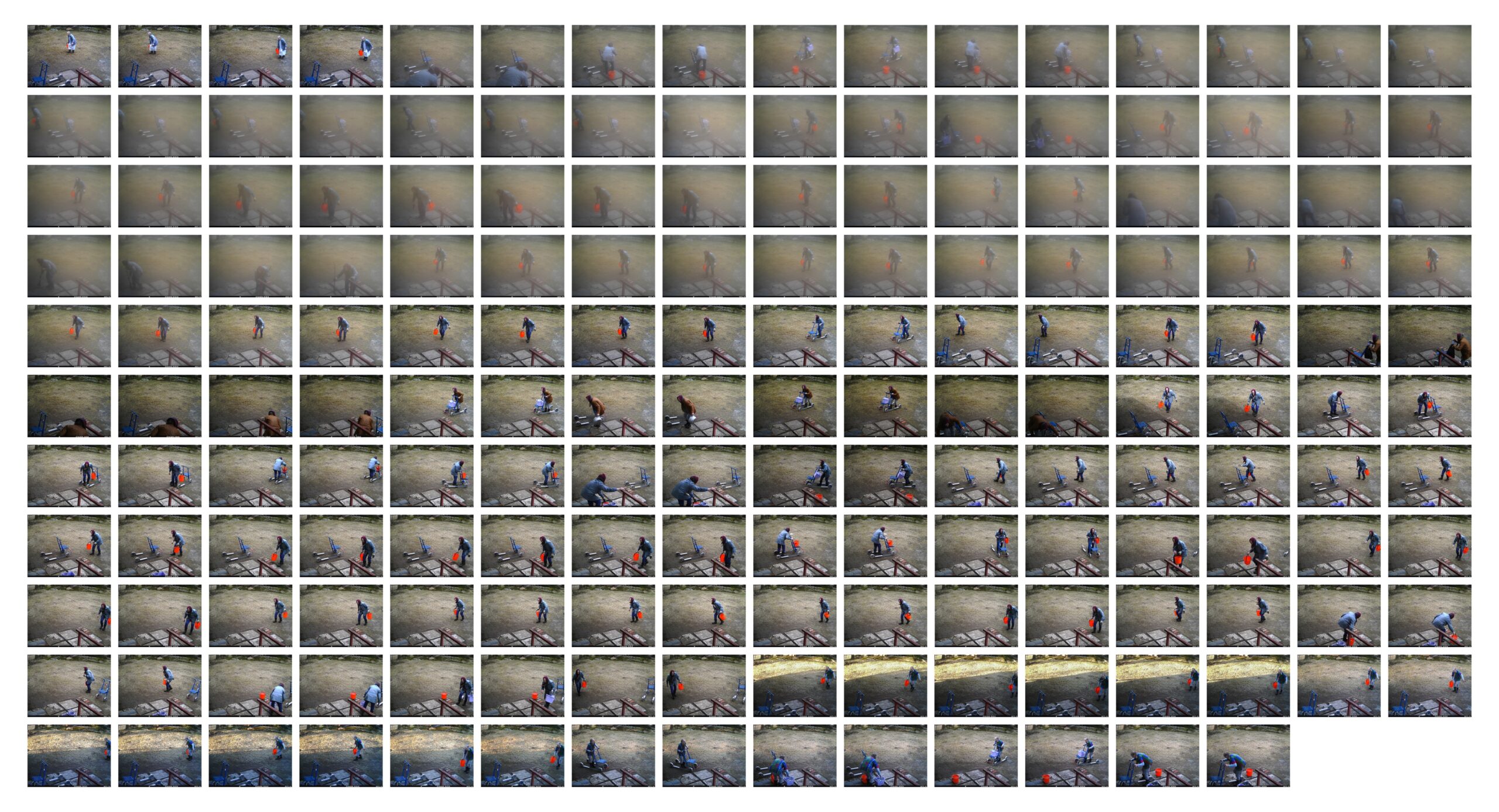
27/4/2016 (2023), from the project “Härmä / Hoar”
For readers in Croatia who may be less familiar with contemporary photography in Finland, how would you describe the context in which your practice developed? Are there particular characteristics of the Finnish photographic scene – its education, institutions or current concerns – that have shaped your work?
For a long time, the Finnish photographic scene was dominated by The Helsinki School and its rather commercial, clean and cool aesthetic. While studying at Aalto University, I also felt pressure to take my practice towards that, as it was presented as the only path to an international career. After harmful practices within The Helsinki School came to light a few years ago, it lost much of its former status. I feel this has opened space for more diverse photographic practices to gain recognition, and right now it is hard to pinpoint any particular characteristics in the Finnish scene.
You work both as a photographer and a trans studies scholar, and questions of visibility, care and agency recur throughout your practice. How has working across artistic and academic contexts shaped your understanding of photography and its capacity to produce knowledge?
I find working at the intersection of artistic and academic contexts very inspiring. In my artistic work, I’m often inspired by theoretical texts. My education in gender studies has completely altered how I view the society around me, which has also changed my relationship with photography. Visual representations like photographs play an important part in how we view the world around us, and they can either uphold current norms and structures or dismantle them and show us something new. Especially as a trans studies scholar who researches nonbinariness, the limitations of photographs’ capacities to produce knowledge within binary optics are blatantly obvious. It’s almost impossible to picture nonbinariness. In a cisnormative society, we have learned to look at bodies, poses, etc. through the binary lens, as either feminine or masculine. Similarly, disability isn’t always visible. Without the backstory that talks about my grandmother’s illness, the viewer would not be able to read it from the images.
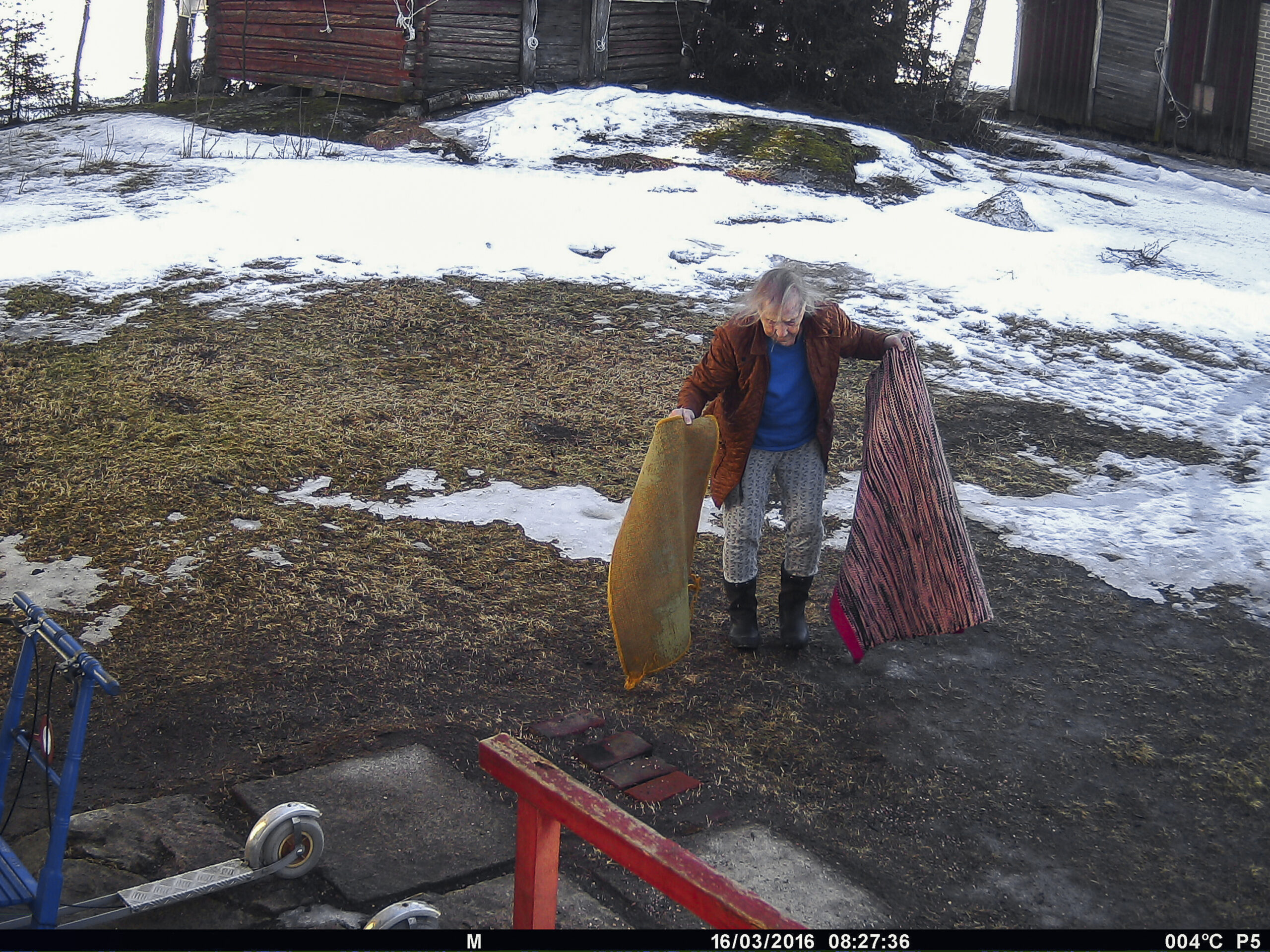
16/3/2016 (2022), from the project “Härmä / Hoar”
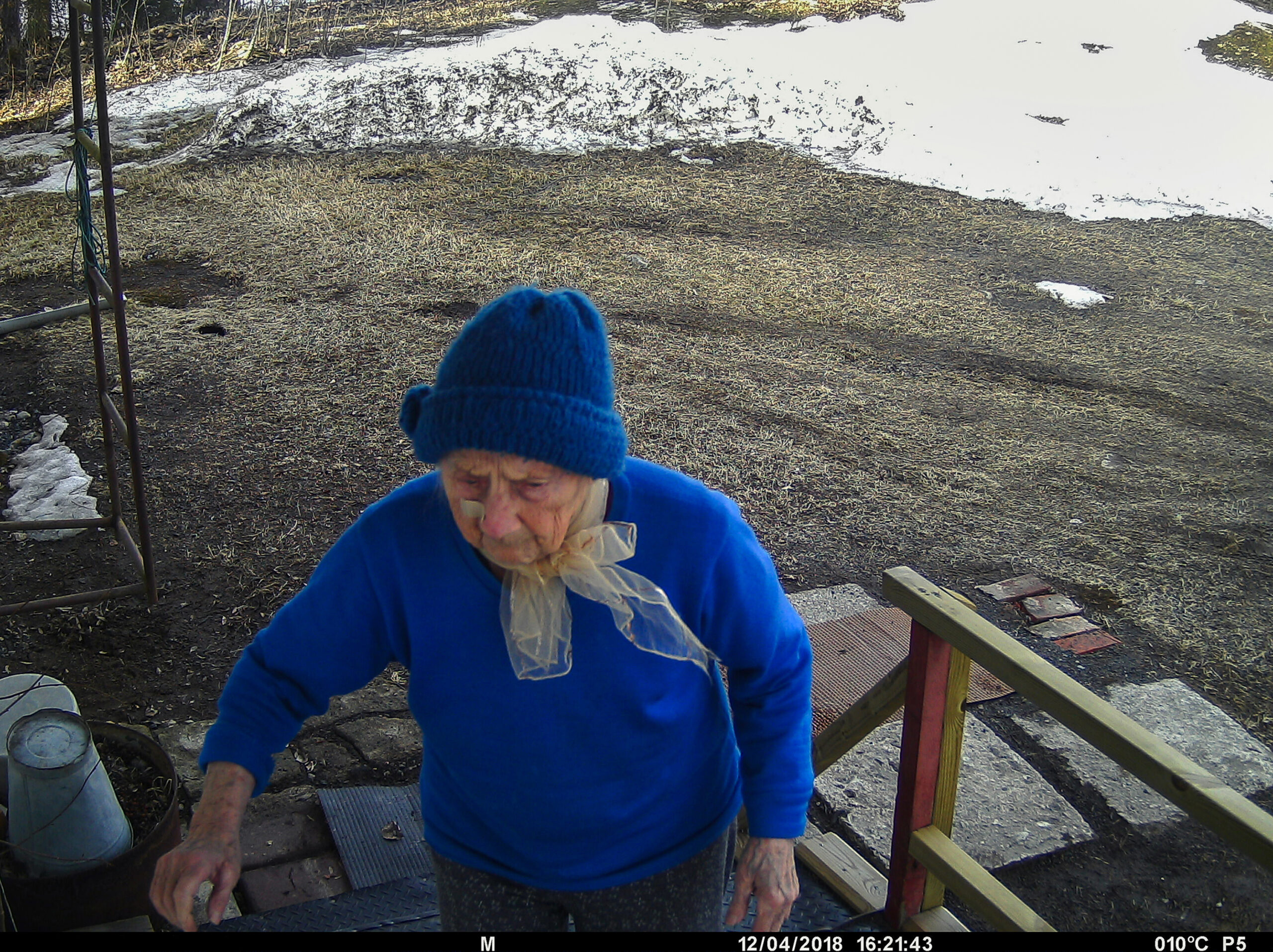
12/4/2018 (2023), from the project “Härmä / Hoar”
Härmä / Hoar began when your father shared with you an archive of surveillance-camera images documenting your grandmother’s daily life during her final years. What did you recognize in these images that prompted you to develop them into a photographic project?
For me personally, it was, of course, very precious to see documentation of my grandmother’s daily life. It showed me parts of her life that were unfamiliar to me before. When I went through the images, I soon recognised aspects that went beyond that personal meaning. These mundane images hold a lot of meaning despite the static perspective. They had a painterly quality produced by coincidences in composition, camera functions, and lighting. It surprised me how this automated camera sometimes turned the everyday scenery into something otherworldly.
The camera was installed as a way of caring for your grandmother and protecting her, yet it gradually became a device that recorded her daily life. How did you approach this relationship between care and surveillance, particularly when deciding which images could enter the public sphere and which should remain private?
I decided not to create a full documentation of my grandmother’s life, and I didn’t try to tell the full story. That is still private. I wanted to emphasise care when curating the images, and I left out her more vulnerable moments. I wanted to choose images that show she was strong and capable, even in her 90s. After all, the purpose of the surveillance camera was to make sure she could live a good life and stay at home despite her illness.
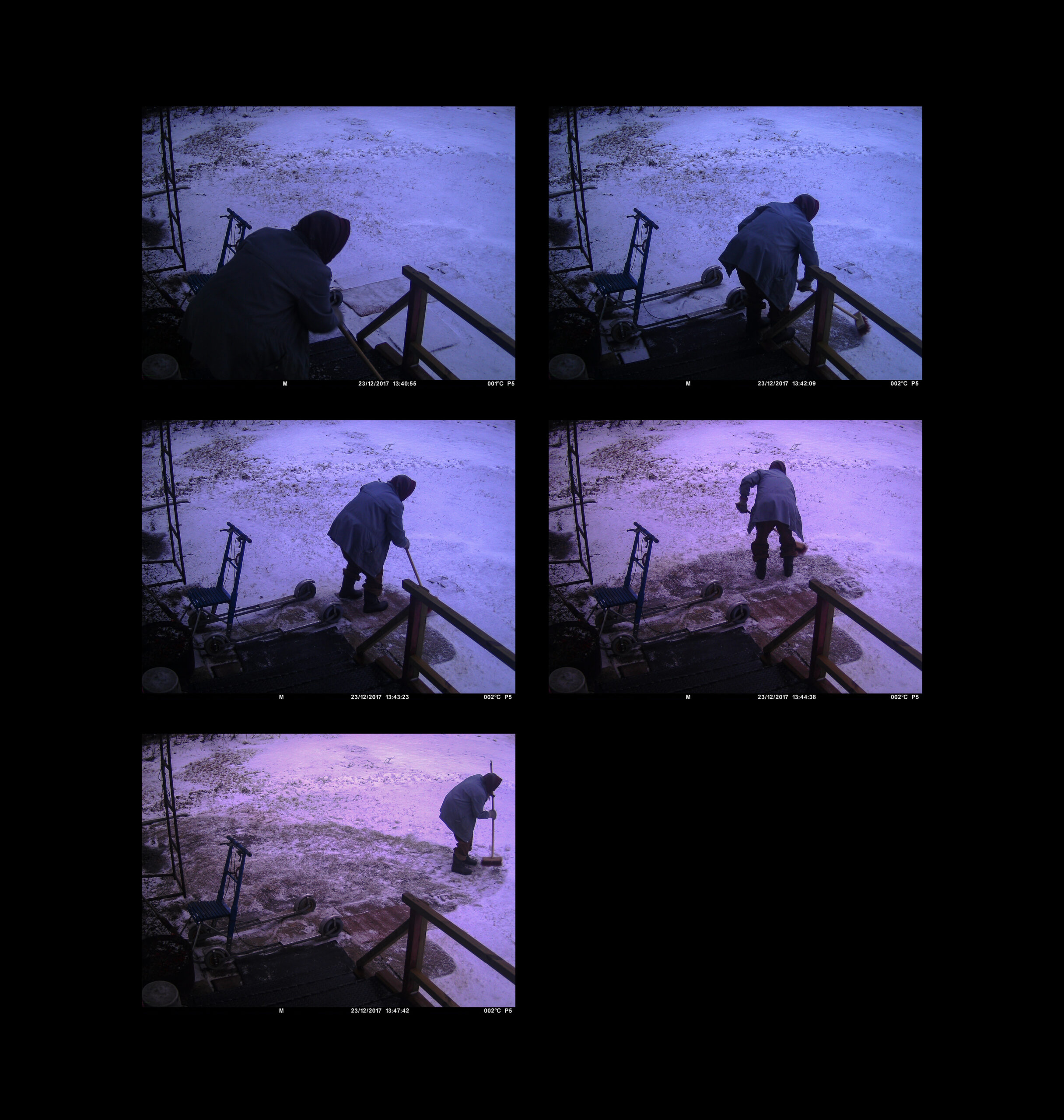
23/12/2017 (2023), from the project “Härmä / Hoar”
Working with intimate images of a loved one—especially photographs that were never intended for public view—requires a sensitive negotiation between personal memory and artistic responsibility. How did your relationship with your grandmother guide your decisions about which images could become part of the project and which should remain private?
Unfortunately, I did not have the chance to discuss the publication of the images with my grandmother because I saw the images after she had already passed away. Before the first exhibition, I discussed using the images with my parents. My relationship with my grandmother also guided me, as did her wish for me, as her only grandchild, to be her heir and inherit her belongings. I consider these images my most valuable inheritance.
The camera remained in a fixed position and produced thousands of images without a photographer controlling the moment or composition. How did you select and arrange this material, and what role do the camera’s unexpected framings, colour shifts and visual glitches play in the final work?
The camera’s whimsical behaviour intrigued me. It produces glitches or otherworldly colours in some images, which I did not edit, and produces black-and-white photographs in the dark. Sometimes the yard is covered in mist, or the sunlight hits just right, creating atmospheric views that feel intentional but are just the result of the camera’s automatic functions. I think these aspects take the series beyond mere documentation. From the thousands of pictures, I selected these sequences and single images intuitively. With the sequences, I wanted to highlight the material’s repetitive nature and the life in my grandmother’s yard. I still find interesting new things every time I look through the archive. The camera is still there, and I have quite a lot of unsorted material from the past few years. I don’t feel the series is complete yet. Depending on the future exhibition spaces or formats of presenting the series, I might still show something new from the archive.
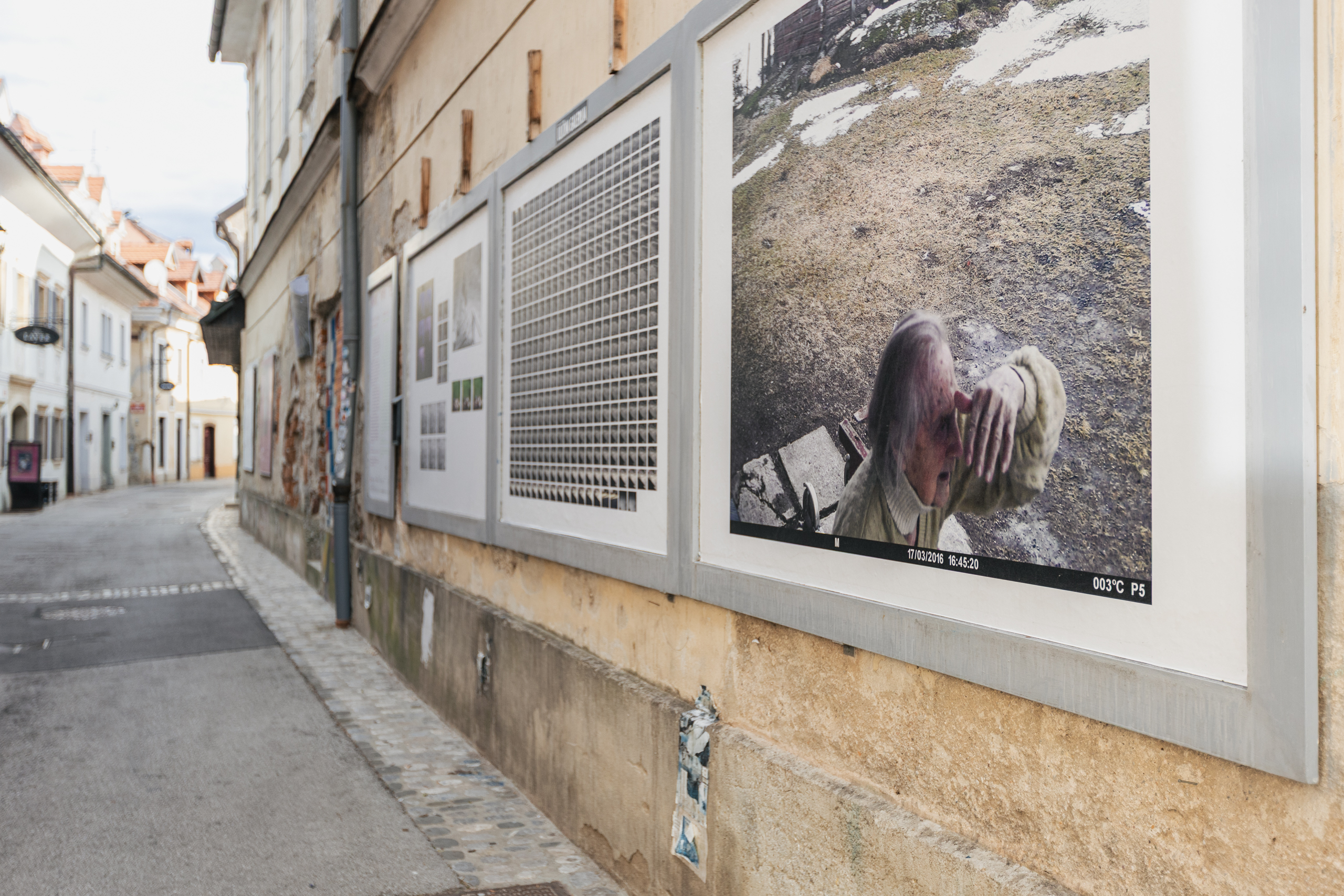
Kranj Foto Fest (2026), exhibition set-up, photo: Katja Pokorn
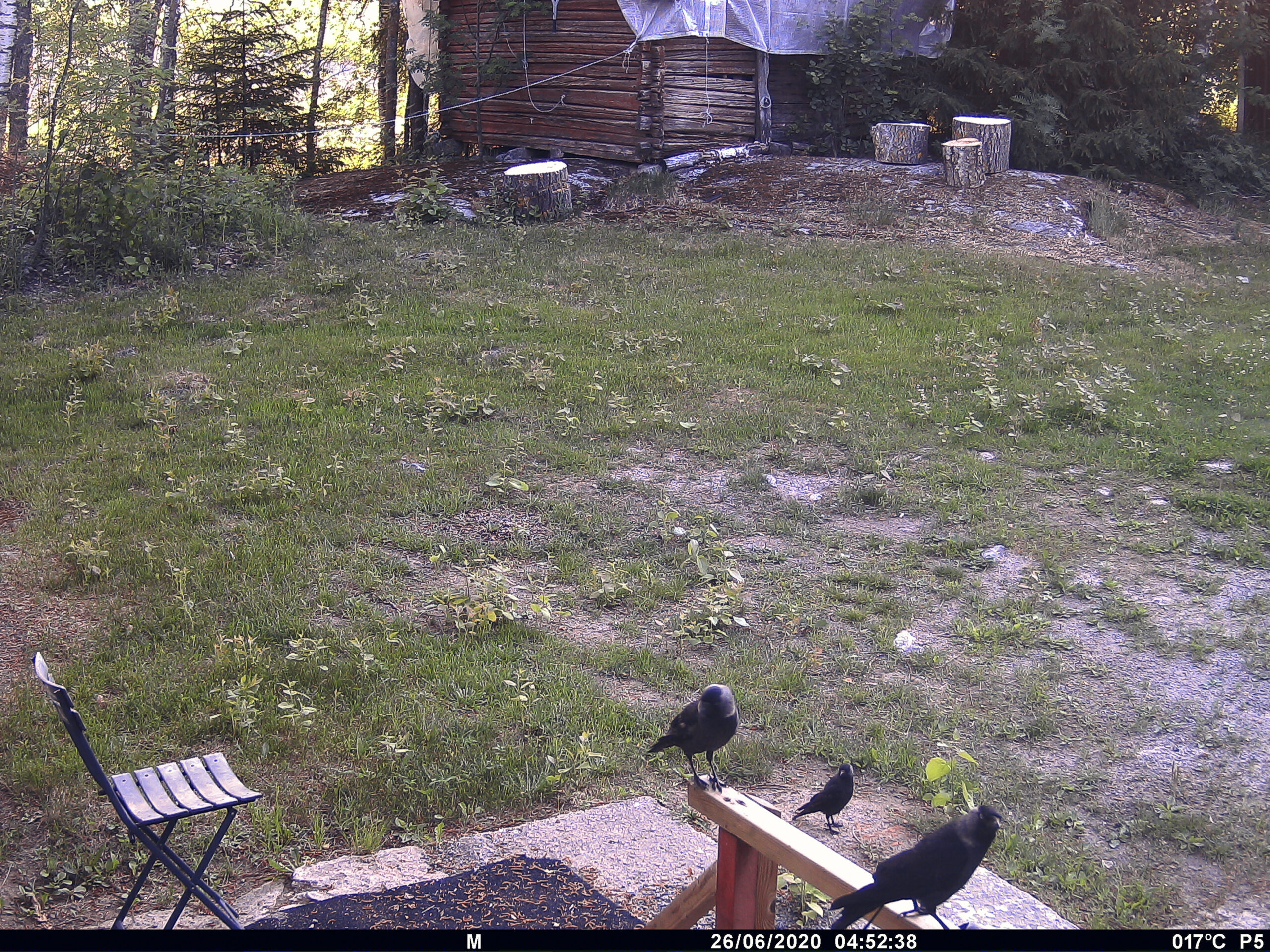
26/6/2020 (2022), from the project “Härmä / Hoar”
Your grandmother eventually disappears from the photographs, while birds, deer, vegetation and moving shadows continue to activate the camera. Why was it important for the series to continue beyond her presence, and how does this ongoing life in the garden shape the work’s treatment of grief, memory and absence?
Sometimes there are coincidences in the image flow; for example, when my grandmother and the bird following her wear the same colours and it looks like she turns into a bird. My grandmother must have observed the animals from the kitchen window. In the series, this continuation of life shows that the yard is home to so many creatures. It is comforting to acknowledge that life continues even after my grandmother’s passing.
At Kranj Foto Fest, Härmä / Hoar brings a deeply intimate family story into the public space of Tomšičeva Street, where it is encountered by passers-by who may not have intended to see an exhibition. What happens to intimacy when it enters the street, and how does this setting reshape the boundary between personal memory and collective experience?
This presentation at Kranj Foto Fest is completely different from how I’ve presented the series in galleries, where I’ve used frames and rather small, intimate sizes. Viewers then have to get close to the images. Now, in public space, I like the idea that a local grandmother who usually doesn’t go to galleries might encounter the work. I don’t think my grandmother ever visited many galleries or museums, so maybe this space is actually quite suited to the work.
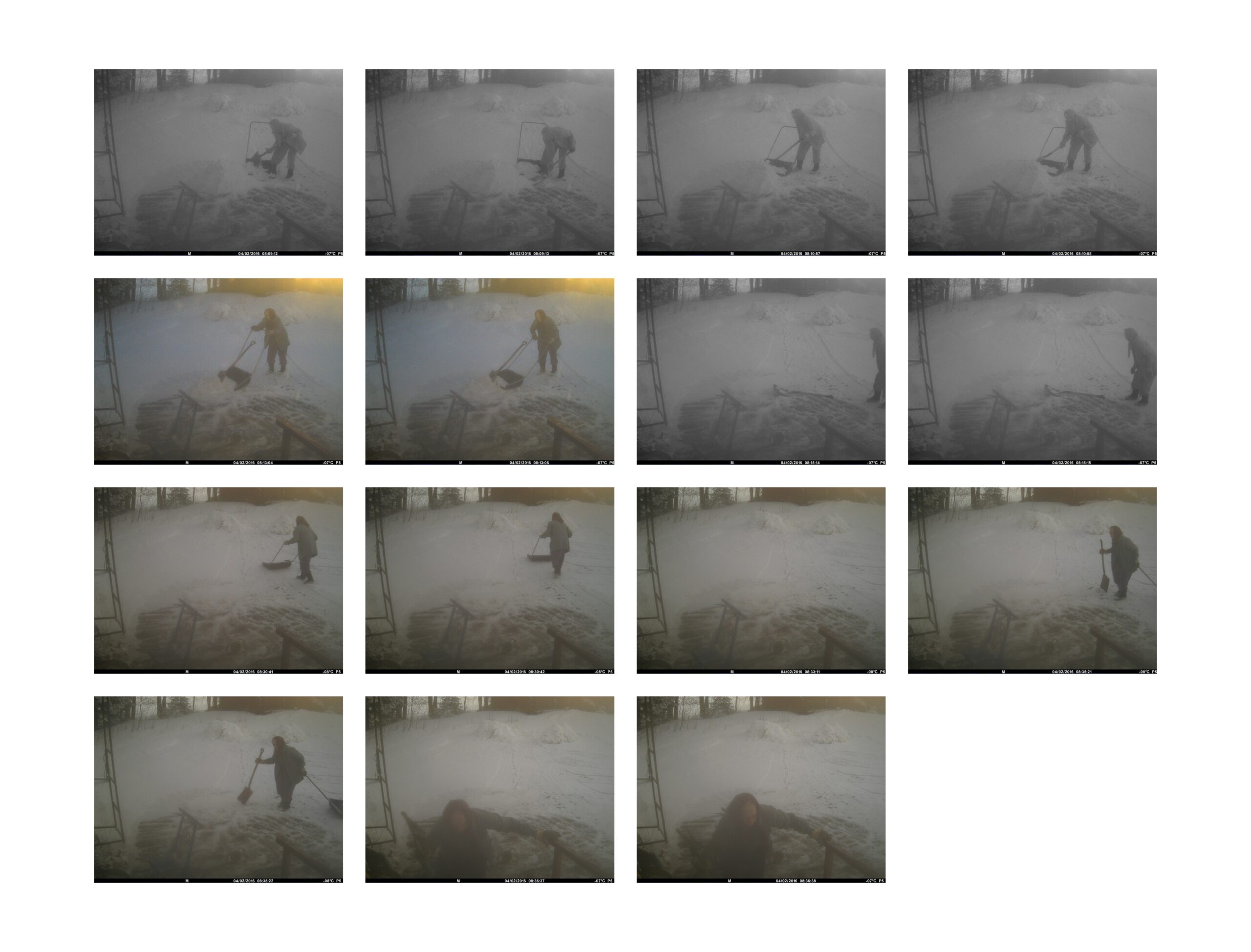
4/2/2016 (2022), from the project “Härmä / Hoar”
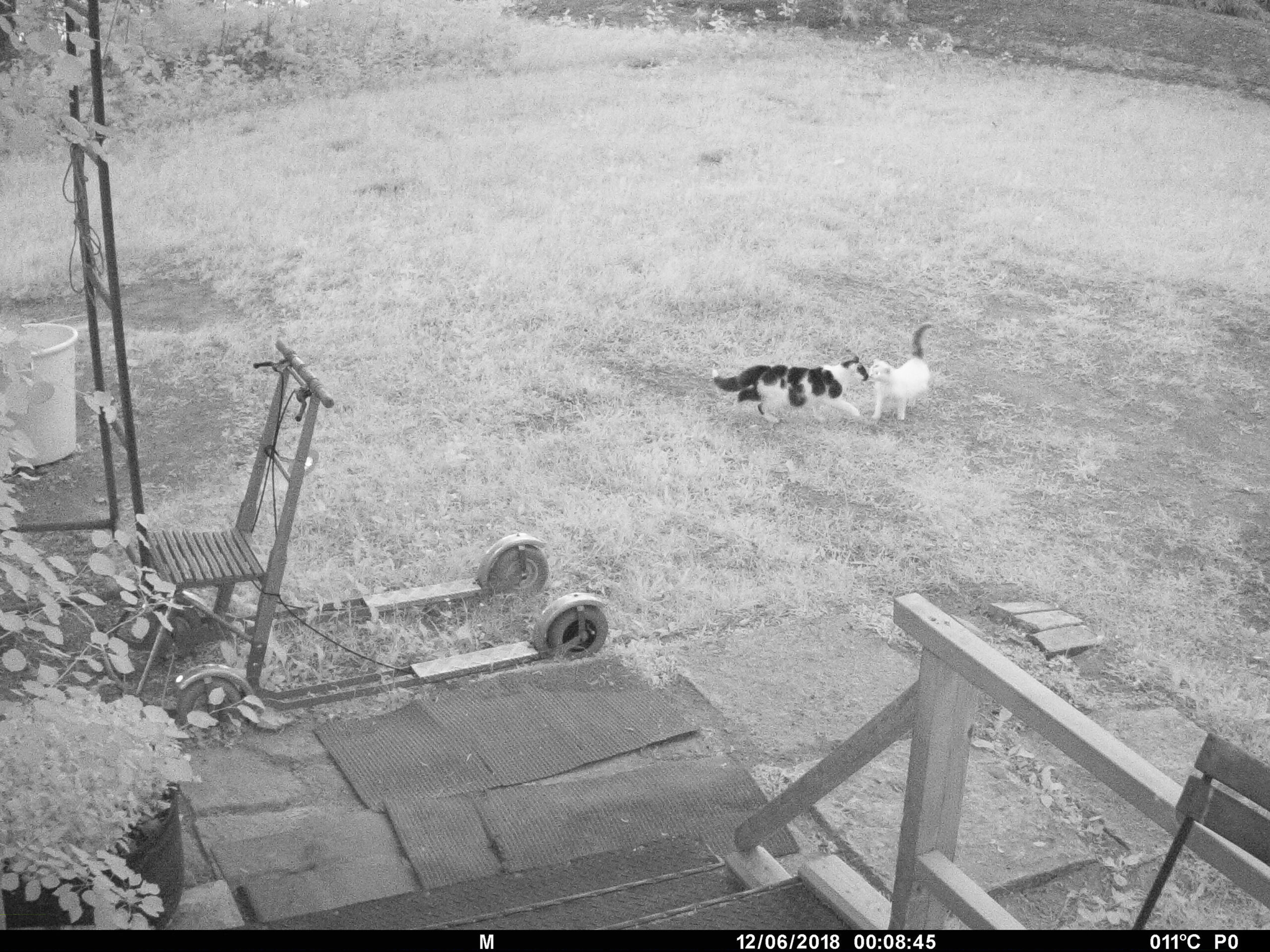
12/6/2018 (2022), from the project “Härmä / Hoar”
The street presentation also allowed people to encounter the work unexpectedly, outside a conventional gallery visit. How did you experience this relationship with the festival audience, and did the conversations or responses in Kranj open any new interpretations of the project for you?
It is always so nice to hear how the audience reflects on their own relationships with their elderly relatives. It seems common to use similar cameras to care for them. Hearing these reflections makes me think the series is less about my grandmother and more about the shared experience of caring for loved ones despite the distance. I also hope these reflections help the audience see their archives of this kind of surveillance-camera imagery in a different light.
What are you currently working on, and which themes, questions or photographic methods would you like to explore in the next phase of your artistic and research practice?
I am currently focusing on my PhD research in gender studies, where I use an artistic research method. In the project, 117 nonbinary participants created studio self-portrait photographs in collaboration with me. Each participant selected one portrait for the photographic series entitled ‘IN/VISIBILITY’, which is published under my artistic pseudonym Jussi Lautu. I interviewed forty participants about the meaning of the process and the selected portrait. The objective was to create a utopian space in the studio where nonbinary genders are recognised unconditionally and to produce portraits on the participants’ terms. In my research, I’m interested in how, or rather if, nonbinariness can be pictured. I want to explore the possibilities of nonbinary representation beyond binary optics.
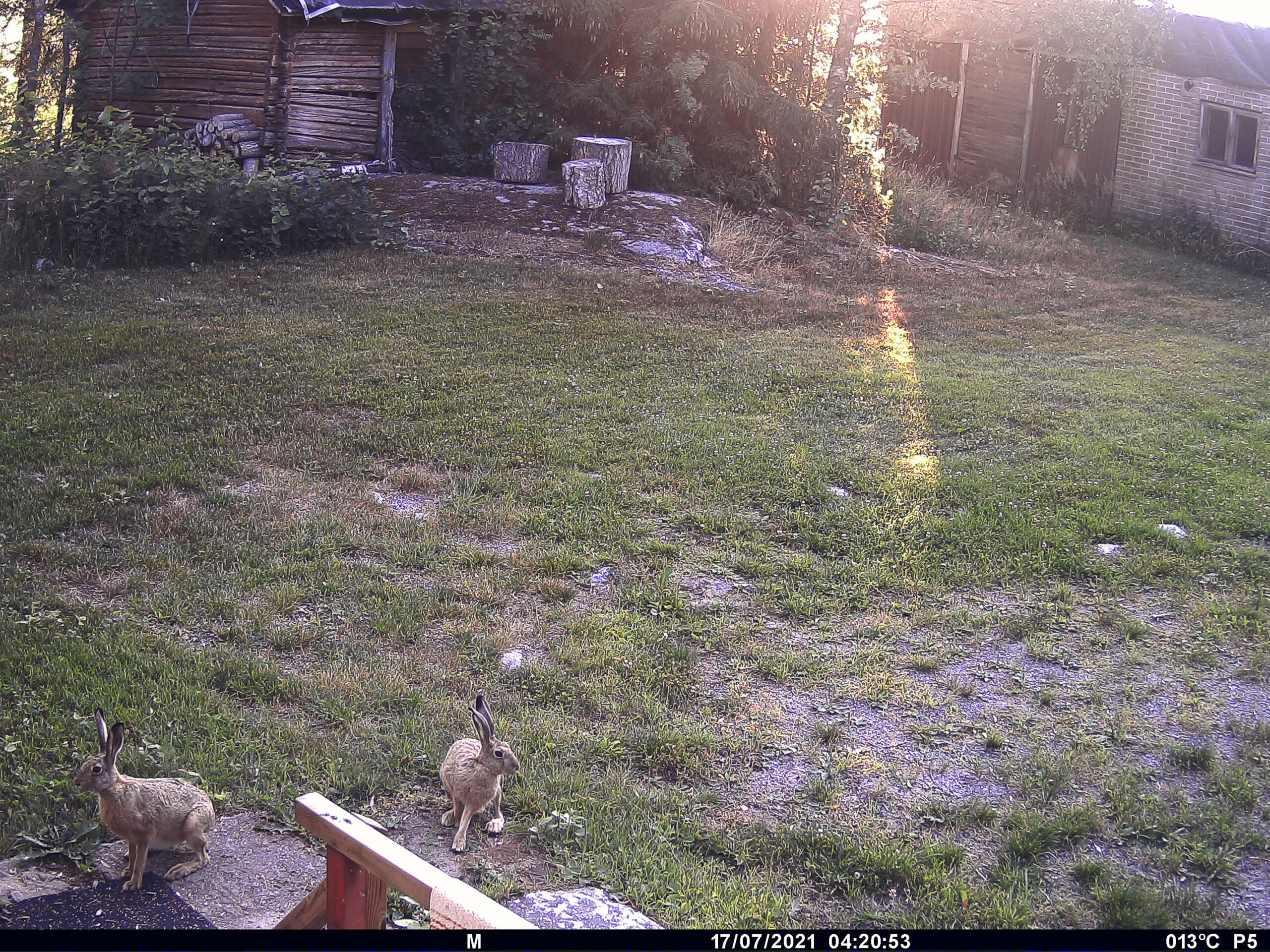
17/7/2021 (2022), from the project “Härmä / Hoar”
More information here.
We thank the artist and Kranj Foto Fest for providing the photographs.