Office for Photography invite you to the opening of the three-part exhibition programme Slovenian Cycle, taking place on Friday, 9 October 2026, at Gallery Spot, Gallery VN and Živi atelje DK. The exhibitions at all three galleries will be open to visitors from 5:00 pm. The programme brings together four Slovenian artists: Mirjam and Andrej Lamut, whose work will be presented at the Spot Gallery; Nik Erik Neubauer, at the Gallery VN; and Peter Fettich, at Živi atelje DK. The official opening of the programme will take place at Gallery VN at 7:00 pm, featuring a lecture by curator Miha Colner on the contemporary photography scene in Slovenia, followed by a conversation with the artists.
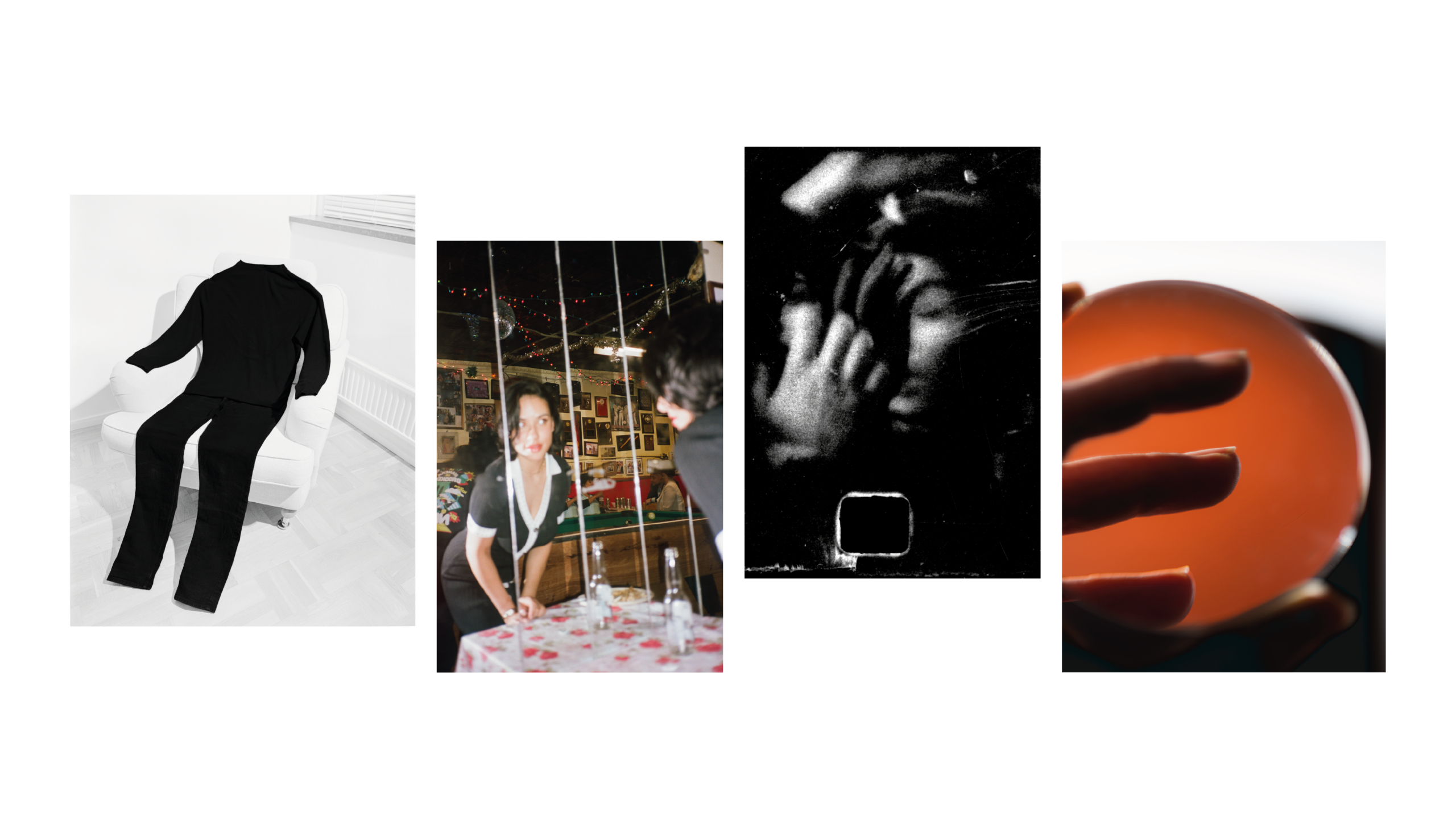
Slovenian Cycle
Three exhibitions presented under the title Slovenian Cycle showcase some of the most acclaimed and prolific protagonists of the photography scene in Slovenia today. Despite being profoundly diverse in their visual, formal, and conceptual approaches, these artists indicate some of the most apparent tendencies of the so-called contemporary photography. What unites and connects them is their sheer diversity and openness to various formal principles, creative concepts, and thematic narratives. Peter Fettich, Andrej & Mirjam Lamut, and Nik Erik Neubauer are all deeply dedicated artists and photographers who attentively and lucidly follow their interests and obsessions. In their artistic practices, they showcase a wide range of formal and conceptual approaches that characterise photography as an art form.
Peter Fettich (1979) is a passionate practitioner of analogue photography who obsessively experiments with a variety of techniques and methods. Focusing primarily on the formal aspects of the medium, he explores the possibilities of photographic language through an archaic approach, while mostly thematizing intimate subject matter. Furthermore, he is not only a photographer who operates primarily in the artistic milieu, but also a darkroom technologist and producer. For several years, he has been the driving force behind the Kela artists’ community that operates studios for artists and full infrastructure for producing analogue photography. Despite being completely dedicated to the alchemy of analogue photography, his work cannot be reduced to pure formalism. Instead, Fettich addresses commonly relevant and topical issues that concern him personally, as well as touching upon universal social questions. In the series of photographs Promises to Keep (2024), he provides an insight into the world of solitude that is in stark contrast with modern society of ongoing spectacle. Therefore, he showcases images of silent and seemingly insignificant everyday moments that are in no way glamorous. These scenes of peaceful wandering and deep observation, captured in often blurry and fuzzy atmospheric photographs, imply that the artist’s attitude towards the world is marked by a sense of melancholia and Weltschmerz.
In a completely different way, Nik Erik Neubauer (1994) also aims to capture the world around him. A sworn documentary photographer and visual storyteller, he carefully observes and records his immediate surroundings in a highly personalised manner. He seems not to keep a (safe) distance from his subject matter, since it appears that he is often very close to the events and situations that he records. However, this aspect of his work remains highly ambivalent. In his piece White Smoke, Brown Glare (2025) he focuses on the city of New York, where he is a stranger, and yet an avid observer. In his photographs, Neubauer documents the less visible side of New York, whose key to survival are a collective mindset and civic activism. He captures the social strata that defy class divisions and political uniformity, and focuses on the verism of the given moment, a representation that can diverge completely from dominant discourses. He photographs the protest movement calling for an end to the genocide in Palestine, in which the US is deeply complicit; the city of former colonists is standing up to oppression on the grounds of nationality or religion. He also documents the vibe of a city marked by harsh social injustice that nonetheless expresses remarkable solidarity and compassion.
The tandem Andrej & Mirjam Lamut, who usually work independently and individually, showcases much more ambivalent, metaphysical, and elusive narratives. The exhibition entitled Turning Inside Out, in which their works are displayed in dialogue, juxtaposes their practices, which are in a way subtly related yet entirely different. Andrej Lamut (1991) is a highly acclaimed artist who uses photography in a way that deviates from the norms of mainstream visual culture. His stylised and non-mimetic pictures appear profoundly ambiguous and metaphysical, as their subject matter is not clearly recognisable. Instead, they are highly relative and based on individual perception. His often dark and eerie imagery seems like a reflection of a dream world, hazy memories, or otherworldly experience, where the boundary between illusion and reality is blurred. He creates a certain kind of suspense, assuming that the world of appearances is not uniform, but could become an integral part of everyday experience. His photographs thus compel the audience to see beyond the obvious and to read between the lines. The photographs of Mirjam Lamut (1990) are similarly mysterious and unfamiliar since they show details of unidentified structures and situations. She thus implies the artificiality of the modern world, where the boundary between organic and inorganic matter, between natural and synthetic materials is ever more unclear. Furthermore, her pictures highlight the forced distinction between nature and culture, the idea that humankind adopted in the past two hundred years. Such divisions have lately been abandoned since it became a widely accepted fact that they are part of the same earthly ecosystem. She reflects the Zeitgeist and points at the inevitability of the end – the end of the human race or the end of the world.
Miha Colner
Peter Fettich (1979) has been working in photography since 1999, initially as a professional photographer in commercial and sports photography. In 2011, he enrolled in photography studies at the Faculty of Applied Sciences in Ljubljana (VIST). In 2019, he spent a semester at Vraa Hojskole (Denmark), gaining experience in alternative photography techniques under the mentorship of Emil Schild. Since 2020, he has served as a co-founder of the Artard Institute, which also oversees the work and development of the Kela production spaces. Fettich is actively involved in developing photographs, self-publishing, and running photography workshops. He has presented his work at solo and group exhibitions at home and abroad. His photobook Rispect the Boul! (2019) was among the finalists of the Athens Photo Festival in 2022.
Andrej Lamut (1991) graduated with a Master of Fine Arts in Photography from HDK-Valand, Gothenburg, and holds a degree in Visual Communication Design from the Academy of Fine Arts in Ljubljana. Through his work, he questions perception and challenges the viewer’s experience of images. His artistic approach often involves working with analog processes and alternative printing methods. He was part of the PARALLEL – European Photo Based Platform, and has exhibited his works at various venues and festivals across Europe, including FORMAT Festival (UK), Organ Vida (Croatia), Revela’t Festival (Spain), Copenhagen Photofestival (Denmark), Robert Capa Contemporary Photography Center (Hungary), MSUM – Museum of Contemporary Art (Slovenia), and Röda Sten Konsthall (Sweden). He lives and works between Gothenburg and Ljubljana.
Mirjam Lamut (1990) holds degrees in Social Pedagogy and Visual Communication Design from University of Ljubljana, and a Master of Fine Arts degree in Photography from HDK-Valand in Gothenburg, Sweden. Her interest lies in the often overlooked ephemeral phenomena and their metaphorical meaning. In her artistic practice she investigates how inner experiences shape perception and how emotional and psychological states become intertwined with external reality. Her work was exhibited in solo exhibitions and curated group exhibitions in Sweden (Galleri Format, Malmö, Röda Sten Konsthall, Göteborg), Slovenia (MSUM, Media Nox Gallery), Italy (Festival Terra del Pane) and Portugal (DE LICEIRAS 18). She lives and works between Gothenburg and Ljubljana.
Nik Erik Neubauer (1994) is a visual artist and photographer based in Ljubljana, Slovenia. His work explores intimate social themes through a contemporary documentary approach.
He holds a BA in Photography from the Faculty of Applied Sciences, Ljubljana, and an MA in Photography from the Academy of Fine Arts and Design, University of Ljubljana. In 2021, he received the Watchdog Award from the Slovenian Association of Journalists for his long-term coverage of anti-government protests in Slovenia and was nominated for the OHO Young Visual Artist Award in 2023. His photobook You Always Cry Twice When You Go to the South received the Photobook Award at Belfast Photo Festival, while his second book Where’s the Afters? was shortlisted for the Rencontres d’Arles Book Awards. In 2026, he was selected for the FUTURES photography platform. Neubauer is a co-editor of Henrik – Journal of Contemporary Photography, a member of the Študio collective, and a staff photographer for the Slovenian daily newspaper Dnevnik since 2022.
Related events:
Lecture by curator Miha Colner and conversation with the authors, 9. 10. 2026., 7:00 p.m., Gallery VN
Exhibition locations:
Peter Fettich
Živi atelje DK, Ilica 110
9. – 23. 10. 2026.
Mon – Fri: 16:00 – 20:00
Mirjam Lamut i Andrej Lamut
Galerija Spot, Čanićeva 6
9. – 30. 10. 2026.
Mon – Fri: 16:00 – 20:00
or by appointment
Nik Erik Neubauer
Galerija VN, Ilica 163a
9. – 30. 10. 2026.
Mon – Fri: 08:00 – 20:00
Sat: 08:00 – 14:00
The exhibition was realized with the support of the Ministry of Culture and Media of the Republic of Croatia, the City of Zagreb, the Ministry of Culture of the Republic of Slovenia, the Embassy of the Republic of Slovenia in Zagreb, and with the additional support of Swedish Arts Grants Committee. The work of the Office for Photography is supported by the National Foundation for Civil Society Development and the Foundation Kultura Nova.